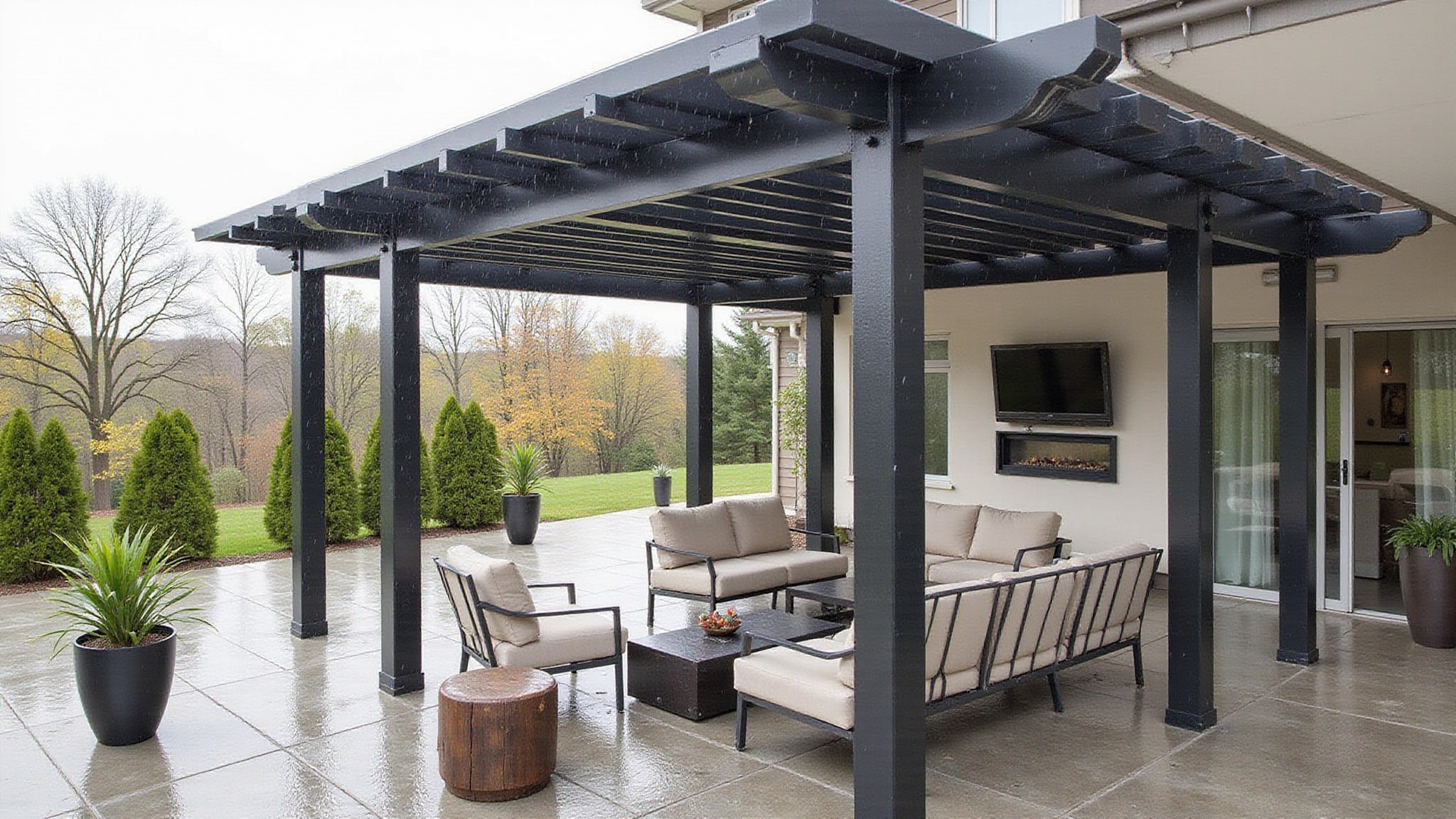
Your Florida pergola must meet design wind speeds from 130 mph in northern counties up to 186 mph in Miami-Dade’s HVHZ. You’ll need a continuous engineered load path, louvers through beams, posts, and anchors into sized concrete footings, verified by a licensed PE’s stamped drawings. Generic “hurricane-rated” claims won’t pass inspection; you’ll need a valid Florida Product Approval or Miami-Dade NOA. Understanding each engineering factor below will help you choose a pergola that actually meets code.
What Wind Rating Does a Florida Pergola Need?
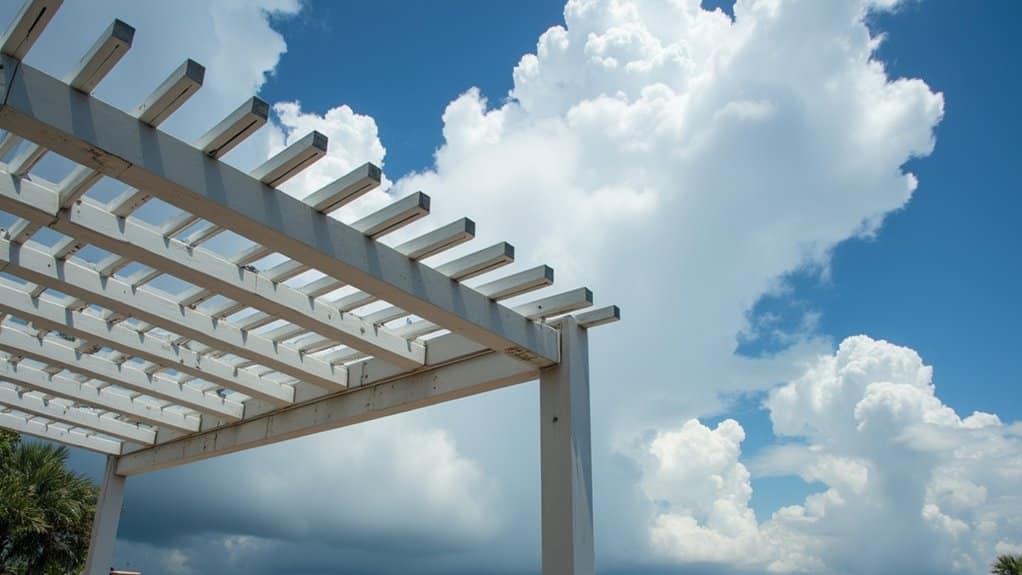
If you’re sourcing a hurricane proof pergola, confirm the rated wind speed covers your site’s specific design requirement. Engineering approval must address the complete load path, posts, beams, louvers, connections, and anchoring, not just the frame. A pergola rated below your local code threshold won’t pass permitting or inspection regardless of material quality. High-quality aluminum pergolas can typically withstand wind speeds of 110 to 140 mph, making them a strong candidate for Florida’s demanding hurricane code requirements.
How Pergola Engineering Determines Hurricane Survival
| Engineering Factor | Why It Matters |
|---|---|
| Load path continuity | Prevents cascade failure through posts, beams, and louvers |
| Connection design | Resists uplift and shear forces at critical joints |
| Post and beam sizing | Guarantees adequate section modulus against bending |
| Exposure classification | Determines required wind resistance for your specific site |
A hurricane rated pergola Florida installation requires professional engineering documentation verifying every connection point meets code-required loads. Each project must account for unique site conditions, including local soil composition and regional weather patterns, to ensure the engineered design performs as intended.
Anchoring and Foundations That Resist Uplift
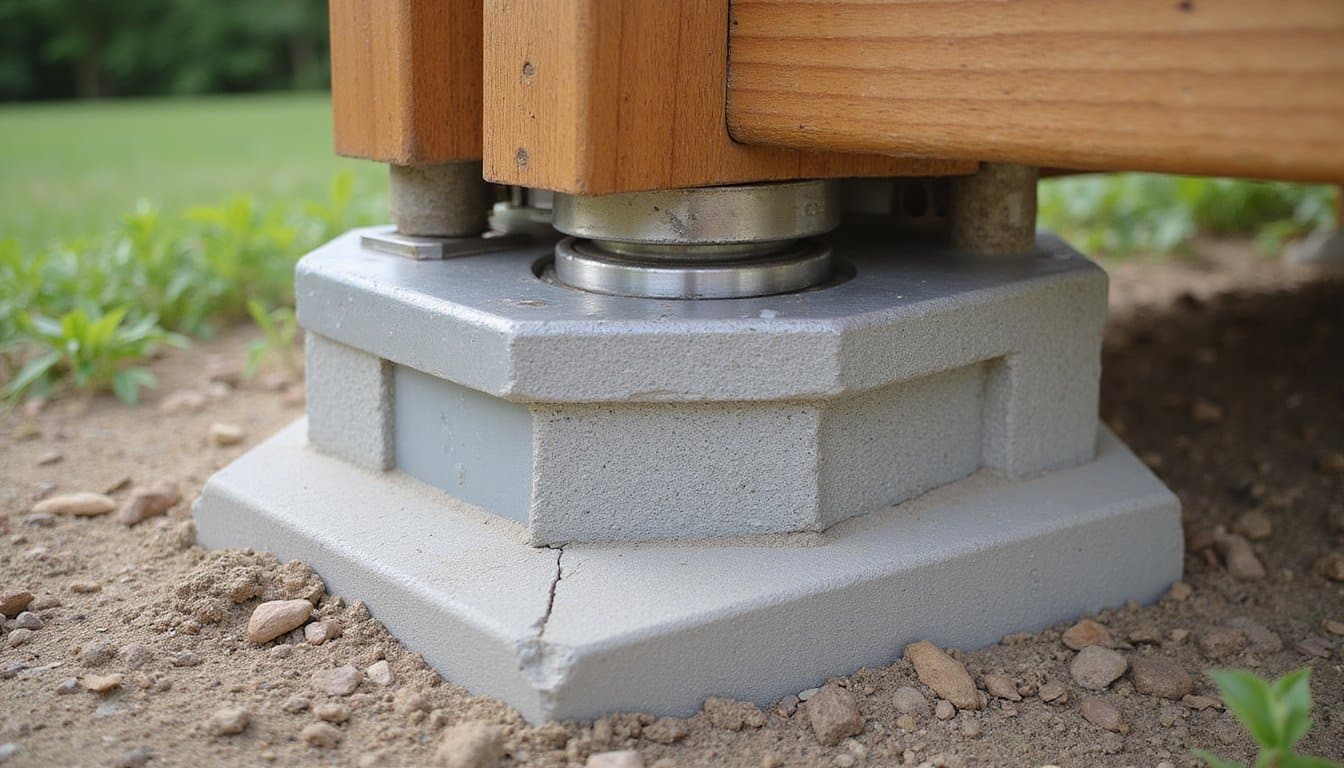
Because high winds generate powerful upward suction on roof structures, your pergola’s anchoring system must be engineered primarily for uplift resistance, not just vertical load bearing. Every wind rated pergola requires a continuous load path from roof members through post bases into concrete footings or soil. Your anchors must resist both uplift loads and lateral forces to prevent lifting and racking during storms.
Concrete footings remain the standard solution, sized for soil bearing capacity and calculated uplift demand. In South Florida, footing depths typically range from 18, 36 inches depending on soil composition. The Florida building code confirms that increasing footing size directly improves uplift resistance. Post bases and mechanical anchors must be structurally rated, not decorative, with specified torque values, embedment depths, and edge distances matching your engineer’s calculations. For coastal installations within five miles of the shoreline, hardware should be fabricated from T316 stainless steel to prevent salt-air corrosion that can lead to premature anchor failure.
Florida Building Code and Miami-Dade Pergola Standards
For any Miami-Dade pergola project, you’re operating within the High Velocity Hurricane Zone, where design speeds reach 175, 186 mph depending on risk category. Products must carry valid Florida Product Approval or a Miami-Dade NOA. Impact resistance under TAS 201, 202, and 203 applies to exposed components. Generic “hurricane-rated” labels won’t satisfy HVHZ inspection requirements.
How to Verify a Pergola’s Hurricane Rating Before You Buy
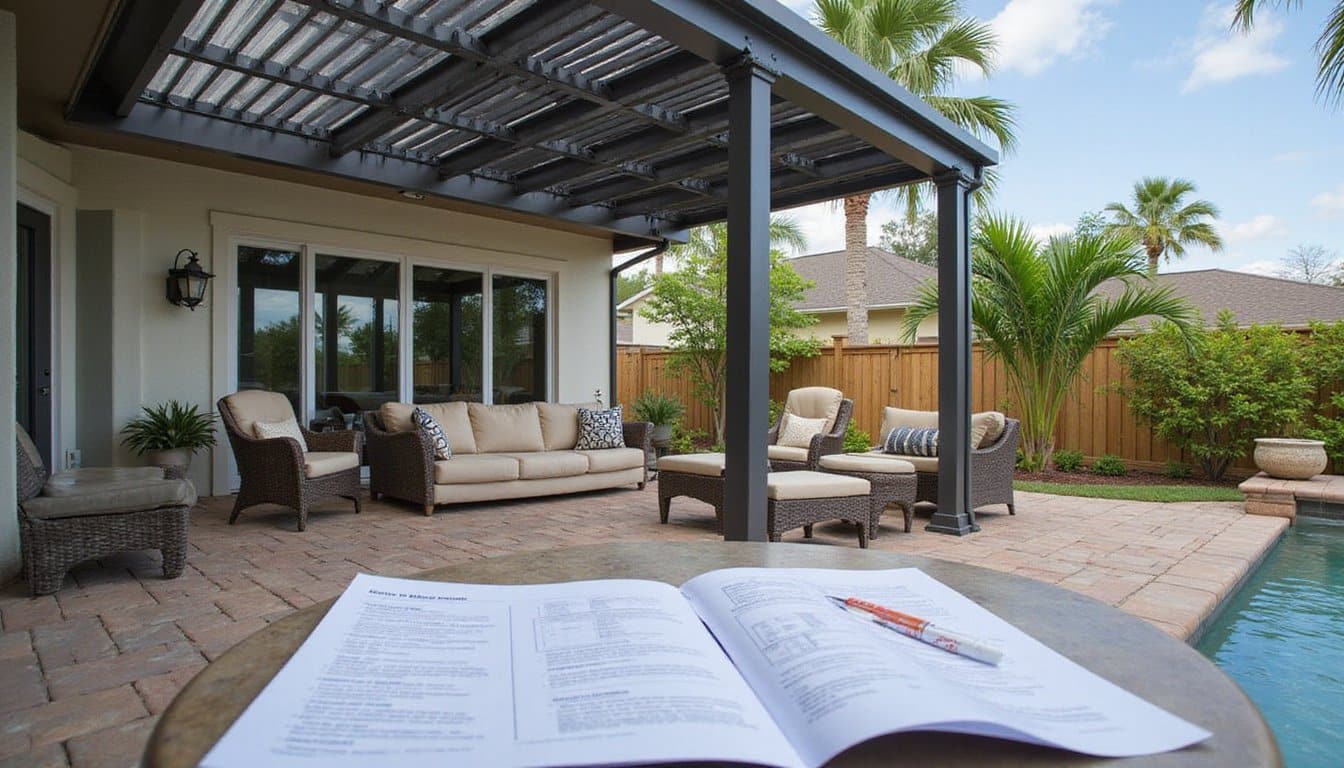
Knowing that your project falls under HVHZ or standard Florida Building Code requirements is only the starting point, you still need to confirm that the pergola you’re buying actually meets those requirements with verifiable documentation.
Meeting the code on paper is just the beginning, verifiable documentation is what separates compliant pergolas from costly assumptions.
Before committing to any aluminum pergola hurricane installation or louvered roof pergola system, verify these critical items:
- Request the product’s documented design wind speed in mph, confirmed on a specification sheet or engineering packet, not marketing copy alone.
- Obtain stamped structural drawings from a licensed PE covering loads, anchoring, connections, and lateral resistance for your specific site.
- Confirm anchoring and foundation details address wind uplift, base plates, embedment depth, and anti-racking strategy.
- Demand independent certification and testing from a third-party body, distinguishing lab-tested wind resistance from self-claimed performance ratings.
Storm-Proof Your Outdoor Living Today
Florida outdoor living deserves storm protection that doesn’t sacrifice beauty, function, or year-round enjoyment. At Innovative Outdoor Living, our experienced team provides trusted Pergolas built to meet Florida wind load codes and withstand the toughest hurricane seasons. Call +1 (561) 594-1495 today and protect your outdoor investment for years to come.
Frequently Asked Questions
Can a Hurricane-Rated Pergola Lower My Homeowners Insurance Premiums?
A hurricane-rated pergola won’t automatically lower your homeowners insurance premiums. No standard Florida discount exists solely for installing one. However, you’ll reduce your risk of wind-damage claims, which can benefit you during underwriting review. You should provide your insurer with engineering documentation, permits, and code-compliance records. Any premium consideration is insurer-specific and depends on how they classify the structure under your policy’s other-structures coverage.
Do Hurricane-Rated Pergolas Require More Maintenance Than Standard Pergolas?
Hurricane-rated pergolas don’t typically require more routine maintenance than standard pergolas, especially if you’ve chosen aluminum framing. You’ll perform the same cleaning and debris removal. However, you’ll need to inspect engineered anchors, structural connections, and protective coatings more carefully, since your wind-load compliance depends on those components. If your system includes motorized louvers, you’ll also maintain moving parts. Wood versions demand the most upkeep regardless of wind rating.
How Long Does It Take to Install a Hurricane-Rated Pergola?
On-site installation typically takes 1 to 3 days, but you’ll need to plan for a 3- to 6-month total timeline from order to completion. Engineering drawings, permit approvals, fabrication, and code review drive most of that lead time, especially in high-velocity hurricane zones requiring wind-load compliance up to 175 mph. Foundation complexity, custom louver systems, and municipal inspection scheduling can extend your timeline further. You should consult a licensed installer for site-specific estimates.
Are Louvered Pergolas More Wind-Resistant Than Fixed-Roof Pergola Designs?
Louvered pergolas can reduce wind uplift because open louvers let airflow pass through rather than striking a solid surface, but they’re not automatically more wind-resistant than fixed-roof designs. You should evaluate engineering, anchoring, material strength, and verified wind ratings, not just roof style. A well-engineered fixed roof can outperform a poorly anchored louvered system. You’ll want to match any product’s tested wind rating to your site’s ASCE 7 design wind speed requirements.
Will a Hurricane-Rated Pergola Increase My Property Resale Value?
A hurricane-rated pergola can increase your property’s resale value, but it’s not guaranteed. You’ll see the strongest impact when you use permanent materials, pull proper permits, and guarantee code-compliant installation. Homes with pergolas reportedly sell 10.7 days faster and get 20% more saves on Zillow. However, appraisers rarely assign direct line-item value, your return depends on build quality, architectural integration, and overall buyer appeal in your local market.