Your pool build takes anywhere from one week to six months or longer, depending on the type you choose. Above-ground installs finish in 1 to 3 weeks, fiberglass shells drop in within 6 to 8 weeks, and gunite pools need 8 to 12 weeks for curing and labor. You’ll move through five phases: excavation, shell construction, plumbing and electrical, decking, then finishing and startup. Weather, permits, and site conditions can stretch that schedule. Here’s how each phase breaks down.
Key Takeaways
- Pool construction typically takes 8 to 16 weeks, but total project time can extend beyond 6 months with planning and permitting.
- Pool type drives timeline: above-ground installs finish in 1 to 3 weeks, fiberglass in 6 to 8 weeks, and gunite in 8 to 12 weeks.
- The core build sequence includes excavation, shell construction, plumbing and inspections, decking, and finishing, each with distinct durations.
- Weather, municipal inspections, backyard conditions, and project complexity can significantly delay multiple phases of the build.
- Permitting and HOA approvals alone can add 2 to 8 weeks, so submitting them early keeps the schedule on track.
Pool Build Timeline: Weeks to Months
Building a pool takes weeks to months, with the construction phase running somewhere between 8 and 16 weeks, though the full picture stretches wider than that. Your pool construction timeline depends heavily on type: above-ground installs finish in 1-3 weeks, fiberglass shells drop in within 6-8 weeks, while gunite pools demand 8-12 weeks for curing and field labor. When you ask how long to build a pool, separate construction from total project time. Design takes 1-4 weeks, and permitting or HOA approval adds 2-8 weeks before excavation starts. Simple, pre-manufactured builds shorten your pool installation time noticeably. Custom in-ground projects, complicated by weather, inspections, and site conditions, can push your schedule toward 6 months or longer.
What are the phases of a pool build
A pool build has five core phases: excavation and site prep, shell construction, plumbing and electrical with inspections, decking, then finishing and startup. Excavation and site prep typically run 1-2 weeks. Shell construction takes 1-4 weeks, depending on whether you’re using fiberglass, vinyl, or gunite. Plumbing, electrical, and inspection work usually adds 2-3 weeks. Decking runs 1-2 weeks, and finishing plus startup adds another 1-2 weeks. When you’re building a pool with gunite, counting each phase separately, your pool build timeline can total 11-22 weeks. Each stage feeds the next, so a delay in one, say a failed inspection, pushes everything downstream. Understanding this sequence helps you anticipate where your project stands at any point.
How long does each phase of the build take
Each phase of the build takes from one to four weeks, depending on pool type and site conditions. You’ll move through a predictable sequence, though durations shift with pool type and site conditions. Each phase carries its own labor and inspection requirements, so budget time accordingly.
| Phase | Duration | Key Factors |
|---|---|---|
| Excavation & site prep | 1-2 weeks | Access, grading |
| Shell construction | 1-4 weeks | Fiberglass, vinyl, or gunite |
| Plumbing, electrical, inspection | 2-3 weeks | Municipal workload |
| Decking | 1-2 weeks | Weather, material choice |
| Finishing & startup | 1-2 weeks | Curing, water balancing |
Add these up and a standard gunite build runs 11-22 weeks end-to-end. You’ll finish faster with fiberglass shells, since factory-built units skip the curing delays that stretch concrete schedules.
What factors affect your pool build timeline
Several variables affect your pool build timeline and can stretch your schedule well past standard estimates. Weather tops the list: rain and freezing temperatures delay excavation, disrupt concrete curing, and stall decking, adding weeks to your build. Local inspections and municipal workload matter too, since backlogged jurisdictions slow progress even after construction begins. Your backyard conditions play a direct role. Limited access, poor grading, or existing site constraints increase labor time. Project complexity drives the biggest swings; custom features, elaborate hardscaping, and integrated systems can push your timeline toward six months or longer. Finally, seasonality affects scheduling because peak construction periods strain material supply and subcontractor availability. Understanding these factors helps you set realistic expectations rather than banking on best-case numbers.
What can delay a pool build
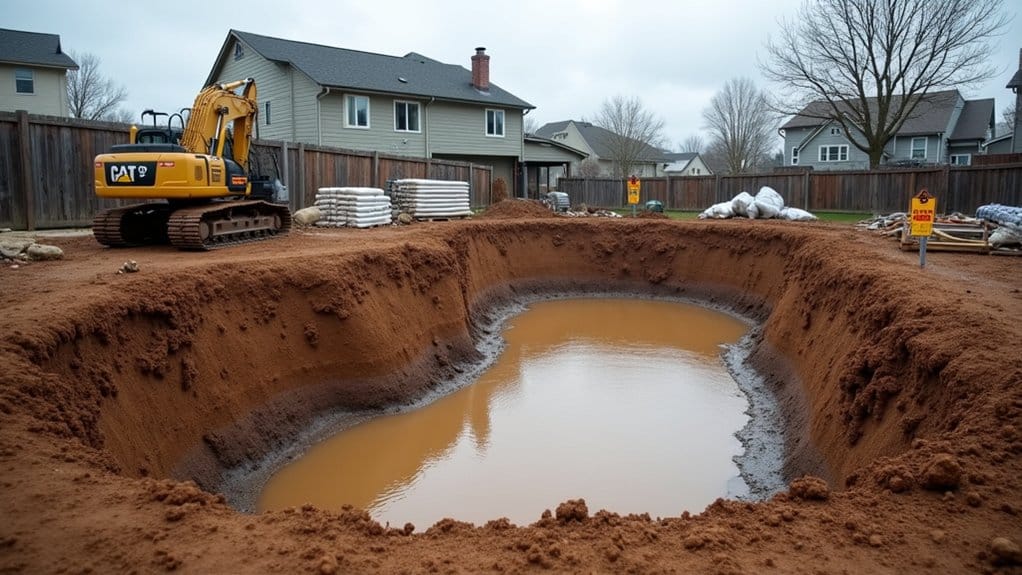
Several factors can delay a pool build, pushing your first swim weeks or months past the estimate even if your project launches on schedule. Weather ranks first: rain, freezing temperatures, and excess moisture stall excavation, delay concrete pours, extend gunite curing, and postpone decking. Permitting and HOA approvals stretch 2-8 weeks, and slow municipal offices compound the wait. Inspections create additional bottlenecks, since plumbing, electrical, and structural sign-offs must clear before you proceed to the next phase. Backyard conditions such as tight access, poor grading, rocky soil, or existing utilities increase excavation labor and equipment time. Custom features like tanning ledges, waterfalls, and complex tile push complexity sharply, sometimes toward six months or longer. Seasonality matters too, since peak-season demand limits subcontractor availability and slows material deliveries across your entire build schedule.
How do you keep your pool build on schedule
Keep your pool build on schedule by front-loading decisions and coordination before excavation ever begins. Finalize your design, materials, and feature selections during the 1-4 week design phase so no mid-build changes stall progress. Submit permits and HOA applications early, since approvals can consume 2-8 weeks and often dictate your start date. Choose a pool type that matches your schedule. Fiberglass or vinyl installs in 6-8 weeks, while gunite runs 8-12. Confirm subcontractor availability upfront to prevent gaps between excavation, shell placement, plumbing, electrical, and decking. Schedule inspections as soon as each phase qualifies. Build weather buffers into concrete curing and decking windows. Book outside peak-season demand when possible, and maintain steady communication with your contractor throughout.
Conclusion
A pool build can run anywhere from a few weeks to several months, and knowing which phases take the longest, permitting, excavation, the shell, and finishing, keeps expectations realistic from the first meeting. The timeline is far smoother when the sequence and the season are planned deliberately. Innovative Outdoor Living maps out each phase of the build up front and schedules around Florida’s weather and permitting, so the pool comes together on a timeline homeowners can actually plan around.
Build the Custom Pool of Your Dreams
From permits and design to construction and completion, every custom pool deserves expert planning and execution. At Innovative Outdoor Living in Jupiter, FL, our experienced team provides trusted Pool Construction with expert craftsmanship and premium materials. Call +1 (561) 594-1495 today and start planning your dream pool.
Frequently Asked Questions
What Is the Best Season to Start a Pool Build?
Fall or winter usually gives the best results, when contractor demand drops and permitting queues shorten. Scheduling excavation and shell work during those off-peak months dodges the busy-season backlog that slows subcontractor availability and material delivery. It also positions the finishing and startup phases to wrap by spring, so the pool is ready right as warm weather arrives, without curing or decking delays derailing the schedule.
Can I Use My Pool Immediately After Construction Finishes?
Not right away. Finishing and startup come first, typically adding one to two weeks. Once the interior finish cures and the equipment is running, the water chemistry is balanced, the filtration primed, and any final inspections passed. Gunite pools in particular need the plaster to cure properly before regular use. Rushing it risks the finish, so stable, balanced water is worth waiting for.
Do I Need to Be Home During Construction?
Not for most of the sequence. The crew handles excavation, shell placement, plumbing, electrical, and decking on their own once they have site access. Being available at key checkpoints helps, though, design sign-off, permit coordination, and inspections where input or presence matters. Arranging equipment and subcontractor access ahead of time keeps the schedule moving without needing to be on site daily.
How Much Does a Typical In-Ground Pool Cost?
A typical in-ground pool generally runs from the mid tens of thousands into six figures, depending on type, size, and features. Fiberglass tends to sit at the lower end, gunite at the higher, with add-ons like decking, a screen cage, heating, and water features raising the total. Site conditions and permitting factor in as well. A local contractor can price a specific project accurately based on those details.
Which Pool Type Requires the Least Long-Term Maintenance?
A fiberglass pool usually needs the least. Its factory-built, gel-coat shell resists algae, so it takes less scrubbing and fewer chemicals. The nonporous surface means no periodic resurfacing like gunite needs and no liner swaps like vinyl requires. Water still needs balancing and the filtration still needs running, but overall upkeep stays noticeably lower.