
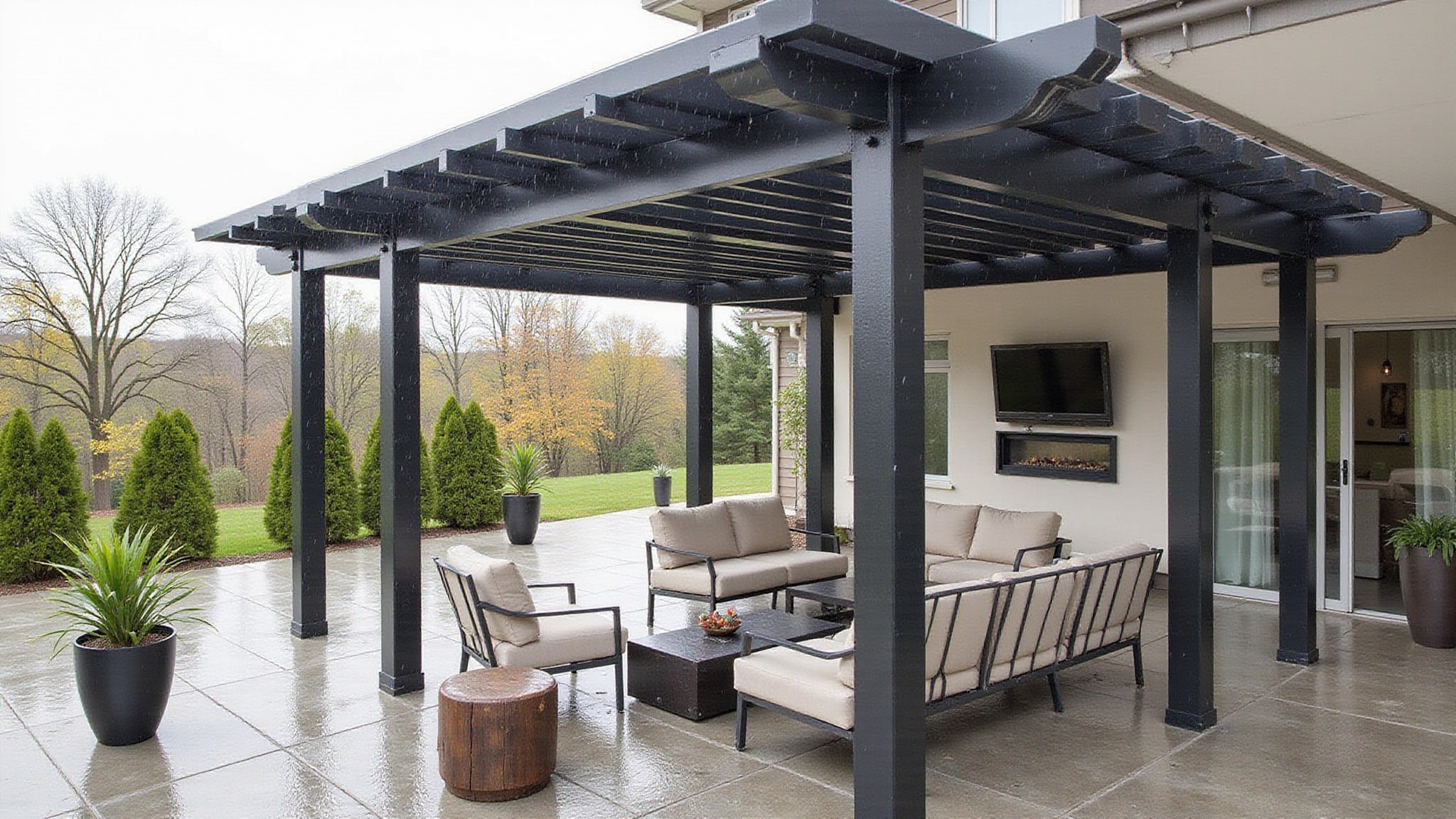

The roof sets these three apart. A pergola gives you an open, slatted top that filters sunlight and lets rain pass through, so you’ll get partial shade and maximum airflow. A gazebo delivers a solid roof and near-full shade, often with railings or partial enclosure on a compact geometric footprint. A pavilion covers a wide span with a solid roof for full all-weather protection. Match each to your site, budget, and layout below.
Key Takeaways
- Roof: Pergolas have open, slatted tops filtering sunlight, while gazebos and pavilions have solid roofs delivering full shade.
- Shape: Pergolas are rectangular or linear, gazebos are round or hexagonal focal points, and pavilions span wide central spaces.
- Weather: Pavilions offer the strongest all-weather protection, gazebos give near-full shade, and pergolas allow more sun and rain through.
- Airflow: Pergolas and pavilions are open-sided for maximum airflow, while gazebos often add railings or screens for privacy.
- Cost: Pergolas are the lowest-cost option, gazebos sit in the middle, and pavilions are the most expensive due to size.
What are the differences between a pavilion, pergola, and gazebo
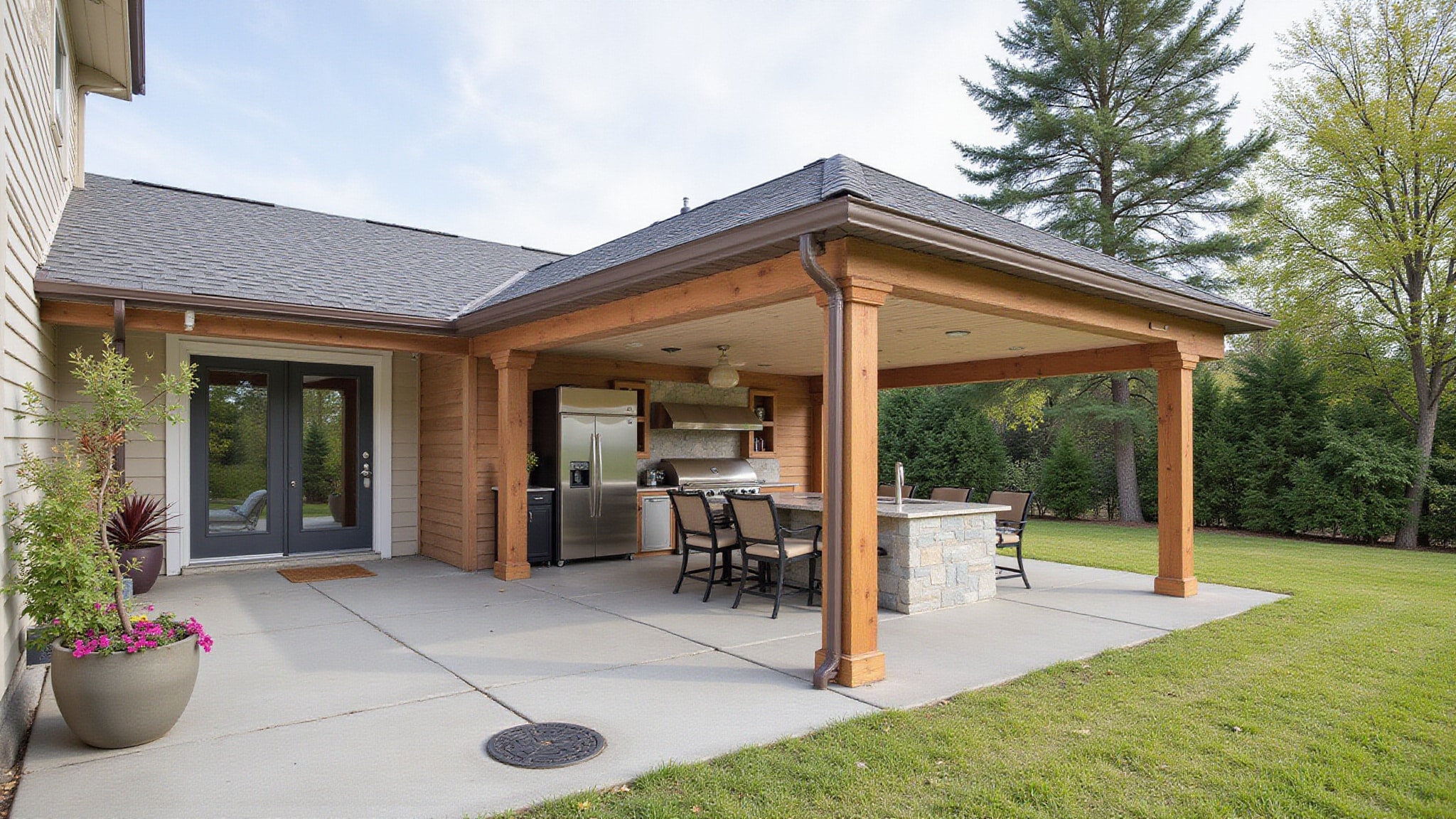
A pavilion, pergola, and gazebo differ most in their roofs. A pergola carries an open, slatted top that filters sunlight, the gazebo’s solid roof delivers near-full shade, and the pavilion tops both with a solid gable or hip roof spanning the largest footprint.
Look next at shape. Pergolas fit rectangular patios and decks, gazebos favor round or hexagonal footprints, and pavilions occupy wide, central open spaces. Pergolas read as light frameworks, while gazebos and pavilions present more substantial, all-weather profiles suited to heavier use and denser gatherings.
What is a pavilion
A pavilion is a freestanding, open-sided shelter topped with a solid gable, hip, or A-shape roof that spans the largest footprint of the three. Comparing pavilion pergola gazebo options among backyard structures, you’ll notice the pavilion commits to full overhead cover and wide-span coverage. That solid roof delivers full shade plus strong rain and snow protection, so you can position it over dining zones, poolside decks, or outdoor kitchens. Since the sides stay open with no built-in walls, you’ll maximize airflow while still sheltering large gatherings. Plan for a central, open site because a pavilion reads as substantial and occupies significant ground. Expect higher material and labor demands too, since the larger roof and structure typically drive the highest cost.
What is a pergola
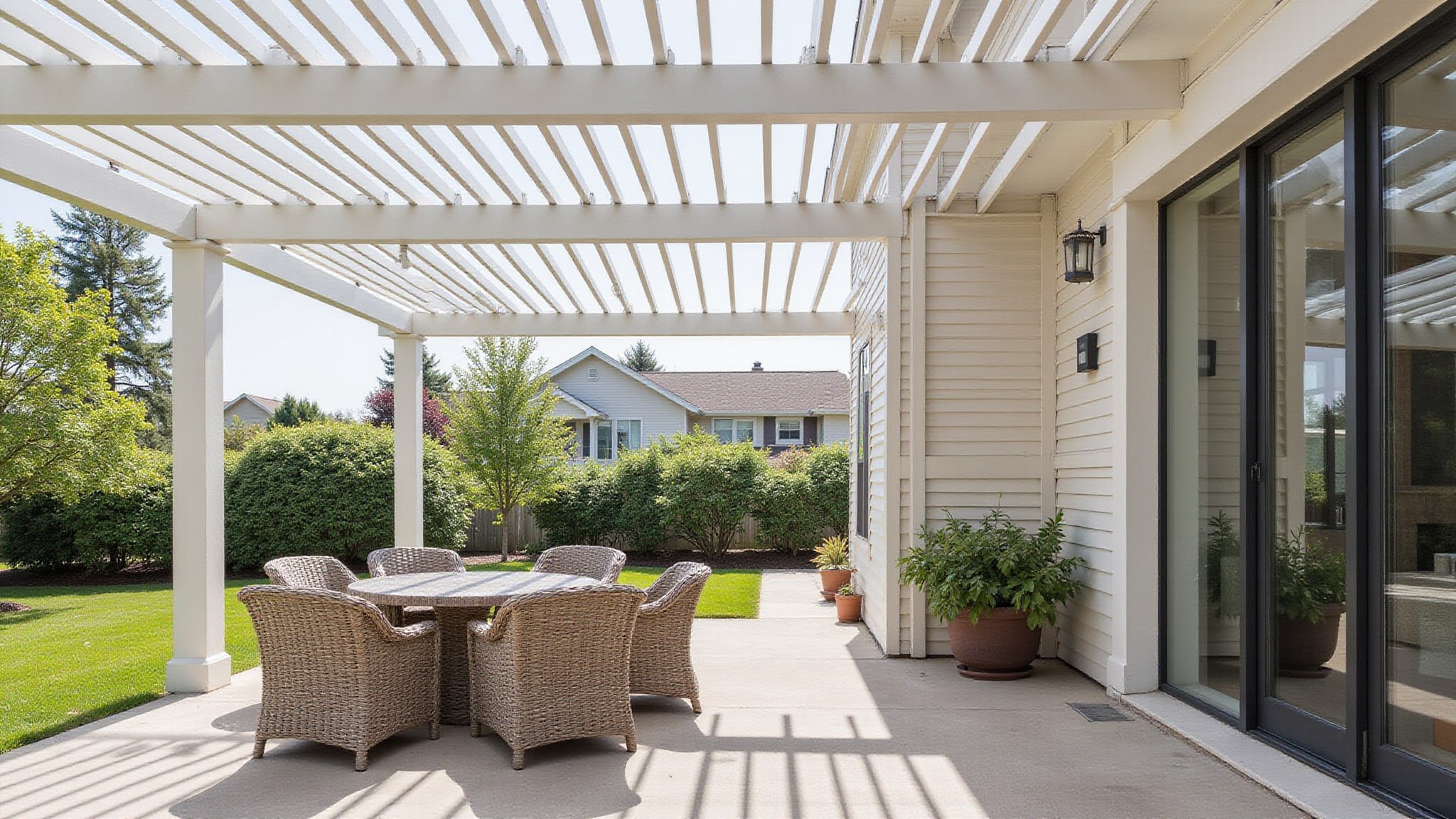
A pergola is the lightest framework of three common outdoor structures: a freestanding or attached structure built from posts and an open lattice, slatted, or beam roof. That openness defines it, giving you partial shade and filtered sunlight rather than full cover, so sun and rain pass through more freely than they would under a gazebo or pavilion. You’ll typically size it rectangular, linear, or custom-fit against a patio, deck, or exterior wall. Its open sides maximize airflow, and you can tune coverage with slat spacing, canopy add-ons, or adjustable louvers. Because it uses less material, it’s usually the lowest-cost, most design-flexible option. Reach for a pergola when you want to frame an outdoor room, support climbing plants, or add decorative, breathable shade.
What is a gazebo
A gazebo is a freestanding structure with a solid roof that gives you full overhead cover with near-full shade and solid rain protection, unlike a pergola’s open framing. You’ll usually spot its geometric footprint, round, hexagonal, or octagonal, which turns the structure into a deliberate focal point rather than a linear extension of your patio. Its roof pitches, domes, or tiers overhead, reading as more substantial than a pergola’s lightweight lattice.
You can leave the sides open, but gazebos often add railings, screens, or partial enclosure, so you’ll get a semi-enclosed feel and more privacy. Site it in a garden corner or lawn center where it anchors the space. Use it for quiet retreats, small gatherings, or a defined destination within your yard.
How do a pavilion, pergola, and gazebo compare
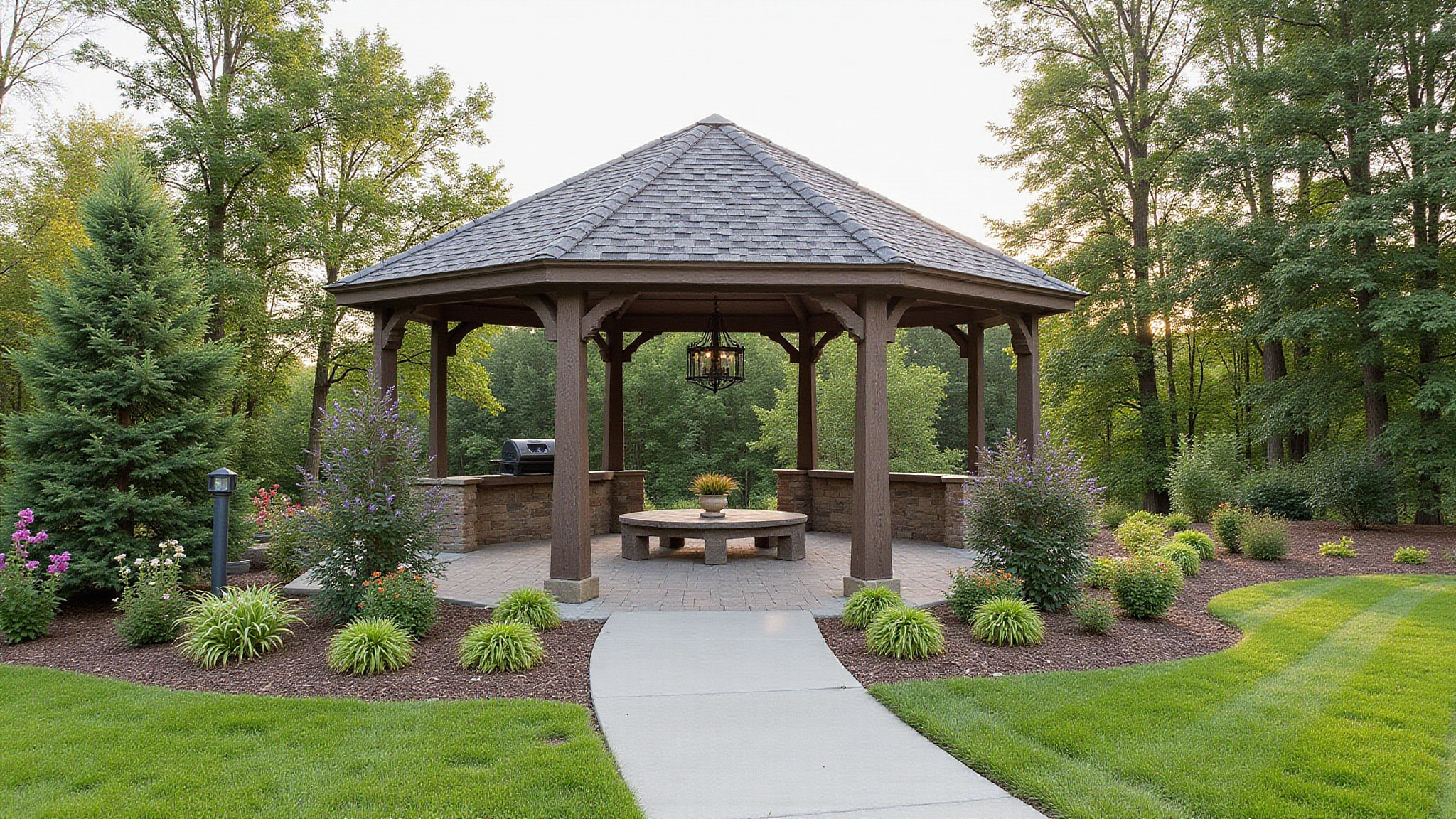
A pavilion, pergola, and gazebo differ most in the roof: a pergola gives you an open lattice or slatted top for filtered light, while gazebos and pavilions carry solid roofs for full overhead cover. Beyond roofing, footprint and function separate them. You’ll read a pergola as a light framework fitted to patios or decks, a gazebo as a geometric focal point anchoring a garden corner, and a pavilion as a wide-span cover for larger central spaces.
| Feature | Comparison |
|---|---|
| Roof | Pergola open; gazebo and pavilion solid |
| Shape | Pergola linear; gazebo geometric; pavilion wide |
| Weather | Pavilion best; gazebo strong; pergola partial |
| Footprint | Pavilion largest; pergola flexible |
| Cost | Pergola lowest; pavilion highest |
Match the structure to your site.
What are the best uses for each structure
The best structure depends on the job you need it to do. Choose a pergola when you’re framing an outdoor room, defining a patio or deck edge, or training climbing plants for decorative, filtered shade. Its open framework suits transitional areas where you want light and airflow, not full cover.
Pick a gazebo for a backyard centerpiece, a quiet retreat, or a garden focal point. Its geometric footprint and semi-enclosed sides work well tucked into lawn corners or garden edges, supporting small gatherings with substantial shade.
Select a pavilion when you’re planning large gatherings, outdoor dining, poolside use, events, or an outdoor kitchen. Its wide-span solid roof and larger footprint anchor central open spaces, delivering full, all-weather coverage where function and capacity matter most.
Which backyard structure is right for you
The right backyard structure depends on what you need it to do, so measure your site and clarify your goals first. If you want filtered light over a patio or deck, a pergola fits flexible, custom footprints and keeps costs down. If you need a geometric focal point for a garden corner or small gatherings, a gazebo delivers near-full shade and a semi-enclosed feel. If you’re covering a large open area for dining, events, or an outdoor kitchen, a pavilion’s solid roof and wide span handle all-weather use.
Match footprint to available space: pavilions demand the most room, gazebos anchor mid-sized spots, pergolas adapt to tight or linear areas. Weigh weather exposure, airflow, privacy, and budget, then choose the structure that aligns with your site’s constraints.
Conclusion
Pavilions, pergolas, and gazebos each solve a different backyard problem, full weather protection, open shade, or a defined destination, so the best choice starts with how the space will actually be used. Weighing coverage, style, upkeep, and budget together points clearly to one of the three. Innovative Outdoor Living designs and builds all three structures, helping homeowners pick the one that fits their yard, their entertaining style, and the Florida climate.
Call Today and Design Your Custom Pergola
Whether you’re comparing louvered, aluminum, or wood pergolas, expert guidance helps you choose the right fit for your backyard. At Innovative Outdoor Living in Jupiter, FL, our skilled team delivers dependable Pergolas built around your lifestyle and style. Call +1 (561) 594-1495 today and start your outdoor project.
Frequently Asked Questions
Do I Need a Permit to Build Any of These Structures?
Usually, yes, though it depends on local building codes, the structure’s size, and the footing type. Larger footprints like pavilions often trigger stricter requirements, while smaller open pergolas sometimes qualify for exemptions. Setback rules, height limits, and property lines are worth checking before digging. Anchoring posts into concrete footings or tying into existing structures typically brings inspection requirements, so the local zoning office is the place to confirm first.
How Long Does Each Structure Typically Last Before Needing Replacement?
A pavilion tends to last longest, since its solid roof and heavier structure hold up for decades with routine maintenance. A gazebo lands mid-range, with its solid roof helping it shrug off sun and rain over many years. A pergola, with open slats and lighter framing, usually needs attention sooner, especially where sun and moisture take a toll. Material choice and upkeep shift all three either way.
What Materials Are Best for Pergolas, Gazebos, and Pavilions?
Cedar or vinyl suit pergolas well, being lightweight and comfortable with open, sun-filtered framing on patios and decks. Gazebos do best in pressure-treated wood or powder-coated aluminum, which support their solid, geometric roofs and semi-enclosed sides. Pavilions call for heavy timber, steel, or engineered beams to carry wide-span roofs and all-weather loads. Matching each material to the site’s exposure, footprint, and coverage goal is what makes the structure last.
Can These Structures Increase My Home’s Resale Value?
Yes, they can. A pergola, gazebo, or pavilion extends usable outdoor square footage and defines functional zones that buyers notice. Positioning it to complement the existing patio, deck, or lawn strengthens the flow of the space. Pavilions offer the most substantial all-weather coverage, while pergolas deliver flexible, lower-cost appeal, so the best choice depends on the yard and the budget.
How Much Maintenance Does Each Backyard Structure Require Annually?
A pergola needs the most frequent attention, since its open slats collect debris and expose more framing to sun and rain, so plan on annual sealing or staining. A gazebo’s solid roof sheds weather better, though railings, screens, and roofing are worth a yearly inspection. A pavilion’s larger roof needs periodic checks for drainage, fasteners, and structural wear, even though its cover reduces exposure. Cleaning surfaces and resealing wood protects all three.