
You’ll transform your outdoor space with five stunning pergola cover options: retractable fabric canopies that block 95% of UV rays, motorized aluminum louvers you control from your smartphone, clear polycarbonate roofs that filter light while keeping temperatures cooler, living covers draped in jasmine or wisteria for natural shade, and traditional wood structures with elegant shingled roofs. Each approach creates a distinct atmosphere, and the details below will help you find your perfect match.
Retractable Fabric Pergola Canopies for On-Demand Shade
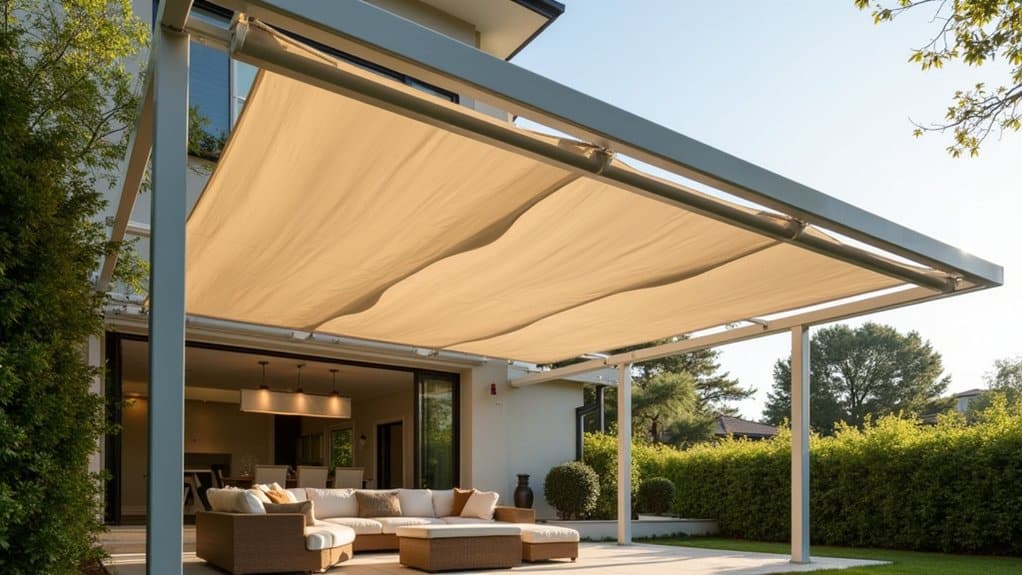
When you’re designing an outdoor living space that balances sunlight with shade, retractable fabric pergola canopies offer the flexibility traditional fixed covers can’t match. You’ll position climbing roses or jasmine along your pergola’s posts while the 300D heavy-duty polyester overhead blocks 95% of UV rays, protecting both you and delicate understory plantings beneath.
Customizable awning configurations span widths from 10 to 24 feet, letting you define distinct zones for dining, lounging, or container gardens. Integrated weather sensors automatically adjust your canopy when conditions shift, while Somfy motorized systems respond to your remote’s command. For even greater convenience, you can equip your awning with a Somfy radio-controlled motor io to enable full smart home integration with remote scheduling capabilities.
The fabric’s marine-grade construction withstands winds up to 48 km/h, and yarn-dyed materials maintain their color through seasons of sun exposure. Upgraded canopy materials featuring 180g/sq.m polyester construction conform to CPAI-84 safety standards for added peace of mind.
Motorized Aluminum Louvers With Smartphone Control
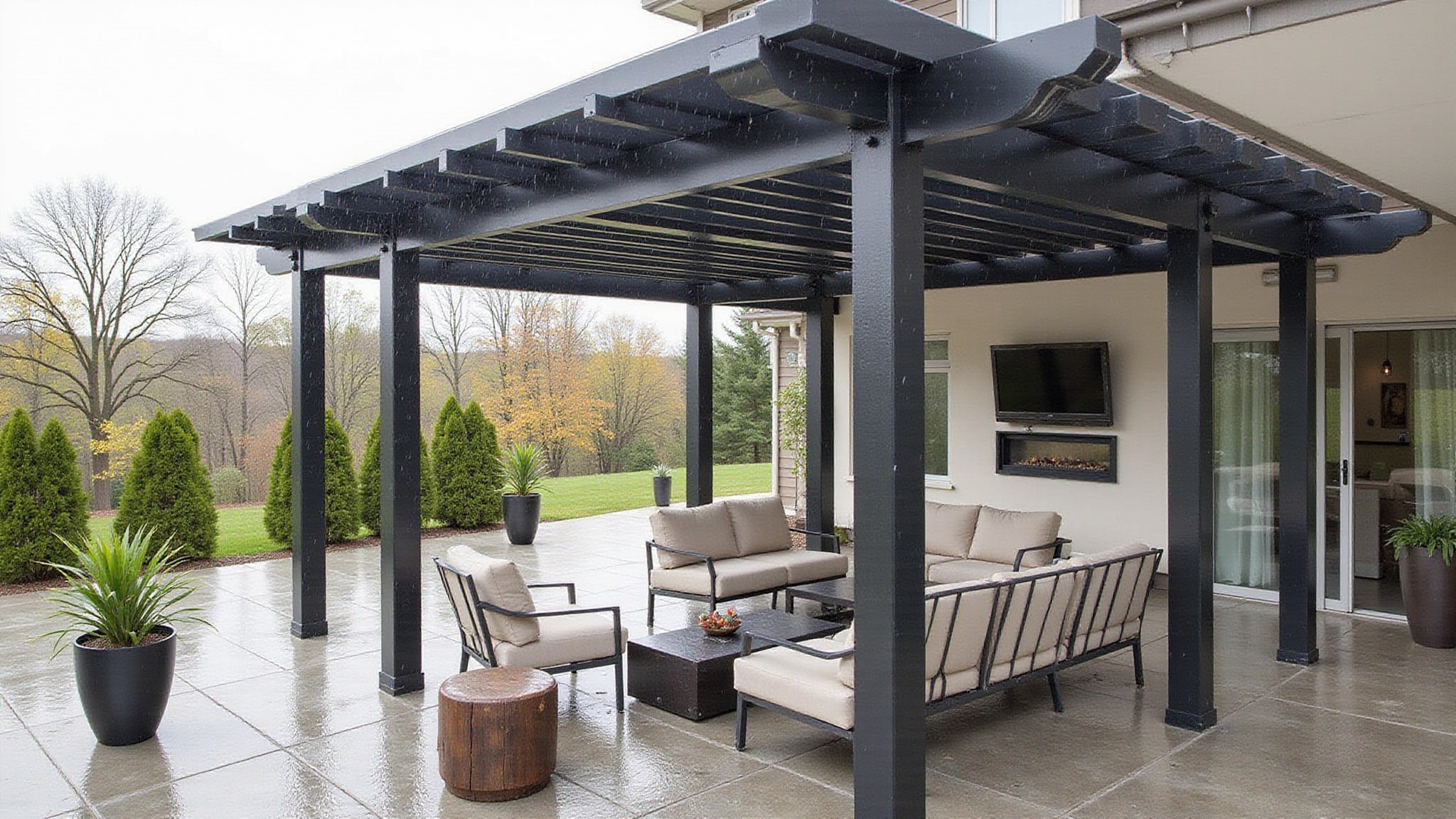
Stepping up from fabric canopies, motorized aluminum louvers transform your pergola into a precision-controlled outdoor room where light and shadow dance at your fingertips. You’ll rotate 6063-T5 extruded aluminum blades up to 110 degrees using your smartphone, directing sunlight onto container gardens or filtering harsh rays from delicate ferns below.
Weather sensing automation protects your outdoor sanctuary when conditions shift, louvers close automatically during rain while built-in gutters channel water away from your seating areas. Noise minimizing motors operate whisper-quiet, preserving the peaceful ambiance you’ve cultivated among climbing vines and hanging planters. The heavy-duty aluminum construction is rated to withstand 120 MPH winds and substantial snow loads, ensuring year-round durability.
The triple-layer powder-coated finish resists rust, complementing your pergola’s aesthetic for years. Integrated LED lighting within louver edges illuminates evening gatherings, casting warm pools of light across textured foliage and architectural plantings beneath your covered retreat. With sizes ranging from 10 x 10 ft up to 13 x 19 ft and a 13 ft length span without center post, these systems accommodate various outdoor spaces while maintaining clean sightlines. A gapless seal between louvers provides year-round protection, keeping your outdoor room comfortable during unexpected weather changes.
Clear Polycarbonate Pergola Roofs for Year-Round Light
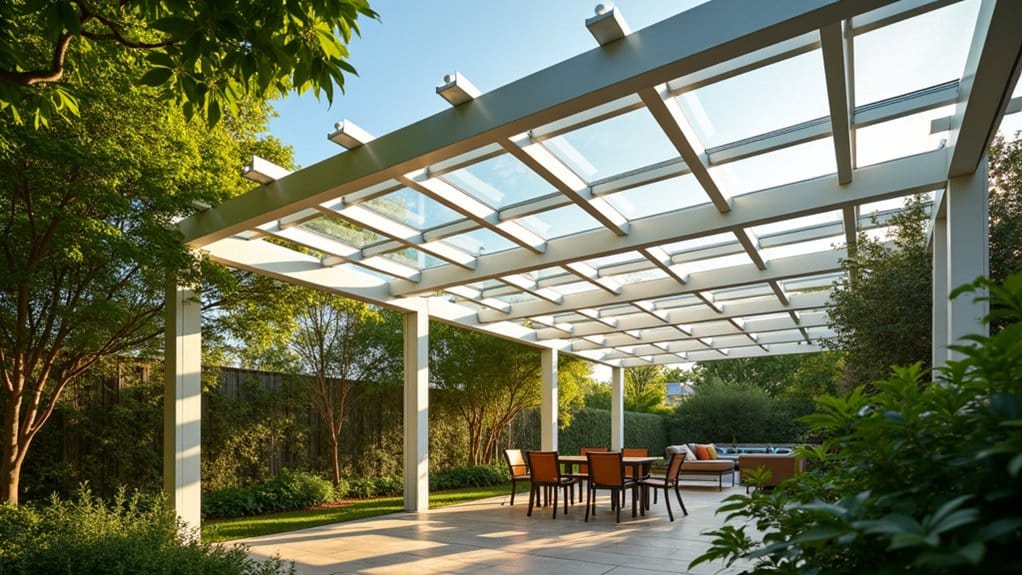
Clear polycarbonate panels let natural light pour through your pergola structure, transmitting up to 90% of visible light while filtering out harmful UV rays that damage both skin and furnishings.
You’ll notice temperatures drop markedly beneath your covered space, up to 20 degrees cooler on scorching summer days. This creates ideal growing conditions for shade-loving plants like ferns, hostas, and impatiens arranged in strategic clusters below.
The material’s customizable light filtration comes through clear, tinted, or opal finishes, letting you control brightness and privacy levels. Your climbing vines and hanging baskets thrive under diffused illumination that prevents leaf scorch. Since polycarbonate is thermoplastic in nature, it can be bent hot or cold without breaking to create curved or custom-shaped roof designs.
Low maintenance cleaning requires only occasional soapy water to remove debris. The shatterproof, impact-resistant panels withstand hail and snow loads while maintaining their clarity for decades without yellowing or cracking. The flexible material can also handle heavy snowfall without cracking under the weight. Despite this impressive durability, the panels are lightweight in construction, reducing structural burden on your pergola frame and simplifying the installation process.
Living Pergola Covers With Climbing Vines and Plants
Living pergola covers transform bare wooden or metal frameworks into lush overhead gardens where climbing vines weave through supports to create natural shade canopies. You’ll benefit from jasmine’s fragrant blooms, wisteria’s cascading purple clusters, or grape vines’ dense foliage that spans 15-20 feet annually. These climbing plants also reduce temperatures underneath by blocking direct sunlight, creating a cooler retreat during hot summer days.
Your native plant selection directly impacts success, regional vines resist pests, adapt to local soil conditions, and support biodiversity by attracting birds and butterflies. Honeysuckle fills pergola spaces within two growing seasons while producing berries that feed wildlife. Climbing roses offer repeat blooming throughout the season while growing 8-12 feet tall, making them ideal for standard pergola structures. Integrating these climbing plants enhances the natural beauty of your pergola while adding visual interest and structure to your yard.
Seasonal maintenance requirements include pruning to control shape, removing dead growth, and preventing excessive weight on your structure. You’ll want to train vines along trellises or horizontal wires, ensuring good air circulation to prevent powdery mildew. Plant in spring or fall for ideal establishment and year-round coverage.
Traditional Wood Pergolas With Shingled Roof Structures
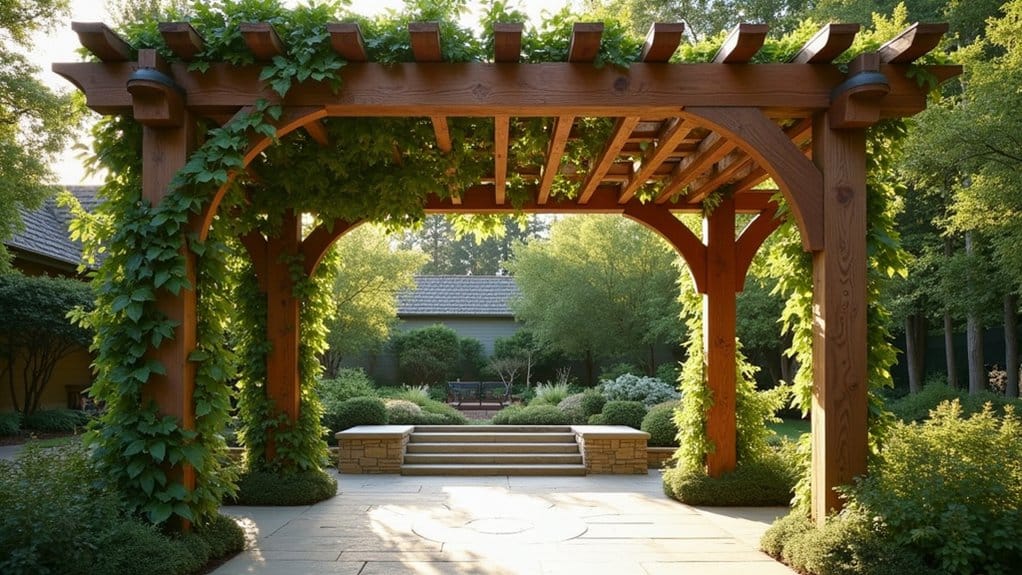
When you’re seeking a permanent shade solution that blends rustic charm with reliable weather protection, traditional wood pergolas topped with shingled roofs deliver both structural elegance and functional coverage. Cedar and redwood frames support shingled structures that withstand rain, wind, and snow while maintaining visual warmth. Custom stained finishes protect your investment and complement existing home exteriors, while modern wooden beams create clean architectural lines overhead. You can leave cedar unfinished if you prefer a natural gray patina that develops beautifully over time. Wooden pergola roofs require regular maintenance and treatment to ensure long-lasting weather resistance and preserve their natural beauty. The unique mortised joints create connections that virtually eliminate unsightly galvanized brackets and mechanical fasteners for a sleek, polished appearance.
- Cedar framework naturally resists rot and insects, lasting 15, 20 years beneath protective shingles
- Redwood posts anchor your structure with rich color variations that deepen over time
- Mortised joints guarantee stability where beams meet vertical supports
Position your shingled pergola adjacent to garden beds where climbing vines can soften edges. The overhead coverage creates defined outdoor rooms perfect for year-round entertaining.
Frequently Asked Questions
How Much Does a Covered Pergola Typically Cost to Install Professionally?
You’ll typically pay between $1,450 and $15,000+ for professional installation costs, with most homeowners spending around $4,262. Your final price depends heavily on material quality considerations, wood pergolas run $107 to $149 per square foot, while aluminum options range from $2,100 to $6,000. When you’re designing your outdoor retreat, factor in how your covered structure will frame garden views and create inviting shade zones for your favorite plants beneath.
Do Covered Pergolas Require Building Permits in Residential Areas?
Yes, you’ll typically need a building permit for covered pergolas in residential areas. Your local building codes determine specific permit requirements based on size, attachment to your home, and included features like electrical wiring. Pergolas under 100 square feet sometimes qualify for exemptions. Before positioning your structure to frame garden views or create plant-draped outdoor rooms, contact your building department. This guarantees your aesthetically stunning pergola meets setback requirements and enhances your landscape legally.
How Long Does a Covered Pergola Installation Usually Take to Complete?
Your covered pergola’s construction time typically spans one to three days for basic designs, while complex custom structures may take up to a week. Expert installation moves efficiently once materials arrive and permits clear. You’ll want to position your pergola where climbing vines and hanging plants can flourish beneath the framework. Factor in site preparation, uneven terrain or existing landscaping elements may extend your timeline slightly but create stunning visual results.
Can Covered Pergolas Increase My Home’s Resale Value?
Yes, covered pergolas can boost your home’s resale value markedly. You’ll typically recoup 50-80% of your investment, with quality installations adding 10-20% to perceived property worth. Enhanced outdoor living spaces create increased home appeal that buyers actively seek. Position your pergola to frame garden views and climbing vines, establishing an aesthetically pleasing outdoor room. You’ll see the strongest returns in warm-climate regions where year-round use maximizes your investment.
What Maintenance Schedule Should I Follow for My Covered Pergola?
You’ll want to follow a consistent maintenance schedule that includes periodic cleaning every 6-12 months using mild detergent and soft brushing. Conduct regular inspection each season, checking for loose hardware, cracks, or weather damage around posts and overhead beams. Trim nearby plants to prevent scratching and debris buildup that disrupts your pergola’s visual flow. Apply protective sealant every 1-3 years, ensuring your covered structure remains a stunning focal point in your garden landscape.