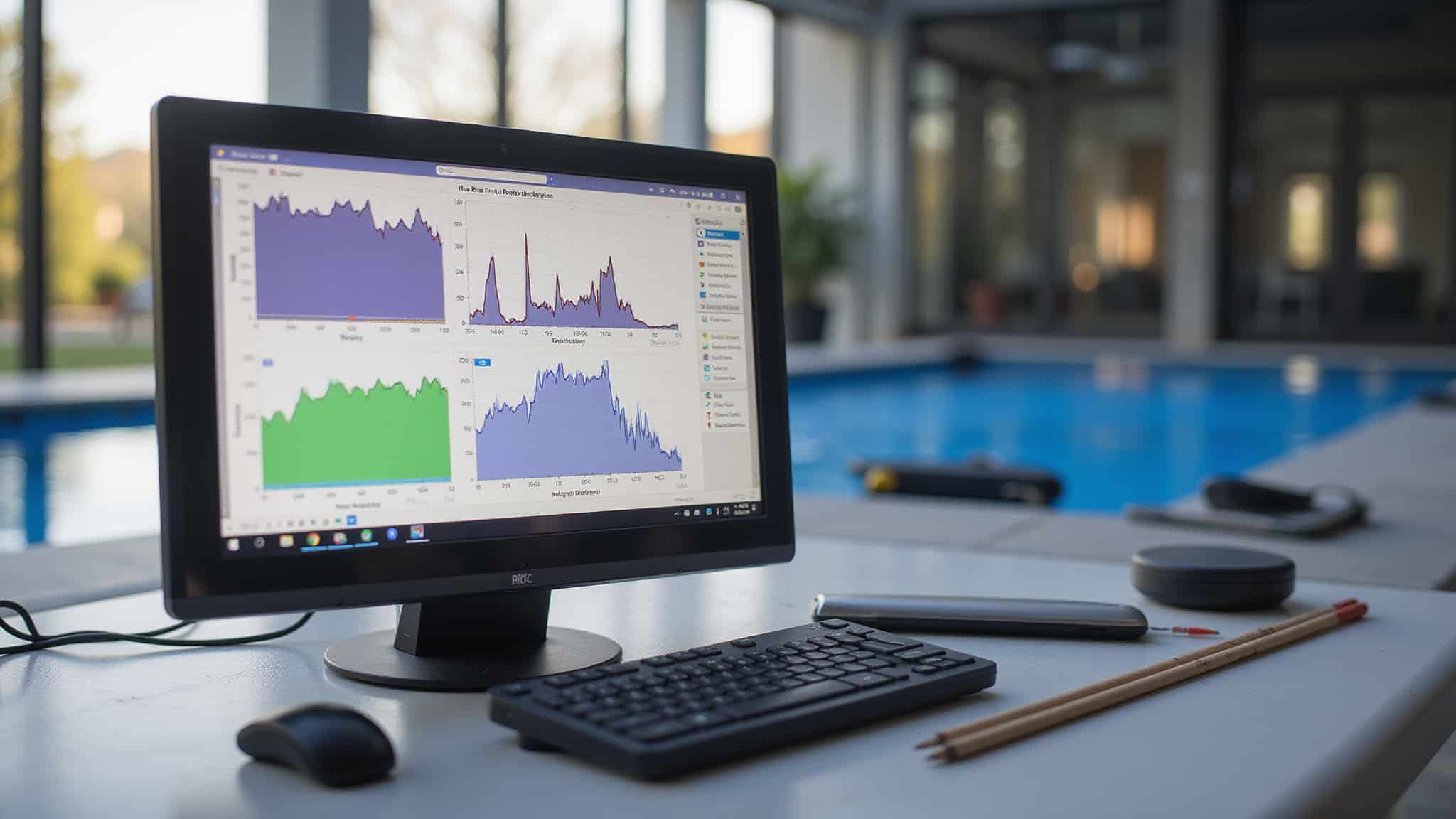
Modern home weather stations offer precision atmospheric monitoring with accuracy ratings up to 98%. For ideal results, you’ll need a system that combines high-quality sensors, proper installation protocols, and smart connectivity features. Top models range from the budget-friendly Ambient Weather WH31E ($25.49) to professional-grade KestrelMet 6000 AG ($999.00). Your perfect choice depends on measuring parameters, durability requirements, and integration needs. Further analysis will reveal the best configuration for your specific monitoring objectives.
Key Features to Consider When Choosing a Weather Station
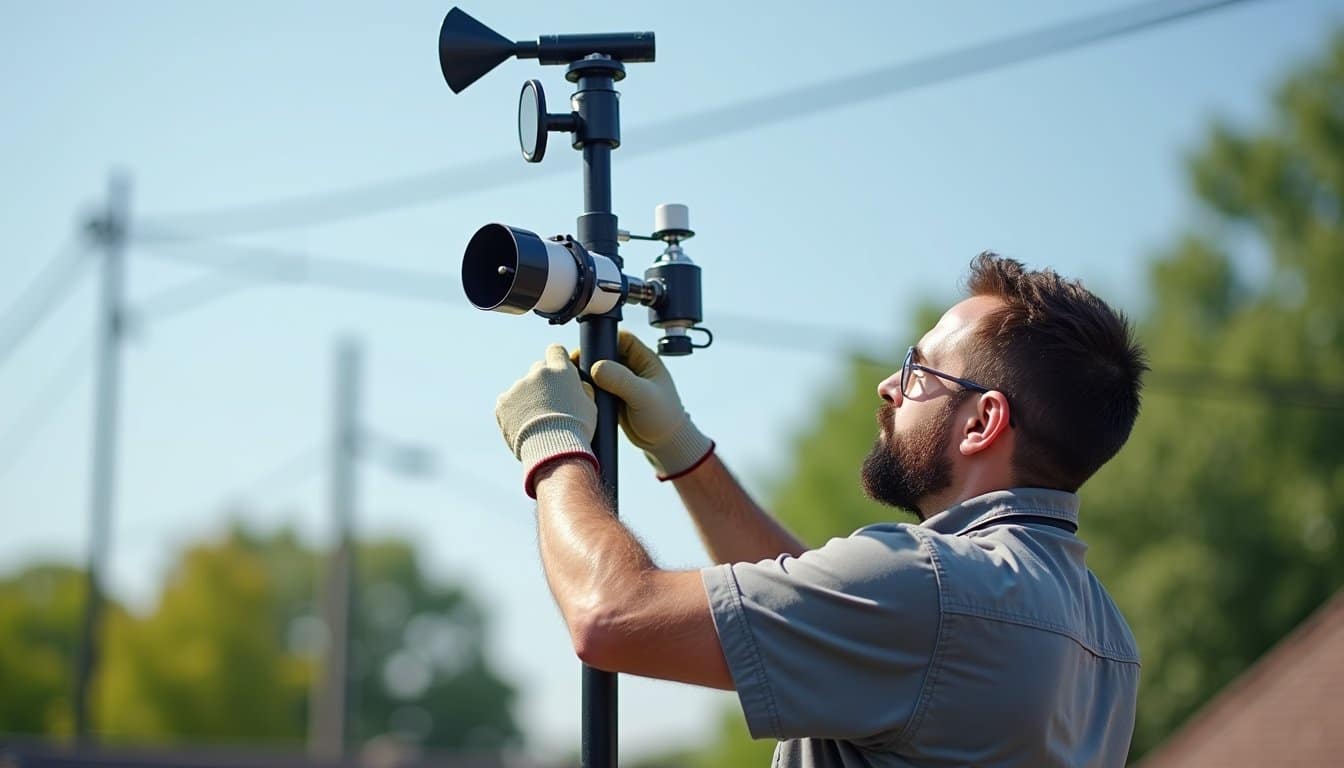
Four essential features stand out when evaluating a home weather station for ideal performance. The quality and quantity of sensors determine measurement accuracy, with premium stations offering multiple parameters including temperature, humidity, wind speed, and precipitation. You’ll want to assess the installation process, as complex setups can lead to calibration errors and compromised data collection.
Connectivity capabilities are pivotal for modern weather stations. WiFi-enabled models let you access real-time data remotely and integrate with weather platforms like Weather Underground. You’ll benefit from automated data logging and community sharing features.
The station’s durability ratings indicate its resilience against harsh weather conditions. Look for sturdy construction materials, UV resistance, and waterproof ratings. These specifications guarantee your weather station maintains accuracy and reliability throughout extended outdoor exposure.
Top Weather Station Models and Their Performance
While budget-conscious consumers can start with basic models like the Ambient Weather WH31E sensor at $25.49, the market offers increasingly sophisticated options across price tiers. Your selection depends on specific monitoring requirements and environmental parameters.
- The Kestrel DROP D2 delivers precision temperature and humidity logging at $109.00, ideal for targeted microclimate monitoring
- For soil analysis integration, the Ambient Weather WH31SM moisture sensor ($36.54) connects seamlessly with compatible weather stations
- The KestrelMet 6000 AG weather station ($999.00) represents professional-grade agricultural monitoring with extensive data collection
- The Falcon WS-8480 features advanced fan aspiration technology for enhanced accuracy, though currently unavailable
Each model demonstrates distinct capabilities in temperature measurement, data logging, and environmental monitoring, allowing you to match features with your specific weather observation needs.
Understanding Weather Station Accuracy and Reliability
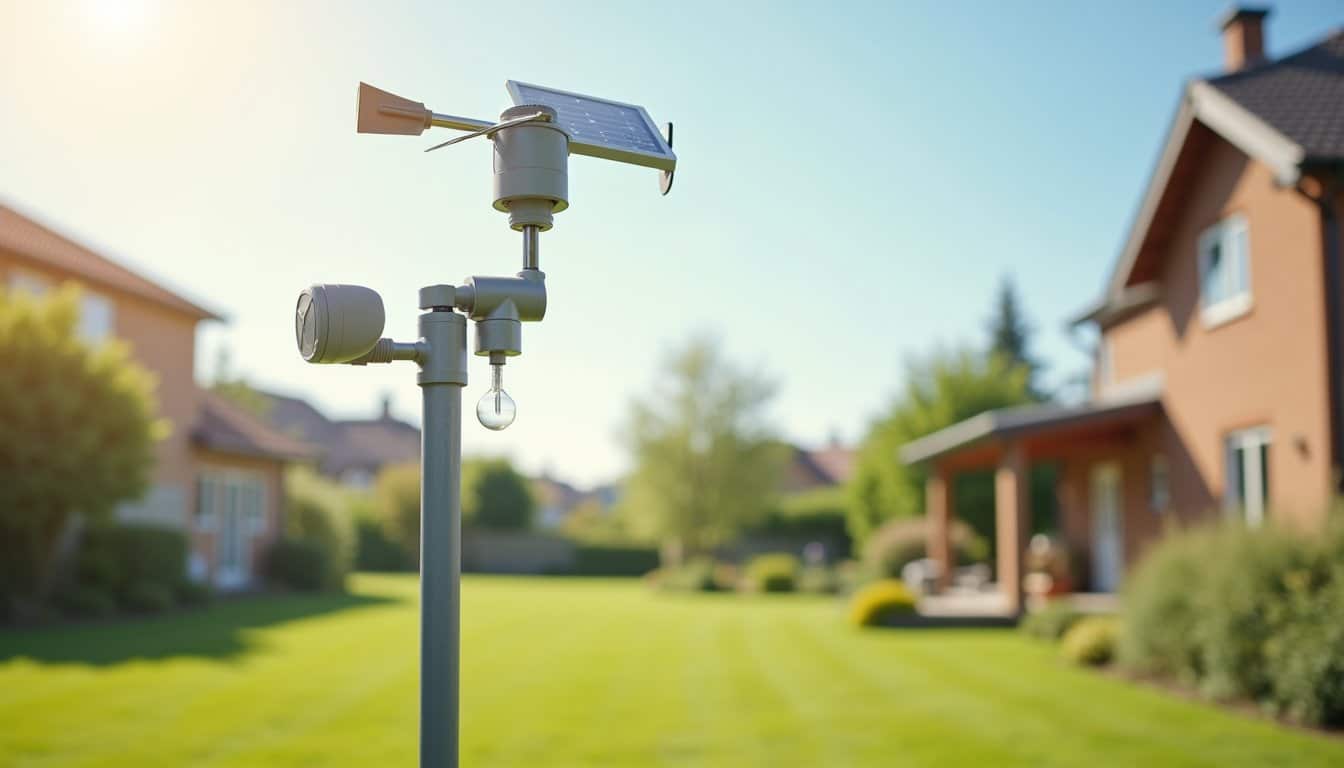
When evaluating weather station performance, sensor accuracy and reliability serve as fundamental metrics that determine data quality and operational consistency. You’ll find that professional-grade stations achieve accuracy ratings of up to 8/10, exemplified by models like the Davis Instruments Vantage Pro2.
Your station’s reliability depends heavily on proper sensor placement and the integration of advanced technologies. Modern integrated sensor suites incorporate sonic anemometers and haptic rain gauges, reducing maintenance needs while improving measurement precision. The durability of these components, particularly with respect to material quality, directly impacts long-term performance.
To optimize your weather station’s accuracy, you’ll need to focus on both the technological aspects and physical positioning of sensors. High-quality stations utilize sturdy materials and sophisticated measurement systems to guarantee consistent, reliable data collection.
Installation and Placement Guidelines for Optimal Results
Successful installation of a home weather station demands precise sensor placement and strategic positioning to guarantee data integrity. Your attention to proper mounting locations will greatly impact measurement accuracy and overall system performance.
Position your outdoor sensor suite 4-6 feet above ground level in an unobstructed area, ensuring the temperature and humidity sensors remain protected by radiation shields to prevent solar interference. Mount the rain gauge in a clear zone, maintaining distance from trees and structures that could impede precipitation collection. Install the anemometer at a minimum height of 10 feet, aligning the sensor suite to true north for accurate wind direction data. Level all components carefully and perform regular maintenance, including cleaning the rain gauge and verifying sensor alignment.
Follow these sensor placement guidelines to achieve laboratory-grade meteorological measurements from your home weather station setup.
Smart Home Integration and Data Connectivity Options
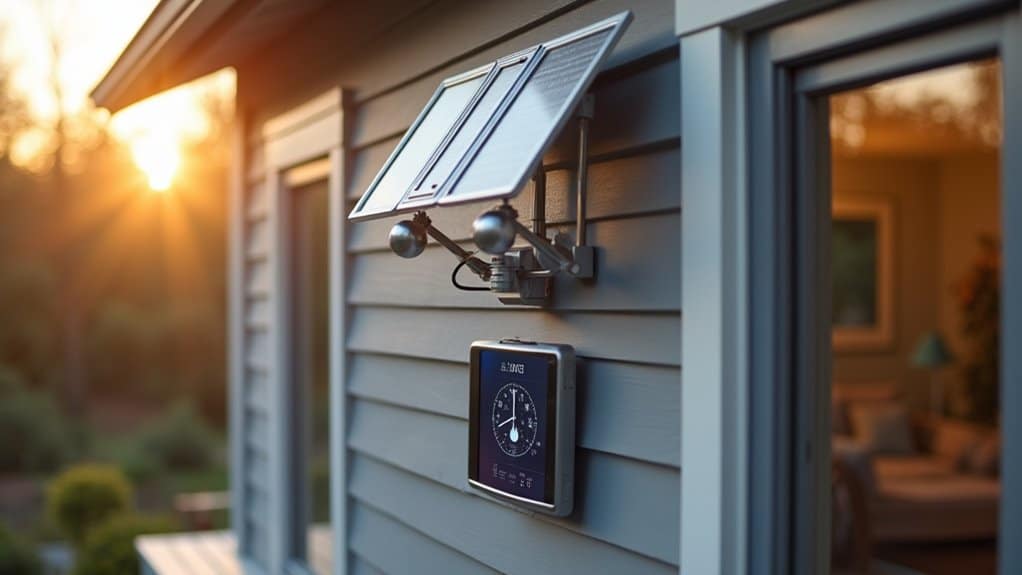
Modern home weather stations utilize advanced IoT connectivity protocols to seamlessly integrate with popular smart home ecosystems. You’ll find extensive compatibility with Amazon Alexa, Google Assistant, and Apple HomeKit, enabling voice control and automated responses to weather conditions.
Your weather station’s Wi-Fi, Bluetooth, or cellular connectivity provides real-time data access through dedicated mobile apps and web interfaces. Many models include built-in bridges that establish direct internet connections, eliminating the need for additional hardware. You can share your station’s data with Weather Underground’s network, contributing to broader weather analysis and forecasting.
The data export capabilities let you analyze measurements in multiple formats, enhancing integration potential with your existing IoT infrastructure. This connectivity transforms your weather station into a sophisticated component of your smart home automation system.
Weather Station Price Points and Value Analysis
After considering connectivity options, the next key factor in selecting a home weather station is understanding the price-to-performance ratio across different market segments. Weather stations occupy distinct price points that correlate with measurement precision and feature sophistication.
- Entry-level stations ($25-$100): Basic temperature and humidity monitoring with the ThermoPro TP62 offering reliable accuracy for fundamental data collection
- Mid-range options ($200-$300): Enhanced value proposition through Ambient Weather WS-2000, delivering ideal sensor arrays and smart integration capabilities
- Professional grade ($1,000+): Davis Vantage Pro2 provides laboratory-level precision, extensive data logging, and advanced meteorological measurements
- Value analysis indicates prime performance-to-cost ratio in mid-tier segment, where you’ll find sufficient accuracy and features for most home weather monitoring applications without excessive investment in professional-grade capabilities
Expert Tips for Weather Station Maintenance and Longevity
While ideal performance of a home weather station depends on precise measurements, proper maintenance protocols are essential for sustaining long-term accuracy and reliability. You’ll need to implement regular sensor cleaning, calibration checks, and strategic positioning to optimize data accuracy.
| Maintenance Task | Frequency | Critical Impact |
|---|---|---|
| Sensor Cleaning | Monthly | Data Precision |
| Calibration | Annually | Measurement Accuracy |
| Battery Replacement | 1-2 Years | Continuous Operation |
| Position Assessment | Quarterly | Environmental Interference |
To extend your weather station’s lifespan, establish a consistent maintenance schedule. Clean sensors routinely to prevent debris accumulation, perform annual temperature and humidity calibrations, and secure all components against adverse weather conditions. Don’t forget to monitor battery levels in wireless units and adjust sensor positions to minimize interference from nearby structures or vegetation growth.
Frequently Asked Questions
What Is the Most Accurate Weather Forecast Station?
The Davis Instruments Vantage Pro2 stands as your most accurate weather station due to its superior sensor precision and exceptional data reliability. You’ll get research-grade measurements across all environmental factors, with sensors calibrated to professional standards. Its advanced suite delivers accuracy within ±1% for most measurements, surpassing consumer-grade alternatives. The station’s radiation-shielded temperature sensor and high-resolution barometric monitoring guarantee you receive laboratory-level weather data for your location.
Is Davis the Best Weather Station?
You’ll find that Davis weather stations consistently rank among the industry’s top performers due to their exceptional reliability and precision-engineered components. Their weather station performance stands out with accuracy ratings that meet WMO standards, while their durability is proven through extensive testing in extreme conditions. Though they’re not the only high-quality option available, Davis weather station reliability is well-documented through decades of professional use in meteorological applications.
How Do I Choose a Home Weather Station?
When selecting a home weather station, you’ll need to evaluate several key factors. Start by determining your budget, as prices range from $100 to $1,000+ for professional-grade units. Consider placement options carefully you’ll need unobstructed exposure for wind measurements and proper radiation shielding for temperature sensors. Data accuracy is pivotal, so look for sensors with high precision ratings and regular calibration capabilities. Check transmission range and wireless connectivity features that match your property’s layout.
How Long Do Home Weather Stations Last?
You’ll typically get 5-10 years from a well-maintained home weather station, though outdoor sensors may need replacement after 3-5 years. Battery life varies by model, but solar-powered units offer extended operation. Regular maintenance requirements include cleaning sensors, checking calibration needs every 6-12 months, and inspecting for wear. Your station’s longevity depends on environmental conditions, installation quality, and how diligently you perform preventive maintenance tasks.