
To optimize your outdoor WiFi coverage in 2025, you’ll need a weather-resistant mesh system like NETGEAR Orbi Outdoor or TP-Link Omada with IP65 rating. Position satellite units 30-50 feet apart with clear line-of-sight to your main router, aiming for -65dBm signal strength minimum. Implement ethernet backhaul connections between units and shield components using climate-appropriate enclosures. Your complete yard network solution depends on strategic placement, proper weatherproofing, and systematic signal optimization.
Understanding the Essentials of Outdoor WiFi Coverage

As the demand for seamless connectivity extends beyond indoor spaces, understanding outdoor WiFi coverage fundamentals becomes essential for establishing reliable wireless networks. Your home’s internet signal naturally weakens as it travels through walls and across outdoor distances, requiring strategic solutions to maintain connectivity in your yard.
To optimize your outdoor network coverage, you’ll need to evaluate your current WiFi range and identify dead zones where signals deteriorate. Mesh systems offer an extensive solution by creating a unified network through multiple access points, eliminating the limitations of traditional single-router setups. Unlike basic WiFi extenders, mesh technology provides seamless handoffs between nodes, ensuring consistent connectivity as you move through outdoor spaces. Consider factors like weather resistance and placement when implementing outdoor wireless solutions to boost signal strength and reliability.
Top-Rated Outdoor WiFi Extenders and Their Features
Several industry-leading outdoor WiFi extenders offer distinct features to address specific connectivity needs and environmental challenges. You’ll find diverse weatherproof enclosure designs and performance capabilities across top models that extends WiFi coverage effectively to outdoor spaces.
| Model | Key Feature | Coverage |
|---|---|---|
| NETGEAR Orbi | Tri-band mesh WiFi systems | 2,500 sq ft |
| TP-Link Omada | IP65 weatherproof rating | Standard range |
| UniFi AC Mesh | Scalable networking | Customizable |
For wide coverage needs, the NETGEAR Orbi delivers reliable performance with weather-resistant construction, while the TP-Link Omada offers easy installation and cost-effective deployment. The Ubiquiti UniFi AC Mesh provides advanced mesh networking capabilities, though it requires more technical expertise. Each wireless extender features specific weatherproofing standards, from IP55 to IP65, ensuring durability in multiple outdoor conditions.
Setting Up Your Outdoor WiFi Network for Maximum Performance

To enhance your outdoor WiFi performance, you’ll need to position satellite units with clear line-of-sight to your main router while maintaining suitable spacing of 30-50 feet between devices. Configure your network’s transmit power settings and channel selection to minimize interference, ensuring each satellite achieves at least -65dBm signal strength for reliable connectivity. You’ll also need to protect outdoor components using weatherproof enclosures rated for your climate zone, with proper ventilation and sealed cable entry points to prevent moisture intrusion.
Strategic Satellite Placement Guide
When establishing an outdoor WiFi network, proper satellite placement becomes the cornerstone of ideal performance. Start by conducting a thorough site survey to identify optimal locations for your best outdoor WiFi extender units. You’ll want to position satellites near windows or walls facing your yard, guaranteeing they’re 30-40 feet apart to create a seamless mesh network.
To eliminate dead zones, implement ethernet backhaul connections between your satellites and main router. This approach delivers superior throughput compared to wireless mesh systems. Monitor signal strength at the yard’s farthest points, aiming for -67 dBm or better for reliable connectivity. Consider potential signal interference sources like metal structures or dense foliage when mapping out your strategic satellite placement. This systematic approach ensures complete yard coverage and maintains consistent network performance throughout your outdoor space.
Optimize Signal Strength Settings
Building upon your satellite placement strategy, optimizing signal strength settings allows your outdoor WiFi network’s full potential. You’ll need to configure your WiFi routers for greatest wireless connectivity while accounting for weather conditions that can impact signal quality.
| Setting | Impact | Optimization |
|---|---|---|
| Power Output | WiFi Coverage | Increase for outdoor zones |
| Frequency Band | WiFi Speeds | 5GHz for speed, 2.4GHz for range |
| Security | Network Protection | Enable WPA2 encryption |
To achieve reliable WiFi, enable beamforming and MU-MIMO features on your mesh network devices. These technologies optimize wireless signal distribution and boost internet speeds across your outdoor space. For ideal performance, your equipment supports WiFi 6, which handles multiple outdoor connections more efficiently. Adjust antenna orientation perpendicular to your target coverage area to maximize signal penetration and maintain consistent performance throughout your yard.
Weather-Proofing Network Components
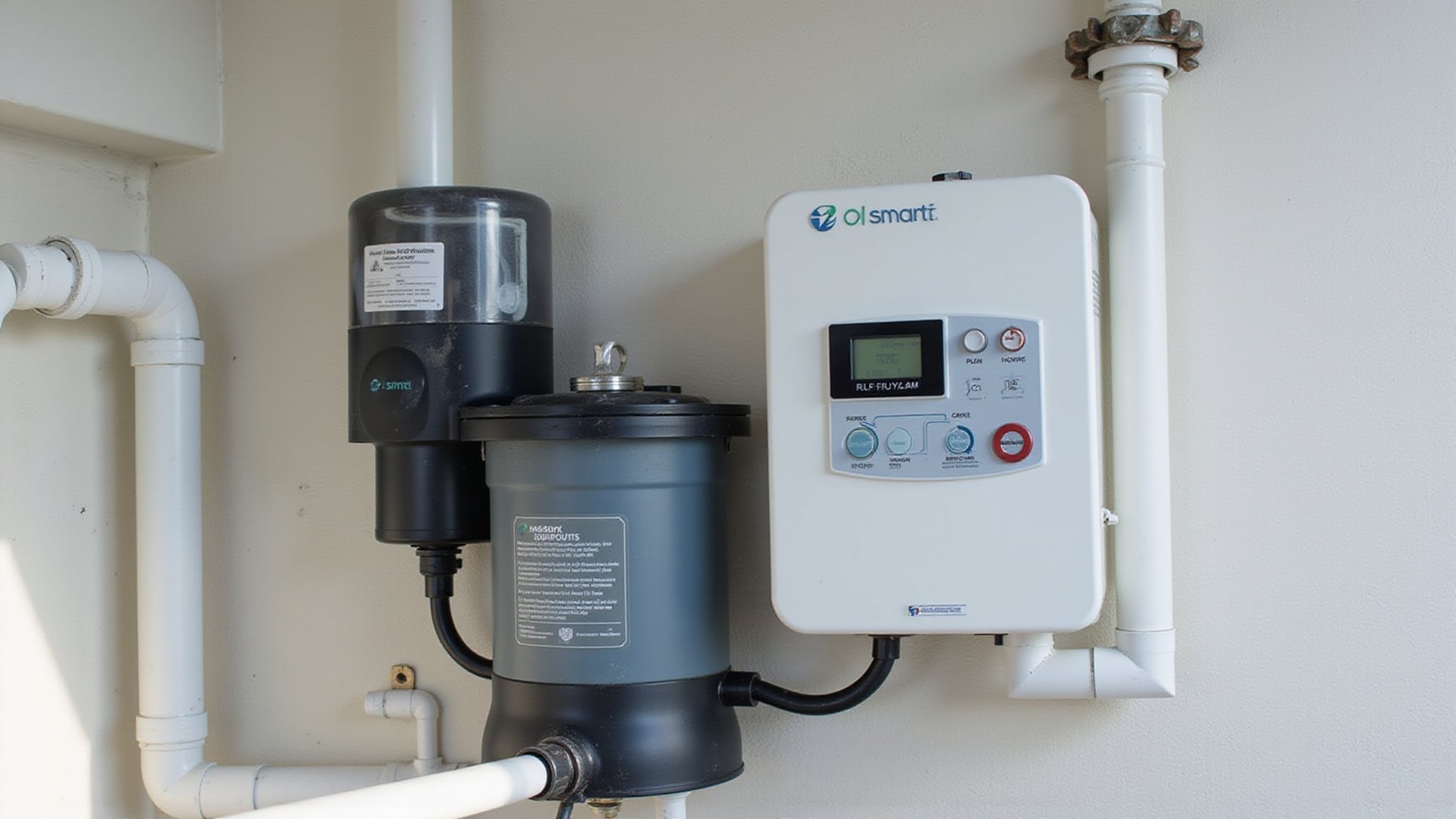
Proper weather-proofing of network components forms the foundation of a reliable outdoor WiFi system. When extending Wi-Fi coverage to your yard, you’ll need IP65 waterproof enclosures to protect equipment from diverse weather conditions while eliminating dead spots. Installing surge protectors and lightning arrestors safeguards your network infrastructure against power fluctuations and electrical storms.
- Mount your access points in UV-resistant enclosures for outdoor placement, ensuring stable and reliable performance during prolonged sun exposure
- Install temperature control systems (heaters and fans) within your ethernet cable housing to maintain ideal operating conditions in extreme weather
- Position equipment strategically under eaves or protected areas while maintaining clear signal paths to maximize coverage and minimize weather exposure
Your outdoor network’s longevity depends on these critical weather-proofing measures.
Weather-Resistant Solutions for Year-Round Connectivity
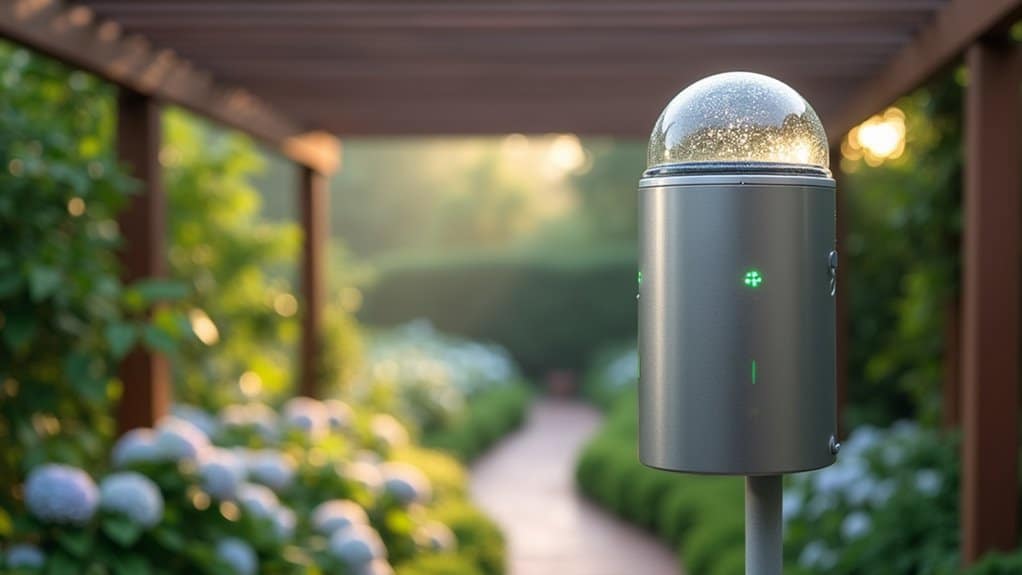
To maintain reliable outdoor WiFi connectivity throughout the year, weather-resistant access points and mesh systems have become essential components of modern network infrastructure.
You’ll find sturdy solutions like the NETGEAR Orbi Outdoor, which delivers tri-band coverage across 2,500 square feet, and the TP-Link Omada EAP225-Outdoor with its IP65 weatherproof design for dependable performance. The Ubiquiti UniFi AC Mesh provides scalable deployment options, while the Linksys RE7000 Max-Stream AC1900+ guarantees seamless coverage with MU-MIMO capabilities. For extensive properties, the EnGenius ENH202’s IP55-rated design offers long-range connectivity. Each system’s weatherproof construction safeguards against environmental elements, maintaining consistent outdoor connectivity regardless of conditions. These solutions integrate seamlessly with existing networks, providing year-round performance for your outdoor spaces.
Advanced Security Measures for Outdoor Networks
To secure your outdoor WiFi network, you’ll need to implement multiple layers of encryption protocols, including WPA3 and VPN tunneling, which work together to create an impenetrable data transmission shield. Your weather-resistant security hardware must include tamper-proof enclosures, protected cable connections, and strategically positioned access points that maintain ideal signal strength while minimizing exposure to physical threats. Network monitoring systems should continuously scan for vulnerabilities, log suspicious activities, and automatically alert you to potential security breaches through real-time threat detection algorithms.
Multi-Layer Encryption Protocols
Multiple layers of encryption protocols form the backbone of secure outdoor WiFi deployments, with WPA3-Enterprise and 802.1X authentication serving as primary defense mechanisms. You’ll need to implement steadfast authentication methods alongside Advanced Encryption Standard (AES) with 256-bit keys to guarantee maximum protection against potential threats.
- Deploy WPA3-Enterprise with multi-layer encryption to protect against brute-force attacks and maintain forward secrecy for your outdoor network
- Enable wireless intrusion prevention systems and rogue access point detection to automatically identify and block unauthorized connection attempts
- Implement client isolation, MAC address filtering, and user access control lists to create segmented security zones that prevent lateral movement between devices
These protocols work together to create an impenetrable security architecture that safeguards your outdoor WiFi infrastructure against sophisticated cyber threats.
Weather-Resistant Security Hardware
When deploying outdoor WiFi security systems, weather-resistant hardware forms your initial line of physical defense against environmental threats. Your IP67-rated enclosures will protect critical network components from water damage, dust infiltration, and extreme temperatures.
| Component | Security Feature | Environmental Protection |
|---|---|---|
| Cameras | Motion Detection | Weather-Resistant Shell |
| Lighting | Smart Integration | Temperature Control |
| Gateway | VPN Support | IP67-Rated Casing |
You’ll need to integrate secure wireless protocols with physical safeguards for thorough protection. Install motion-activated security cameras with night vision capabilities and connect them to your smart lighting system. This integration enables automated responses to potential threats while maintaining constant surveillance. Through centralized management, you can remotely monitor and control your entire outdoor network via a mobile app, ensuring your perimeter remains secure regardless of weather conditions.
Network Monitoring Systems
Network monitoring systems continuously analyze your outdoor wireless infrastructure through sophisticated real-time detection protocols. Through advanced anomaly detection and automated threat response capabilities, you’ll maintain strong network security while guaranteeing ideal performance of your outdoor WiFi setup.
Key monitoring features include:
- Real-time analytics that instantly identify and mitigate potential security threats
- Centralized monitoring dashboards providing extensive infrastructure visibility across your entire outdoor network
- Automated compliance documentation and security audits that generate detailed reports for regulatory requirements
Your network’s performance monitoring is streamlined through integrated threat mitigation protocols that automatically isolate compromised devices and reconfigure network parameters. This systematic approach ensures your outdoor WiFi remains secure while maintaining optimal connectivity and throughput levels for all connected devices.
Optimizing Range and Signal Strength Beyond Your Walls
Three key challenges impede outdoor Wi-Fi performance: physical barriers, signal degradation, and limited router range. To extend your Wi-Fi beyond these obstacles, you’ll need a versatile Wi-Fi solution that’s specifically designed for outdoor coverage.
Implementing a mesh system like NETGEAR Orbi can dramatically improve your WiFi range. By strategically positioning mesh router satellites near windows or exterior walls, you’ll create a sturdy network that maintains high-speed internet throughout your property. These access point modes enable devices simultaneously without compromising signal strength.
The WiFi signal penetrates outdoor spaces more effectively when you’ve established multiple connection points. Your mesh router system actively manages data traffic between satellites, ensuring consistent performance across your yard. This systematic approach eliminates dead zones and maintains reliable connectivity for all your outdoor activities.
Frequently Asked Questions
What Is the Best Way to Extend Wifi to Back Yard?
You’ll get the best backyard WiFi coverage by implementing a mesh network topology with strategically placed wireless access points. Start by mounting weatherproof equipment housings containing outdoor range extenders near your home. Consider line of sight considerations when positioning directional antenna configurations. For larger yards, deploy solar-powered access points with signal augmenting amplifiers. Use outdoor-rated cabling options to connect multi-hop wireless relays for seamless coverage across your entire outdoor space.
How Do I Extend My Wifi Signal to Another Building 1000 Feet Away?
You’ll need to set up a point-to-point wireless bridge system using outdoor access points with directional wifi transmitters. Mount high-gain antennas on both buildings, ensuring clear line of sight ideal. Configure your wireless bridge settings for maximum throughput and install weatherproof enclosures. For perfect performance, use mesh network expansion or multi-hop wireless relay if there are obstacles. Consider professional installation of long-range antennas and proper repeater placement strategies to guarantee reliable connectivity.
What Is the Best Device to Extend Wifi Range?
For ideal wifi range extension, you’ll want to think about the NETGEAR Orbi Outdoor as your primary outdoor wifi range extender. It’s equipped with a high power wifi router system and weatherproof wifi bridge capabilities, covering up to 2,500 square feet. If you need longer distances, the EnGenius ENH202’s directional wifi antenna can reach up to 2 miles. Both options support wireless mesh network installation and provide industrial wifi solution-grade performance in challenging environments.
How Far Will a Wifi Extender Reach Outside?
You’ll typically get 150-300 feet of outdoor wireless signal strength from a standard WiFi extender, but ideal router placement tips can amplify this range. For improved coverage, you’ll need weatherproof equipment choices and proper outdoor antenna installation. Line of sight considerations are pivotal – obstacles will reduce performance. High-power wireless bridges can reach 1-2 miles, while mesh network configurations offer better coverage than traditional wireless repeater limitations. Performance enhancement strategies depend on your specific setup.