

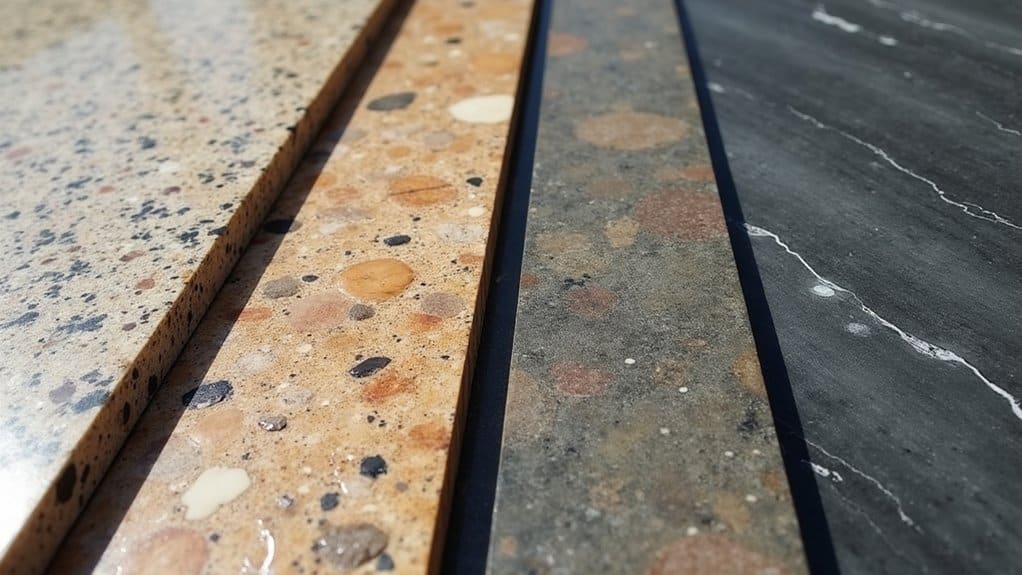
The seven best stone materials for outdoor kitchens in 2026 are granite, quartzite, porcelain, soapstone, limestone, sandstone, and slate. You’ll want materials that withstand UV exposure, temperature swings, and moisture without cracking or fading. Granite and quartzite lead the pack for durability, while soapstone and limestone offer distinctive character that develops over time. Each option brings unique benefits depending on your climate, design style, and maintenance preferences, factors worth exploring before you invest.
Four Factors That Make Stone Right for Outdoor Countertops
When you’re designing an outdoor kitchen that works with your landscape rather than against it, stone countertops offer a natural integration that synthetic materials can’t match.
Weather Resistance
Your countertops face rain, snow, and intense UV exposure daily. Properly sealed granite and quartzite resist moisture penetration while preventing sun-induced fading. Darker stones better withstand UV rays and help hide outdoor debris.
Year Round Durability
Stone withstands falling limbs, hail, and heavy use without chipping or cracking. Quartzite ranks among the hardest natural stones available. Granite’s unique, natural patterns also provide each outdoor kitchen with a distinctive look that synthetic materials cannot replicate.
Heat Tolerance
Place hot pans directly from your grill without scorching. Granite’s volcanic origins give it exceptional thermal stability. Quartzite also demonstrates strong heat resistance, withstanding high temperatures without damage to the surface.
Moisture Resistance Performance
Low-porosity stones like quartzite prevent water absorption that causes freeze-thaw damage. Sealed granite blocks infiltration from spills and precipitation, requiring only periodic resealing to maintain protection throughout every season.
Granite Remains the Most Popular Outdoor Countertop Choice
When you’re designing an outdoor kitchen that needs to perform year after year, granite delivers the durability, design flexibility, and weather resistance you’re looking for. You’ll find options ranging from soft whites to bold blacks that integrate seamlessly with your outdoor living space while standing up to UV exposure, temperature swings, and direct heat from grills. Granite’s proven track record across climates makes it the go-to choice for homeowners who want a countertop surface that works as hard as it looks. For outdoor installations, choosing a leathered or honed finish helps reduce glare and hides wear more effectively than polished surfaces. Beyond aesthetics, granite offers practical advantages including being strong, heat-resistant, and easy to clean, which are essential qualities for any outdoor cooking environment. With dozens of color and movement choices available, you can select a granite that complements everything from modern minimalist designs to rustic outdoor retreats.
Unmatched Durability and Strength
Granite ranks among the hardest natural stones available for countertops, which explains why it’s remained the most popular choice for outdoor kitchens heading into 2026. You’ll find it resists scratches, impacts, and daily wear far better than softer alternatives like marble or soapstone. Granite also offers many color options that allow you to match your outdoor kitchen with various design styles, from sleek modern aesthetics to traditional looks.
When you’re designing your outdoor cooking space, consider how granite handles thermal stress. It withstands heat from grills, hot pans, and temperature swings without cracking or warping. Dark varieties absorb more heat while lighter colors stay cooler under direct sunlight. You can explore granite selections through Stone Warehouse’s live inventory to find the perfect slab for your project.
Innovative sealing techniques now protect granite’s porous surface more effectively, preventing water absorption and staining. With annual resealing, you’ll minimize long term wear patterns and maintain your countertop’s appearance for decades. However, homeowners should note that granite surfaces are still susceptible to scratches and spills without proper care. This combination of natural strength and proper maintenance delivers lasting performance.
Versatile Design Options
Beyond its exceptional strength, granite’s aesthetic versatility keeps it at the forefront of outdoor kitchen design. You’ll find this natural stone in an impressive range of colors and finishes, allowing seamless integration with your outdoor living space’s existing landscape and architectural elements.
When considering material selection for your outdoor kitchen, granite offers pattern customization that complements both traditional and contemporary design schemes. Its natural variations create unique visual interest while maintaining a classic appearance that won’t feel dated. Like other natural stones, granite does require periodic resealing due to its porous nature to maintain optimal performance and appearance.
You can pair granite with sustainable design elements, as its longevity guarantees replacement cycles and environmental impact are minimized. The stone’s UV resistance confirms colors won’t fade under sun exposure, preserving your investment’s aesthetic appeal for years. Whether you’re designing a compact grilling station or an expansive entertainment area, granite adapts to your spatial requirements effortlessly. However, be aware that granite absorbs heat significantly and can become extremely hot when exposed to direct sunlight during warm weather. Granite’s low absorbency also makes it particularly well-suited for withstanding rainy weather conditions without damage.
Weather-Resistant Performance
Three critical factors, heat resistance, UV stability, and freeze-thaw durability, establish granite as the leading countertop material for outdoor kitchens across diverse climates.
You’ll find granite handles direct grill heat and intense summer sun without warping or cracking. Unlike quartz, granite won’t fade under prolonged UV exposure, maintaining its color for years. The natural stone’s unique patterns and deep color variations add timeless sophistication to any outdoor space.
Key performance advantages:
- Heat tolerance, Withstands pizza ovens, hot cookware, and extreme temperature changes without damage
- UV resistance, Resists yellowing and discoloration in high-sun regions like Florida and Michigan
- Freeze-thaw durability, Properly sealed surfaces prevent moisture absorption, protecting against seasonal cracking
Lighter granite varieties stay cooler underfoot during peak sun hours, making them spatially efficient for covered outdoor zones. Annual sealing guarantees your investment performs sustainably across decades. With proper maintenance, granite countertops represent a durable investment that can serve your outdoor kitchen for a decade or more.
Quartzite Offers Granite’s Durability With Marble’s Elegance
When you’re designing an outdoor kitchen that demands both performance and visual impact, quartzite delivers scratch resistance rivaling granite while showcasing marble-like veining that won’t fade under relentless sun exposure. You’ll appreciate its UV-stable surface that maintains luxurious patterns season after season, unlike engineered alternatives that degrade in outdoor conditions. This naturally hypoallergenic stone also creates a cleaner cooking environment, making it an ideal choice for health-conscious outdoor entertaining spaces. Its heat resistant properties make it particularly well-suited for placement near grilling stations where high temperatures are common. Since quartzite is porous, you’ll need to seal it periodically to protect against stains from outdoor cooking spills and weather exposure.
Superior Scratch Resistance
Although quartzite ranks slightly higher than granite on the Mohs Hardness Scale at 7 versus granite’s 6-6.5, scratch resistance tells a more nuanced story for your outdoor kitchen countertops.
While quartzite delivers a smooth aesthetic appeal, granite actually outperforms it in everyday scratch resistance. You’ll find quartzite is resilient to heavy use, yet sharp blades can still produce scratches and dings during direct cutting.
Consider these key scratch resistance factors:
- Granite withstands decades of heavy family use without showing significant wear
- Quartzite surpasses marble in scratch resistance but falls slightly behind granite
- Both materials require cutting boards to maintain their pristine surfaces outdoors
For your outdoor kitchen’s longevity, pair either stone with proper cutting surfaces to preserve your investment’s appearance throughout seasons of entertaining.
UV-Resistant Luxurious Veining
Because quartzite forms under intense geological pressure, it delivers the best of both worlds: granite’s proven durability alongside marble’s sophisticated veining patterns. You’ll appreciate how each slab offers one-of-a-kind veining that creates authentic natural aesthetic appeal without marble’s vulnerability to etching.
What sets quartzite apart for outdoor applications is its UV stability. Your countertops won’t yellow or fade under constant sun exposure, making it ideal for grilling stations and sun-drenched patios. Unlike resin-based alternatives that deteriorate, quartzite maintains its color integrity season after season.
You’ll find this material surprisingly low maintenance, periodic sealing preserves performance while resisting stains, heat, and moisture. For 2026 outdoor kitchens, quartzite represents the spatially-conscious choice: luxurious appearance with sustainable longevity that eliminates frequent replacement needs.
Hypoallergenic Surface Benefits
Quartzite’s non-porous surface creates a naturally hypoallergenic environment that’s essential for outdoor food preparation spaces. You’ll appreciate how this dense stone resists bacterial growth and allergen accumulation, making your cooking area safer for family gatherings.
The material’s sealed surface supports allergy free maintenance while integrating seamlessly with your outdoor living design:
- Bacteria resistance – Non-porous composition prevents microorganisms from penetrating the surface
- Easy sanitization – Simple cleaning removes pollen, dust, and outdoor debris without harsh chemicals
- Mold prevention – Moisture resistance stops fungal growth common in humid outdoor environments
Your maintenance free hypoallergenic countertop works sustainably with surrounding landscape elements. You’re investing in a spatially-conscious solution that protects both your health and your outdoor kitchen’s longevity through changing seasons.
Porcelain Countertops Resist Heat, UV, and Stains in Any Climate
When you’re designing an outdoor kitchen that faces scorching summers, freezing winters, and everything between, porcelain countertops deliver performance that natural stones struggle to match.
Fired at temperatures exceeding 1,000°C, porcelain handles hot pots directly without scorching. Its non-porous surface offers exceptional moisture resistance, blocking bacteria and preventing stains from wine, oil, or condiments. You’ll appreciate the low maintenance requirements, no sealing needed, just mild soap and water.
UV rays won’t fade your countertops, even under constant sun exposure. The material’s dense composition resists freeze-thaw cycles without cracking, making it 30% stronger than granite under stress.
For spatially-conscious designs, large porcelain slabs minimize seams while mimicking marble or granite aesthetics. You’re investing in sustainable durability that performs year-round without sacrificing contemporary style.
Soapstone Countertops Develop Character While Resisting Moisture
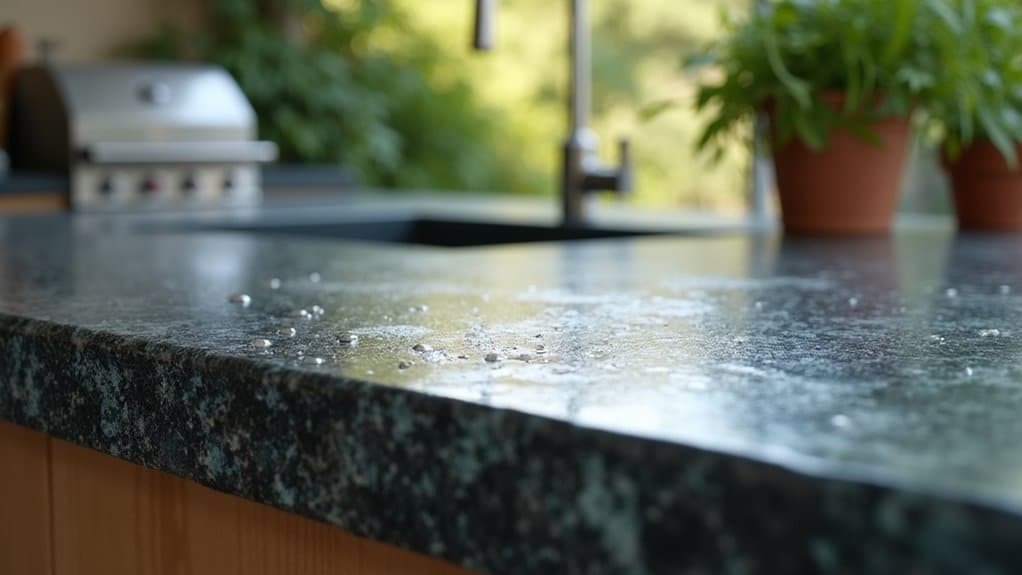
Soapstone offers a different path to outdoor kitchen excellence, one where your countertops grow more beautiful with age rather than simply resisting the elements.
This non-porous stone delivers exceptional weather endurance through freeze-thaw cycles while developing distinctive patina development that deepens your outdoor space’s character over time.
Why soapstone excels outdoors:
- Moisture immunity, Standing water won’t absorb, eliminating mold and bacteria breeding grounds near pools or sinks
- Heat tolerance, Place hot pans directly on the surface without damage
- Zero sealing required, Occasional mineral oil applications maintain appearance without specialized products
Your soapstone won’t fade under constant UV exposure, and acidic spills from wine or citrus won’t damage the surface. Nineteenth-century soapstone installations remain operational today, proving this material’s lasting durability.
Limestone Brings Warm Tones to Rustic Outdoor Countertops
Few natural stones match limestone’s ability to anchor your outdoor kitchen within its surrounding landscape while maintaining practical functionality. You’ll discover unique color variations in each slab, ranging from creamy whites to rich yellows that create an inviting ambiance perfect for desert settings.
| Feature | Benefit |
|---|---|
| Heat Resistance | Handles hot cookware safely |
| Weather Durability | Withstands sun, rain, elements |
| Price Range | $25-$70 per square foot |
| Maintenance | Requires periodic sealing |
Limestone’s matte finish and subtle veining support relaxed rustic schemes without overwhelming your space. The natural textural variations add character while blending seamlessly with surrounding hardscapes. You’ll need to seal surfaces periodically due to porosity, but this minimal maintenance preserves your countertops like ancient landmarks through countless outdoor gatherings.
Sandstone Countertops Create a Relaxed, Earthy Aesthetic
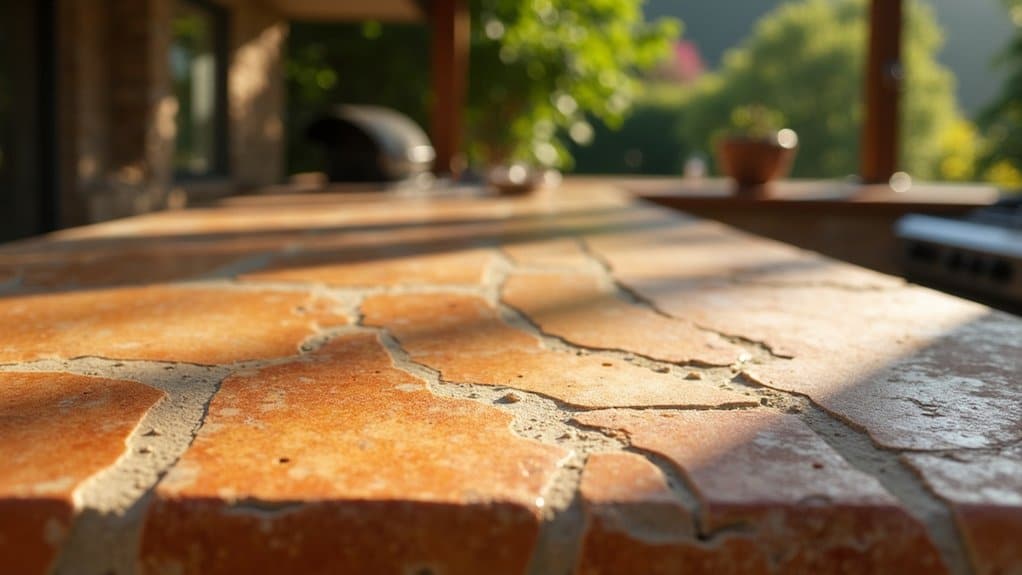
Although limestone offers warmth and durability, sandstone brings its own distinctive character to outdoor kitchen designs with textures that feel genuinely connected to natural landscapes. You’ll appreciate its versatile design appeal, with colors ranging from warm earth tones to medium whites that complement any outdoor setting.
Why sandstone works for your outdoor kitchen:
- High end aesthetic value that remains timeless regardless of housing trends
- Natural durability that withstands heavy use and outdoor elements
- Low maintenance requirements with simple cleaning and proper sealing
Sandstone’s earthy appearance creates a relaxed atmosphere while boosting your property’s resale appeal. Realtors recognize this material’s sophistication, making it a smart investment for long-term home value. You’re choosing functionality and beauty that integrates seamlessly with your landscape’s natural character.
Frequently Asked Questions
How Often Should Outdoor Stone Countertops Be Sealed for Maximum Protection?
You should seal high-porosity stones like marble and limestone every 6 months, while dense materials like granite and slate need resealing every 1-2 years. Seasonal sealing requirements vary based on your climate’s freeze-thaw cycles and UV exposure. Follow proper resealing procedures by performing water-beading tests regularly to assess protection levels. You’ll extend your countertop’s lifespan by using UV-stable sealers and cleaning spills immediately with pH-neutral products.
Which Stone Material Works Best Near Saltwater Pools or Coastal Areas?
Porcelain-sintered stone like Dekton or Neolith works best near saltwater pools or coastal areas. You’ll appreciate its exceptional resistance to weathering from salt air, UV exposure, and humidity without worrying about corrosion. Since it’s non-porous, your maintenance requirements stay minimal, no sealing needed. This sustainable choice integrates seamlessly into your outdoor space while protecting against the harsh coastal elements that quickly degrade other materials.
Can Outdoor Stone Countertops Be Repaired if They Crack or Chip?
Yes, you can repair cracked or chipped outdoor stone countertops effectively. For minor damage, DIY repair techniques using color-matched epoxy kits let you fill small chips and cracks yourself. Deeper structural damage requires professional restoration services, where experts use diamond grinding, fiberglass reinforcement, and specialized sealing to restore your stone’s integrity. After any repair, you’ll want to reseal your countertop to protect against coastal elements and extend its outdoor lifespan sustainably.
What Is the Average Cost Difference Between These Outdoor Countertop Materials?
You’ll find the average cost per square foot varies considerably across outdoor countertop options. In your material cost comparison, ceramic tile offers the most budget-friendly choice at $6, $50, while concrete and granite run $60, $150 installed. Porcelain falls mid-range at $50, $120, and soapstone ranges from $40, $160. Consider your space’s exposure and sustainability needs, durable materials like porcelain minimize future replacements, reducing long-term environmental impact.
How Do Stone Countertops Compare to Concrete for Outdoor Kitchen Durability?
Stone countertops outperform concrete in outdoor kitchen durability. You’ll find granite’s low material porosity prevents moisture absorption, while concrete’s porous nature makes it vulnerable to freeze-thaw cracking. Granite offers superior staining resistance without constant resealing, whereas you’ll need to reseal concrete frequently to protect against acids and grease. For a sustainable, long-lasting outdoor space, granite withstands UV exposure, temperature swings, and daily wear, reducing your replacement needs and maintenance demands over time.