
To protect outdoor wood in 2025, you’ll need to implement a multi-layered defense strategy using advanced nano-particle sealers and hybrid coatings. Apply UV-resistant finishes with photocatalytic technology to combat degradation, while utilizing bio-based preservatives to prevent rot and decay. You should select moisture-blocking treatments that incorporate thermal stress management for dimensional stability. Consider copper-based solutions and pigmented sealers for greatly improved durability. Modern protection techniques offer far more sophisticated options than traditional methods.
Understanding Modern Wood Protection Challenges
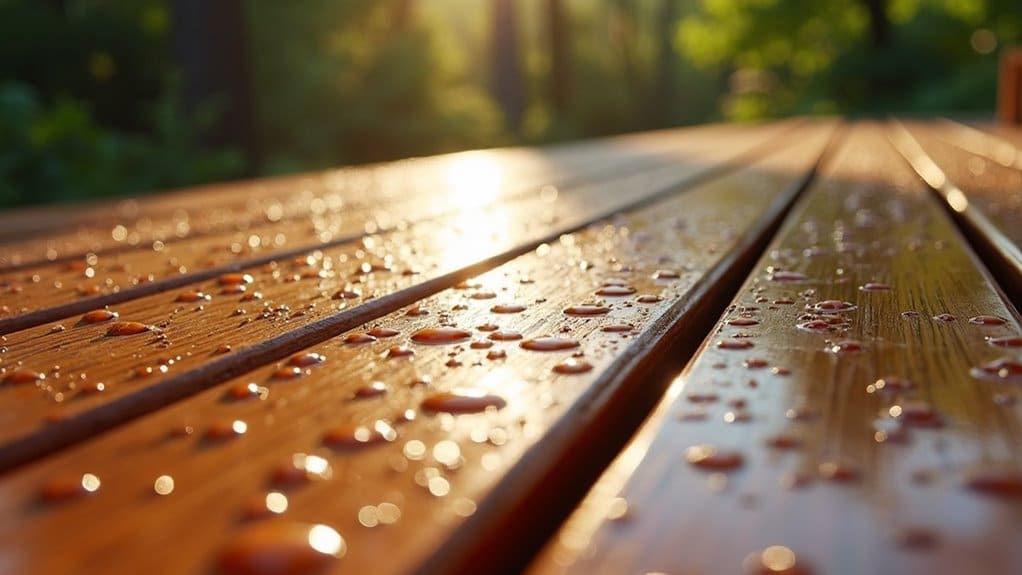
While wood remains a timeless building material for outdoor projects, today’s environmental conditions pose significant preservation challenges that you’ll need to address systematically. Your outdoor wood faces a triple threat: moisture infiltration that triggers swelling and rot, UV radiation that degrades the natural grain structure, and temperature fluctuations that cause dimensional instability.
To protect against these elements, you’ll need to select appropriate sealers and finishes based on your specific application. Modern wood protection requires an exhaustive approach – penetrating finishes like oil-based sealers provide deep protection while maintaining wood’s natural aesthetics, whereas film-forming finishes offer superior water resistance for high-traffic areas. Your success depends on thorough surface preparation and complete coverage, ensuring every wood surface receives adequate protection against water intrusion and UV damage.
Latest Innovations in Wood Sealing Technology
As wood protection technology continues to evolve, cutting-edge innovations have revolutionized how you’ll seal and preserve outdoor wood surfaces. Today’s advanced hybrid coatings blend traditional oil-based durability with water-based efficiency, offering superior protection for your exterior wood and outdoor furniture.
You’ll find breakthrough nano-particle wood sealers that penetrate deeper than conventional stains, delivering unmatched defense against moisture damage and UV deterioration. For eco-conscious protection, bio-based preservatives derived from plant oils provide sturdy barriers against rot and decay. Self-cleaning coatings incorporating photocatalytic technology actively combat mildew, while thermochromic finishes signal when it’s time to reapply protection. These innovations guarantee your outdoor wood surfaces maintain their integrity longer, with reduced maintenance requirements. The latest wood sealer technologies combine durability with environmental responsibility, transforming how you’ll protect your exterior wood investments.
Comparing Traditional vs. Advanced Protection Methods
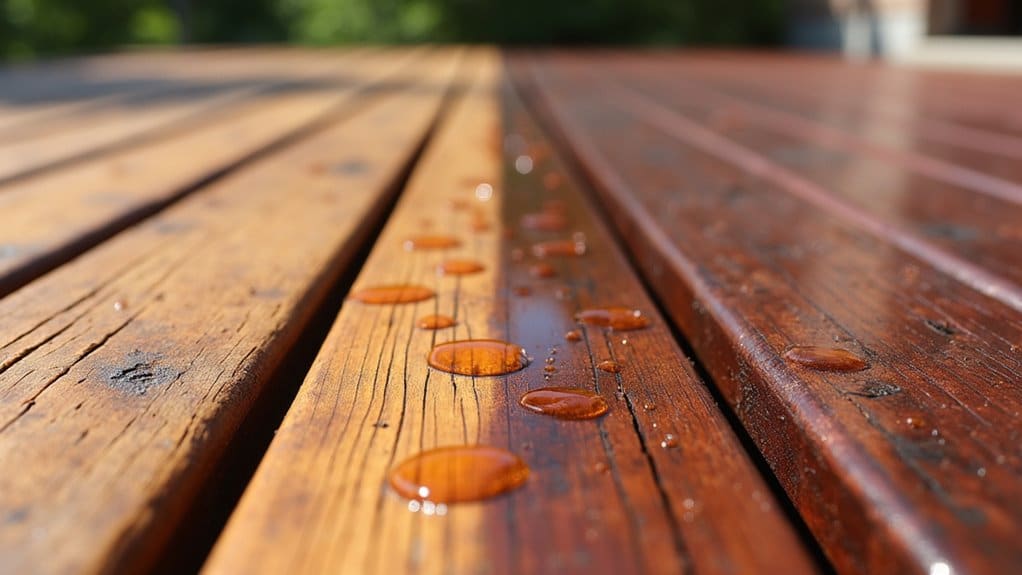
While traditional oil-based finishes and stains remain functional for basic wood protection, you’ll notice they demand frequent maintenance cycles that increase your long-term labor investment. Today’s advanced solutions, including nanotech-bolstered coatings and liquid silicone sealers, offer superior weatherproofing and UV resistance with maintenance intervals extending up to a decade. Your choice between traditional and modern protection methods should factor in the specific performance requirements of your outdoor project, considering that newer technologies typically deliver fortified durability despite higher initial costs.
Traditional Methods Still Work
Although advanced wood protection technologies continue to emerge, traditional finishing methods have maintained their status as reliable defenders of outdoor wood surfaces. You’ll find that time-tested products like teak oil, tung oil, and danish oil effectively penetrate wood fibers, while marine varnish and spar urethane create durable protective barriers against moisture and UV damage.
When you’re selecting between water-based stains and oil-based options, keep in mind that traditional penetrating oils still offer exceptional protection when properly applied to well-prepared surfaces. While these finishes require reapplication every 2-5 years, you can bolster their durability by combining methods – for instance, using a penetrating oil base layer followed by a protective wood stain topcoat. With proper surface preparation and maintenance, these conventional solutions continue to provide reliable long-term protection for your outdoor wood projects.
Modern Solutions Offer Advantages
Modern wood protection has evolved dramatically beyond traditional coatings, offering sophisticated solutions that address the limitations of conventional methods. When you’re looking to keep your picnic table looking great for years, advanced polymer-based treatments provide one thorough solution that enhances the wood’s natural grain while offering superior protection.
Consider these cutting-edge advantages:
- Nanoparticle-enhanced stain and sealer combinations penetrate deeper into wood grain, creating a more durable barrier against UV damage
- Self-healing polymer coatings automatically repair minor surface scratches, extending protection up to 5 years longer than conventional finishes
- Composite-polymer treatments use molecular bonding to create a protective matrix that won’t crack or peel like traditional sealants
These modern solutions considerably reduce maintenance frequency while preserving wood’s aesthetic appeal, making them increasingly popular among contractors and homeowners.
Environmental Factors and Their Impact on Wood Durability
When you’re protecting outdoor wood from environmental stressors, you’ll need to address UV radiation’s destructive impact on lignin through specialized UV-resistant sealants and protective coatings. You’ll find that implementing proper moisture barriers and vapor-permeable finishes helps combat the dimensional instability caused by temperature and humidity fluctuations. To optimize your wood’s longevity, you’ll want to incorporate multi-layer protection systems that address both surface degradation from UV exposure and internal deterioration from moisture penetration.
UV Damage and Prevention
The relentless assault of ultraviolet radiation poses a significant threat to outdoor wood structures and furniture. UV rays penetrate the wood surface, breaking down lignin and compromising its natural beauty. You’ll notice this deterioration initially in softer springwood areas, creating an uneven, weathered appearance that extends beyond mere surface damage.
To maintain the beauty of the wood while ensuring maximum protection in one application, consider these proven strategies:
- Apply copper-based preservatives that provides protection against both UV damage and biological decay
- Use pigmented sealers that act as UV shields while allowing the wood’s texture to show through
- Select high-quality exterior paints that offer both color and protection, creating a sturdy barrier against harmful radiation
These solutions help preserve your wood’s structural integrity while protecting its aesthetic appeal.
Moisture Control Strategies
Since moisture poses one of the most consequential threats to outdoor wood’s durability, understanding its behavior and implementing effective control strategies becomes essential for preservation. As water penetrates into the wood fibers, you’ll notice structural changes that require more frequent maintenance, especially in challenging weather conditions.
| Exposure Level | Impact | Solution |
|---|---|---|
| High Moisture | Takes longer to dry | Improved ventilation |
| Direct Rain | Deep penetration | Waterproofing Wood treatments |
| Combined Moisture/Sun | Accelerated damage | Multi-layer protective finish |
To maximize water resistance, you’ll need to implement a thorough protection strategy. Start by positioning structures to minimize direct water exposure, then apply professional-grade sealants that combat both moisture and sun damage. In addition, areas with poor ventilation will require additional protective measures, as trapped moisture substantially accelerates wood deterioration.
Temperature Impact Solutions
Understanding temperature’s impact on wood structures demands careful consideration of thermal stress management solutions. You’ll need to implement thorough protection strategies to shield your outdoor wood from extreme temperature fluctuations, ensuring long-lasting protection against thermal wear and tear.
- Apply a waterproof barrier specifically designed for your types of wood, incorporating thermal-resistant properties that protect the wood from expansion and contraction cycles.
- Install thermal breaks in high-traffic areas where temperature variations are most severe, preventing structural stress points and reducing the risk of warping.
- Utilize advanced coating systems that combine UV protection with thermal regulation properties, creating a protective shield that prevents both water damage and temperature-related deterioration while inhibiting mold and mildew growth.
Regular maintenance with specialized temperature-resistant sealants will fortify your wood’s defense against thermal stress, particularly in regions experiencing dramatic seasonal changes.
Application Techniques for Maximum Protection
Proper application techniques serve as the cornerstone of long-lasting wood protection in outdoor environments. You’ll need to thoroughly prepare the wood’s surface through comprehensive sanding and degreasing before applying any sealer every few years. It is crucial to note that a second coat won’t properly adhere if you cause wood to trap contaminants beneath the finish.
Best Wood protection practices demand you use around three thin, even coats, especially on popular choice materials like cedar and teak. Apply marine-grade finishes with UV inhibitors when working in coastal areas. Guarantee you’re coating all surfaces, including end grains, using high-quality brushes for ideal penetration. For maximum durability, maintain a regular reapplication schedule: every 1-2 years for softwood decks and 4-5 years for interior hardwood pieces.
Maintenance Strategies for Long-Term Wood Preservation
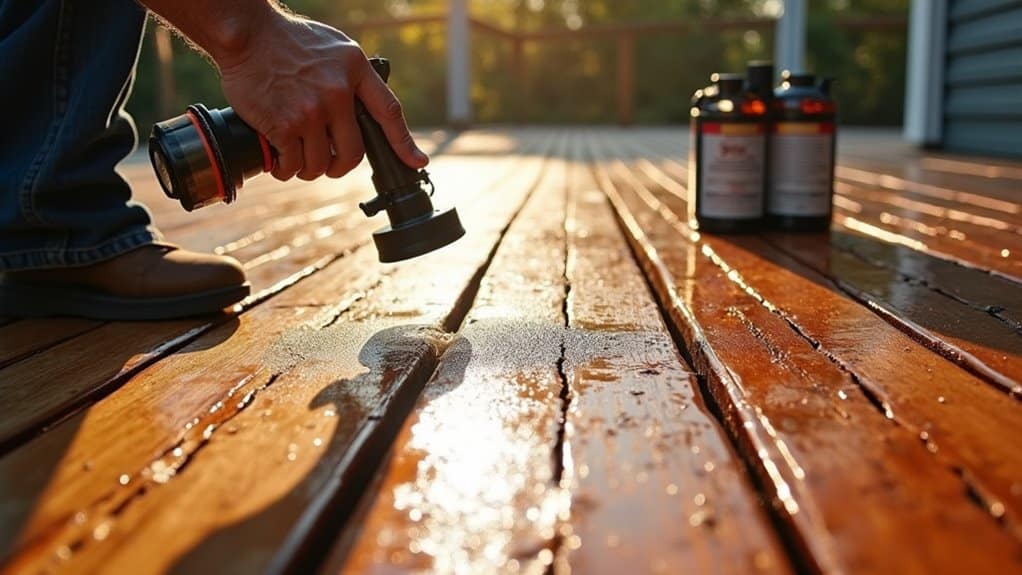
To optimize the longevity of outdoor wood structures, implementing strategic maintenance protocols with penetrating finishes proves essential. When using wood for outdoor use, you’ll need to monitor how the oil dries and reapply treatments every two years, particularly for wood furniture and exotic hardwoods exposed to harsh elements.
- Inspect your wood flooring and structures quarterly for signs of weathering, addressing cracks or damage immediately to prevent deterioration
- Apply penetrating oils like teak or Penofin when the surface appears dry, typically every couple of years, avoiding film-forming finishes
- Make wood maintenance easier by selecting durable species such as cedar or redwood, which naturally resist decay and require less frequent treatment
This proactive approach guarantees maximum protection while minimizing long-term maintenance requirements for your outdoor wood installations.
Frequently Asked Questions
What Is the Best Finish to Protect Wood Outside?
You’ll get ideal protection by applying multiple layers of moisture resistant finishes, starting with penetrating oil-based stains for deep wood penetration. Top that with UV resistant coatings to prevent sun damage. For pressure treated lumber, use water based sealers that won’t interfere with preservative treatments. Marine grade varnishes or polyurethane applications provide excellent weatherproofing techniques for high-exposure areas. Consider your specific climate and wood type when selecting weather proofing methods.
What Is the Best Way to Seal Wood for Outdoor Use?
You’ll get the best outdoor wood protection by using a multi-step waterproofing method. Start with a deep-penetrating oil-based sealer for moisture resistance, followed by two coats of marine-grade varnish for weather protection. For ideal sealant longevity, guarantee proper wood preservation by sanding between coats and maintaining consistent natural oiling practices annually. Choose UV-resistant finishes for exposed areas, and you’ll augment your sealant penetration effectiveness while enhancing wood stain durability.
How Do You Make Wood Last Forever Outside?
While you can’t make wood truly last forever outside, you’ll optimize its longevity through proper wood surface preparation and a multi-layered protection approach. Start with preservative treatments, then apply UV-resistant and moisture-resistant sealants. You’ll need weather-resistant coatings suited to your climate using customized application techniques. Choose environment-friendly options like penetrating oils, and commit to annual maintenance. These long-term durability factors can extend your wood’s life by decades when properly implemented.
Is It Better to Seal or Clear Coat Wood?
Your choice between sealing or clear coating depends on your specific wood protection goals. If you’re prioritizing wood grain preservation and natural aesthetics, you’ll want a penetrating sealer that creates a moisture barrier while maintaining environmental compatibility. For maximum UV light protection and long-term durability, a clear coat provides superior surface protection. Consider your maintenance requirements carefully sealers need more frequent reapplication but are easier to maintain, while clear coats last longer but require thorough surface preparation techniques.