
Creating custom outdoor cushions requires careful planning and precise execution across seven key steps. You’ll need to select your cushion style, determine exact shapes and dimensions, take accurate measurements with 1-inch seam allowances, choose appropriate filling materials like high-density foam, pick weather-resistant fabrics, add decorative elements, and install secure fasteners. Guaranteeing a systematic approach to cushion creation ascertains your outdoor space will be both comfortable and visually appealing. These essential steps lay the foundation for mastering the complete cushion-making process.
Selecting Your Perfect Cushion Style
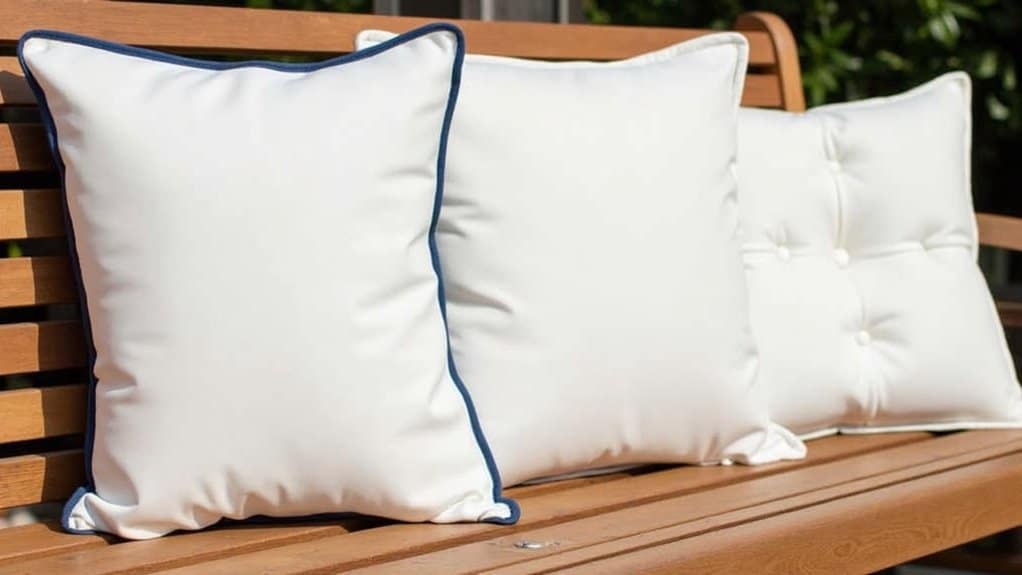
Every successful outdoor cushion project begins with selecting the right cushion style for your specific needs. You’ll need to determine whether you’re creating cushions for an ottoman, bench, or chaise lounge, as each type requires different specifications and construction methods.
When planning your custom outdoor cushions, evaluate your existing patio furniture to guarantee cohesive design integration. Consider whether you’re replacing worn cushions or creating entirely new ones. Your choice should complement your outdoor fabric selections while maintaining functionality for your space.
If your furniture features unique shapes or dimensions, you’ll need to account for custom specifications. Work directly with your fabric provider to address special requirements, confirming precise measurements and proper fit. Your cushion style choice impacts both the aesthetic appeal and practical comfort of your outdoor furniture pieces.
Determining the Right Shape and Dimensions
Before you cut your cushion material, you’ll need to carefully measure each dimension twice and record your measurements in a detailed diagram, especially for curved or irregular shapes. Complex shapes, such as L-shaped bench cushions or rounded corner pieces, require additional planning steps and pattern-making to guarantee proper fit and alignment. You’ll also want to factor in any furniture angles, such as sloped backrests or curved armrests, as these drastically impact the final cushion dimensions and comfort level.
Measure Twice, Cut Once
Getting the right measurements for your custom outdoor cushions stands as the most critical step in ensuring a perfect fit for your furniture. When measuring the seating area, you’ll need precise length and width dimensions for every surface that requires cushioning.
- Record the exact width of the foam needed by measuring the depth measurements from front to back, accounting for any curves or unique shapes in your furniture
- Triple-verify all dimensions before submission, following the “measure twice, cut once” principle to prevent costly errors
- Document specific requirements for custom shapes, including specialized measurements for corners, angles, and any accompanying pillows
For the best results, use a steel measuring tape and record measurements to the nearest 1/8 inch. Consider photographing your measurements alongside the tape measure for additional verification.
Complex Shapes Need Planning
When designing cushions for irregularly-shaped outdoor furniture, you’ll need to develop detailed plans that account for curved edges, angled corners, and unique contours. Measuring accurately becomes essential when working with unique furniture shapes, as precision guarantees your custom outdoor cushions fit perfectly.
| Dimension Type | Measurement Points | Required Tools |
|---|---|---|
| Length | End-to-end | Steel tape |
| Width | Side-to-side | Measuring square |
| Depth | Top-to-bottom | Caliper |
| Contours | Curved sections | Flexible ruler |
Custom cushions provide the best solution for sectionals and curved furniture pieces. You’ll want to ponder the specific angles and passages between segments while planning your measurements. Premium materials must be cut precisely to maintain structural integrity across complex shapes, ensuring your outdoor cushions maintain their form and functionality over time.
Consider Furniture Angles
Understanding furniture angles serves as the foundation for precise cushion design and fabrication. When making patio cushions, you’ll need to carefully measure the seat and back angles to guarantee your outdoor furniture cushions fit perfectly against the frame.
- Take width and depth measurements of both flat and angled surfaces, accounting for any curves or contours that might affect how cushion covers conform to the furniture
- Measure the exact angle between the seat and backrest to determine if you’ll need separate cushions or a single L-shaped design
- Calculate proper thickness requirements based on your furniture’s height and depth dimensions
Your patio cushions offer ideal comfort and aesthetics when they align precisely with your furniture’s angles. This attention to detail prevents gaps, sliding, and confirms your custom cushions maintain their intended position throughout use.
Taking Precise Measurements for Success
You’ll save time and resources by carefully measuring your cushion dimensions twice before making any cuts. Critical measurements include the width, length, and thickness of the cushion’s foam core, plus any supplementary allowances needed for seams and welting. When measuring irregularly shaped cushions, you’ll need to create a paper template first, including 1/2 inch to all sides for seam allowances.
Measure Twice, Cut Once
Taking precise measurements stands as the cornerstone of creating perfect custom outdoor cushions. When you’re ready to make your patio furniture more comfortable, start by measuring your cushion dimensions with utmost precision.
- For the cushion top, measure width and depth, then add 1 inch to each measurement for seam allowance, ensuring your outdoor space remains stylish and functional.
- Calculate the side panel length by combining all four original measurements plus 1 inch, while measuring foam height and adding 1 inch for proper seam allowance.
- Triple-check every measurement before proceeding with fabric cutting, paying special attention to unique furniture contours that might affect the final fit.
Essential Cushion Dimension Guidelines
Proper cushion dimensions serve as the foundation for creating durable, comfortable outdoor seating that fits perfectly on your furniture frames. When measuring seat cushions, you’ll need to determine three critical dimensions: width, depth, and height. Use a ruler and a marker to record precise measurements of both top and bottom panels.
For a patio chair cushion, measure from the inside front edge to the back, then across the width. Make sure to account for any curves or angles. When measuring height, compress the existing cushion to match typical seated pressure. For a bench cushion, take measurements in three spots across the length to account for any variations. Add 1/2 inch to all dimensions for seam allowances and filling expansion to guarantee your finished cushions fit snugly without being too tight.
Choosing the Ideal Cushion Filling
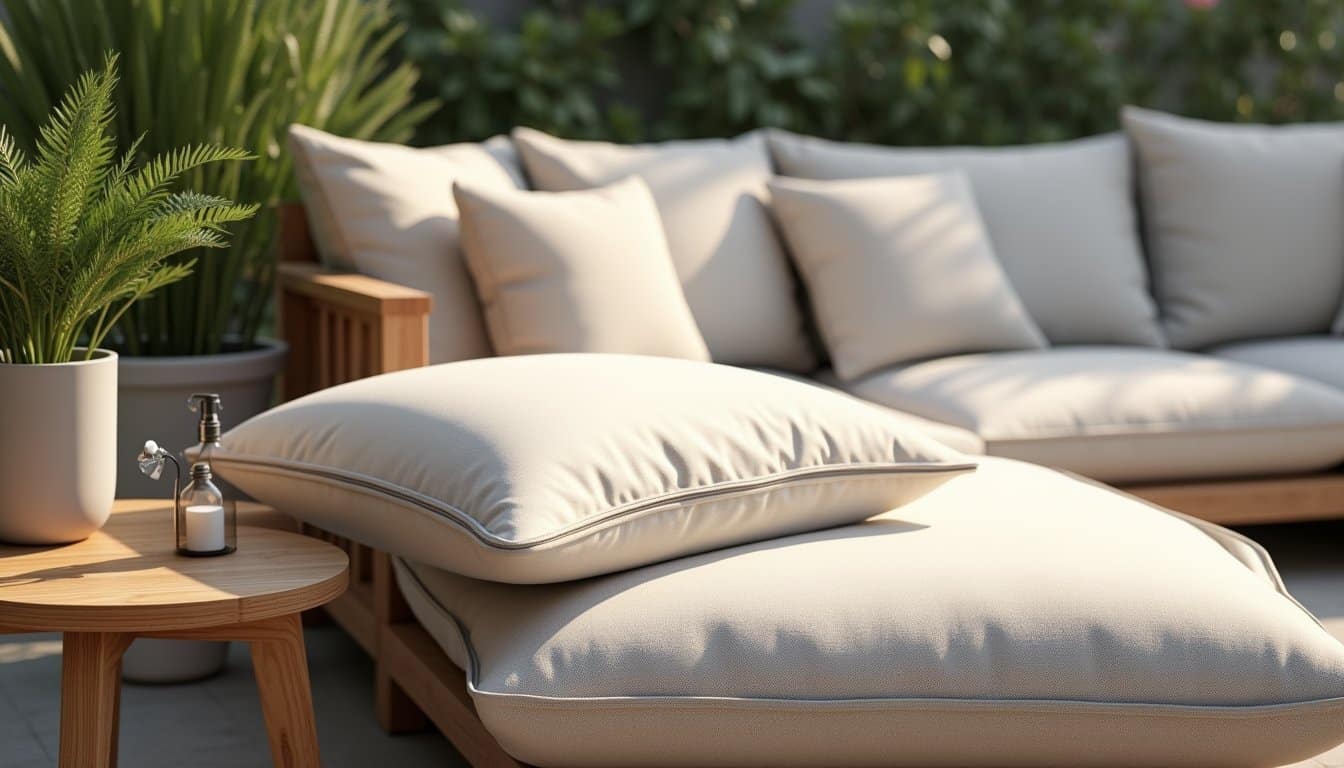
Selecting the right cushion filling can make or break your outdoor seating experience. When cushions often fall short of expectations, it’s paramount to choose materials that withstand outdoor conditions while maintaining comfort. Your back cushions and seat supports need to make a perfect balance between durability and coziness.
- High-density foam provides superior support and shape retention, ideal for primary seating areas where you’ll need consistent firmness
- Polyester fiber fill works best in decorative cushions or when you’re seeking a softer, more relaxed feel
- Weather-resistant materials are essential consider treating your cushions with waterproof spray after sewing the sides together
Before finalizing your filling choice, factor in the seam allowance and consult with your supplier about the ideal density specifications for your specific outdoor application. The right filling thickness will guarantee long-lasting comfort and performance.
Picking Weather-Resistant Fabrics
Regarding outdoor cushions, the fabric you choose serves as the initial line of defense against nature’s elements. For ideal outdoor living durability, you’ll want to select materials specifically engineered for exterior use. Solution-dyed acrylic fabrics, like Sunbrella, offer superior UV protection while maintaining their look and feel over time.
| Fabric Type | Best Climate | Key Benefits |
|---|---|---|
| Sunbrella | All-Purpose | UV-resistant, fade-proof |
| Vinyl | Wet Areas | Water-resistant, easy clean |
| Polyester Blend | Dry Climate | Affordable, lightweight |
When measuring your fabric, add 2 inches to all four sides for seam allowance. Use sharp fabric scissors for clean cuts. You’ll find a wide range of weather-resistant options available, from textured weaves to smooth finishes. Consider your specific climate conditions and expected usage patterns when making your selection.
Adding Decorative Piping and Details
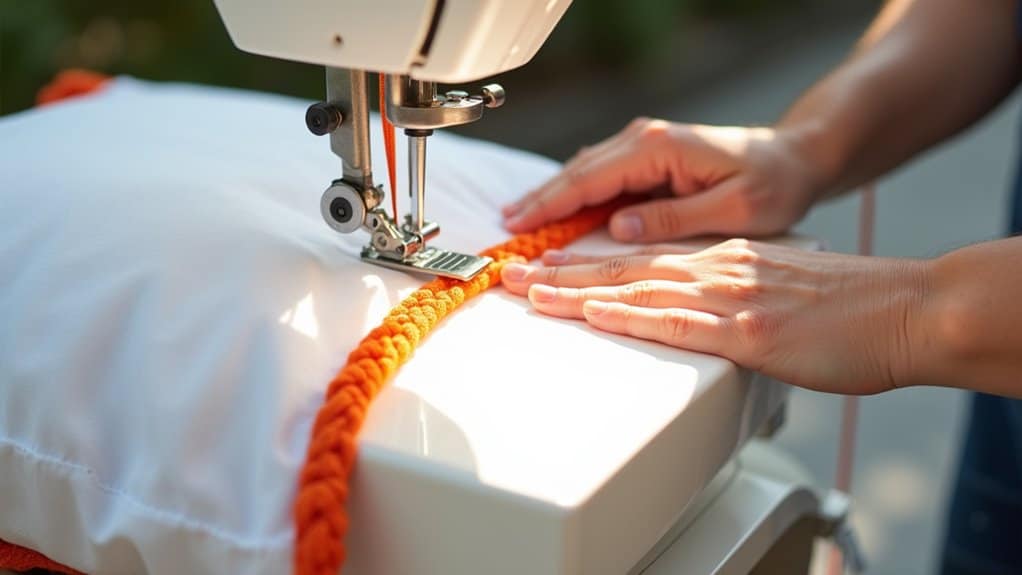
Every custom outdoor cushion can be raised from basic to luxurious with the strategic inclusion of decorative piping and details. When you’re ready to make one, carefully consider how piping can improve both the side panel and top and bottom panel construction. You’ll want to Pin the zipper and secure the zipper in place before adding your chosen piping elements to the top panel.
Strategic piping placement elevates any outdoor cushion from basic to beautiful, transforming simple panels into professionally finished statement pieces.
- Select contrasting colors or patterns that’ll create striking visual interest while complementing your outdoor furniture’s aesthetic
- Incorporate decorative stitching along the piping to achieve a professional, customized appearance
- Consider using weather-resistant piping materials that match the durability of your chosen fabric
Your attention to these finishing touches transforms standard cushions into sophisticated statement pieces that boost your outdoor space’s overall design. The right piping detail makes the difference between ordinary and extraordinary results.
Installing Secure Cushion Ties and Fasteners
With your cushions’ decorative elements in place, securing them properly becomes the next critical step. When making outdoor cushions that reflect your personal style, you’ll need to strategically position weatherproof ties or fasteners that work well with your furniture’s design. Install Velcro straps, snap fasteners, or durable ties on the sides facing your furniture’s frame, ensuring every detail contributes to stability.
Position the attachments where they’ll provide maximum hold while remaining discreet typically near corners and along edges where the zipper face meets the cushion back. You’ll want to space multiple fasteners evenly to prevent shifting and lifting in windy conditions. By using high-quality, weather-resistant materials and proper installation techniques, your custom cushions will stay firmly in place and maintain their functionality season after season.
Frequently Asked Questions
Is It Cheaper to Make Your Own Cushions?
You’ll typically save 30-50% by making your own cushions, but consider several factors. Your fabric cost and material durability choices greatly/substantially/considerably impact savings. While custom size projects require labor investment and pattern complexity knowledge, you can learn through online tutorials. For basic designs, you’ll spend $20-$50 per cushion versus $50-$150 for pre-made options. However, your time commitment and sewing expertise will determine if the savings are worthwhile.
How Do I Make My Own Outdoor Cushions?
To make your own outdoor cushions, start by taking precise measurements and creating a paper template for your desired cushion shape. You’ll need weather-resistant materials like Sunbrella fabric and marine-grade foam. Follow DIY tutorials to learn essential sewing techniques, including box corners and piping. Make sure you’re using UV-resistant thread and proper custom sizing for your specific furniture. Don’t forget to add a waterproof inner lining to protect the foam from moisture.
What Is the Best Material for Outdoor Cushions?
For outdoor cushions, you’ll want to invest in Sunbrella fabric, which offers superior UV protection capabilities and fade-resistant textile properties. High-quality outdoor fabric should feature moisture-wicking and mildew-resistant properties to withstand divergent weather conditions. Look for materials specifically engineered with weather-resistant qualities that can endure sun, rain, and humidity. Your cushion’s core should be high-density foam wrapped in water-resistant polyester, ensuring both comfort and longevity in outdoor settings.
What Is the Best Thickness for Outdoor Cushions?
For ideal comfort, you’ll want an optimal thickness of 4-6 inches for your outdoor cushions. Choose weather resistant foam that’s thicker (5-6 inches) for lounge seating and thinner (2-3 inches) for dining chairs. When selecting cushions, consider their customizable dimensions and guarantee they’re made with durable fabrics featuring moisture wicking properties and UV resistant coatings. For chaise lounges, you’ll need 6-8 inches of thickness to support reclined positions comfortably.