

Begin your initial garden design by conducting a thorough site analysis of sunlight patterns, soil composition, and available space. You’ll need to establish distinct zones for growing, relaxation, and storage while incorporating essential pathways between beds. Position raised beds 2-3 feet apart with proper vertical support systems, and integrate native plant borders to augment biodiversity. Your success depends on methodically implementing each element according to proven spatial and structural principles.
Evaluating Your Garden Space and Natural Elements
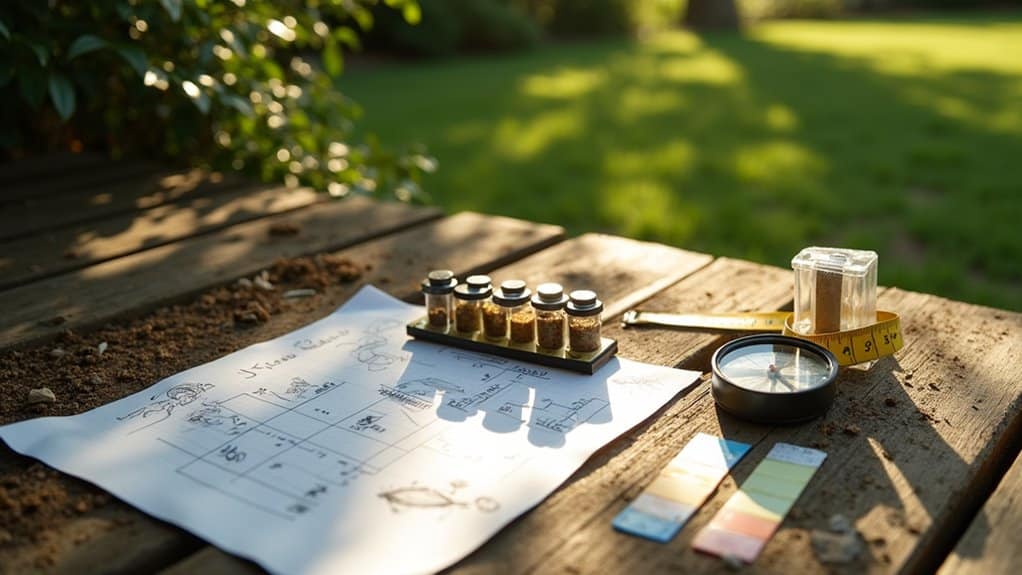
Before establishing your outdoor garden, conducting a thorough site analysis of the available space and its natural elements is essential for ideal plant growth and garden success. Begin by tracking sunlight exposure across your garden area throughout the day, noting areas of full sun, partial shade, and deep shade. Evaluate your soil’s composition through pH testing and nutrient analysis to determine necessary amendments.
Measure your space precisely and consider whether raised beds or in-ground beds better suit your layout requirements. Document permanent features like structures, mature trees, and utilities that’ll affect your design. Monitor local climate patterns and prevailing winds to inform plant selection and placement. This data will help you create microclimates within your garden area and determine if windbreaks are necessary for protecting sensitive plants.
Planning Essential Garden Zones and Structures

While designing your outdoor garden, strategically divide the space into distinct functional zones that align with your gardening objectives and lifestyle needs. Create efficient garden layouts by positioning raised garden beds, trellises, and living wall structures to augment your available space and establish compelling focal points.
| Zone Type | Purpose | Key Structures |
|---|---|---|
| Growing | Food Production | Raised Beds |
| Relaxation | Social Space | Seating Areas |
| Wildlife | Biodiversity | Native Plants |
| Vertical | Space Optimization | Trellises |
| Storage | Tool Organization | Garden Shed |
When implementing your garden designs, select weather-resistant materials that’ll withstand environmental conditions while complementing your home’s aesthetic. Position structures to optimize sunlight exposure and incorporate flexible elements that you can modify as your gardening needs evolve. Consider installing permeable pathways between zones to improve accessibility and maintain proper drainage throughout your garden space.
Selecting Materials for Pathways and Borders
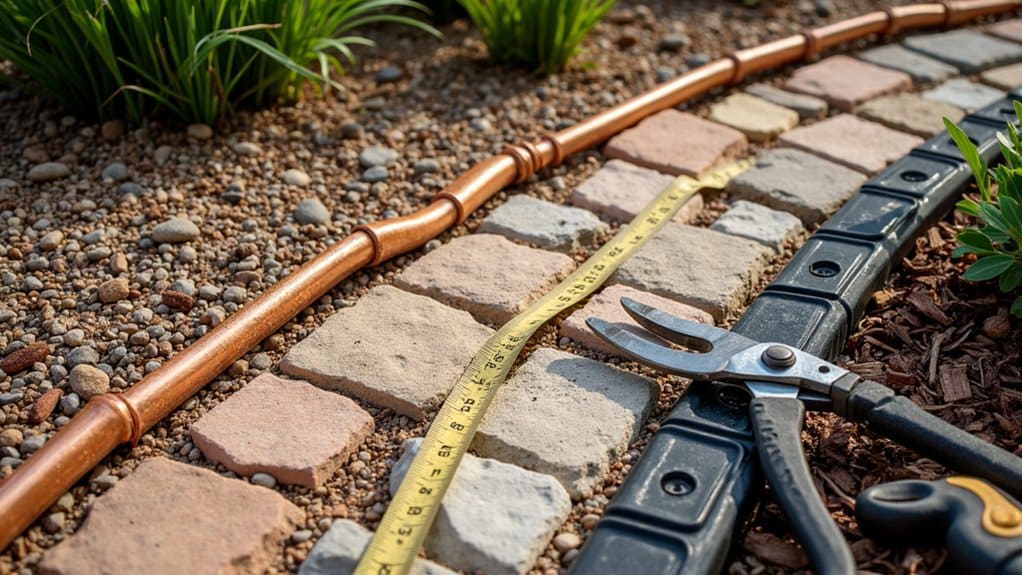
Since pathways and borders serve as the structural framework of your garden design, selecting appropriate materials requires careful consideration of both functionality and aesthetics. While mulch offers an economical pathway solution, its rapid degradation makes gravel a superior choice, particularly for bed edges where moisture control is indispensable.
You’ll want to maintain a minimum pathway width of 6 inches to guarantee proper garden accessibility. Metal edging provides an ideal border solution, combining structural integrity with minimal visual impact. When selecting pathway materials, make certain they complement your home’s architectural elements and existing landscape features.
For maximum durability and reduced maintenance requirements, install gravel pathways throughout your primary garden zones. This approach prevents beds from retaining excess moisture while creating a cohesive design that refines your garden’s overall functionality and visual appeal.
Creating Functional Growing Areas and Beds
Establishing functional growing areas requires precise spatial planning to guarantee both accessibility and cultivation efficiency. When designing your garden layout, incorporate raised garden beds with minimum dimensions of 1.5 feet wide and 6 inches high, spacing them 2-3 feet apart for wheelbarrow access. Integrate garden trellises strategically to boost vertical growing space while supporting climbing plants.
- Position raised beds in 8-12 foot lengths, maintaining 1-foot width for ideal plant maintenance
- Install panel, obelisk, or arch trellises with secure anchoring for vertical cultivation
- Create designated pathways using gravel or natural mulch between growing spaces
- Establish native plant and pollinator-friendly borders to improve biological diversity
This systematic approach guarantees your garden design balances functionality with ecological considerations while increasing growing space through vertical and horizontal optimization.
Building Vertical Elements and Support Systems
Vertical support structures serve as foundational elements in optimizing garden space utilization. When you design a garden, incorporating Types of Trellises becomes essential for maximizing your space to grow. You’ll find three primary options: panel, obelisk, and arch trellises, each offering distinct advantages for different garden configurations and climbing plants.
For year-round stability in your initial garden, select powder-coated steel trellises over wooden alternatives. They’ll provide superior durability and longevity for supporting vining plants. When installing these vertical elements, secure them at least 12 inches into the ground to prevent instability during adverse weather conditions. This methodical approach to implementing support systems not merely increases your garden’s productive capacity but also creates architectural interest through strategic placement and thoughtful integration with existing natural elements.
Frequently Asked Questions
How to Plan Your Garden Layout for Beginners?
Start by determining your garden’s ideal dimensions and mapping sun exposure patterns. You’ll need to prepare soil with organic fertilizers and establish proper plant spacing for best growth. Consider beneficial plant companions while planning your layout, and implement efficient watering techniques like drip irrigation. Create seasonal planting schedules that boost yield, and integrate pest management strategies. Focus on low maintenance garden designs that’ll work with your available time and resources.
How to Start a Garden for Beginners Step by Step?
Start by preparing your soil with organic compost and testing pH levels. Create raised beds for ideal drainage and select pollinator-friendly plants suited to your zone. You’ll want to follow seasonal planting schedules and implement water conservation through mulching and drip irrigation. Begin seeds indoors 6-8 weeks before last frost, then transplant using sustainable practices. Manage pests naturally with companion planting and organic deterrents. Apply slow-release organic fertilizers and monitor soil moisture consistently for healthy plant development.
What Is the Gardening 3 Year Rule?
The Gardening 3 Year Rule states you’ll need three full growing seasons for your garden to reach prime/ideal/maximum maturity. Year one focuses on soil preparation requirements and establishing root systems, while implementing proper irrigation system design. In year two, you’ll see increased growth as plants adapt to your hardiness zone and pest management strategies take effect. By year three, your garden reaches peak performance with established native plants thriving and seasonal planting schedules running smoothly.
What Is the Most Common Mistake of First Time Gardeners?
You’ll find that poor soil preparation and incorrect plant spacing are among the most frequent mistakes you’ll make as a novice gardener. Overwatering plants or underwatering plants can quickly damage root systems, while inadequate sunlight exposure compromises photosynthesis. You’re also likely to overlook essential practices like proper mulching, consistent weeding, and effective pest control. Many beginners develop unrealistic expectations and fail to master proper tool usage for ideal garden maintenance.