
Gunite and concrete pools differ mainly in application method, not the underlying material. Gunite uses a dry-mix process, cement and sand travel through a hose, and water’s added at the nozzle by a skilled nozzleman. Concrete arrives pre-mixed and gets poured or formed. Gunite delivers higher compressive strength (7,500 to 9,000+ PSI) and superior crack resistance, but it costs more. Poured concrete’s budget-friendly, though weaker. Keep going to find out which pool fits your project.
Key Takeaways
- Gunite uses a dry-mix process where water is added at the nozzle, while concrete is pre-mixed before placement.
- Gunite delivers higher compressive strength (7,500 to 9,000+ PSI) versus poured concrete’s 3,000 to 4,500 PSI.
- Gunite uses only fine aggregate, while conventional concrete incorporates both larger and smaller aggregates.
- Gunite offers superior crack resistance and design flexibility for curved, free-form, or custom pool shapes.
- Poured concrete is more budget-friendly for simpler builds, while gunite costs more due to skilled labor and mess.
Gunite vs Concrete Pool Explained
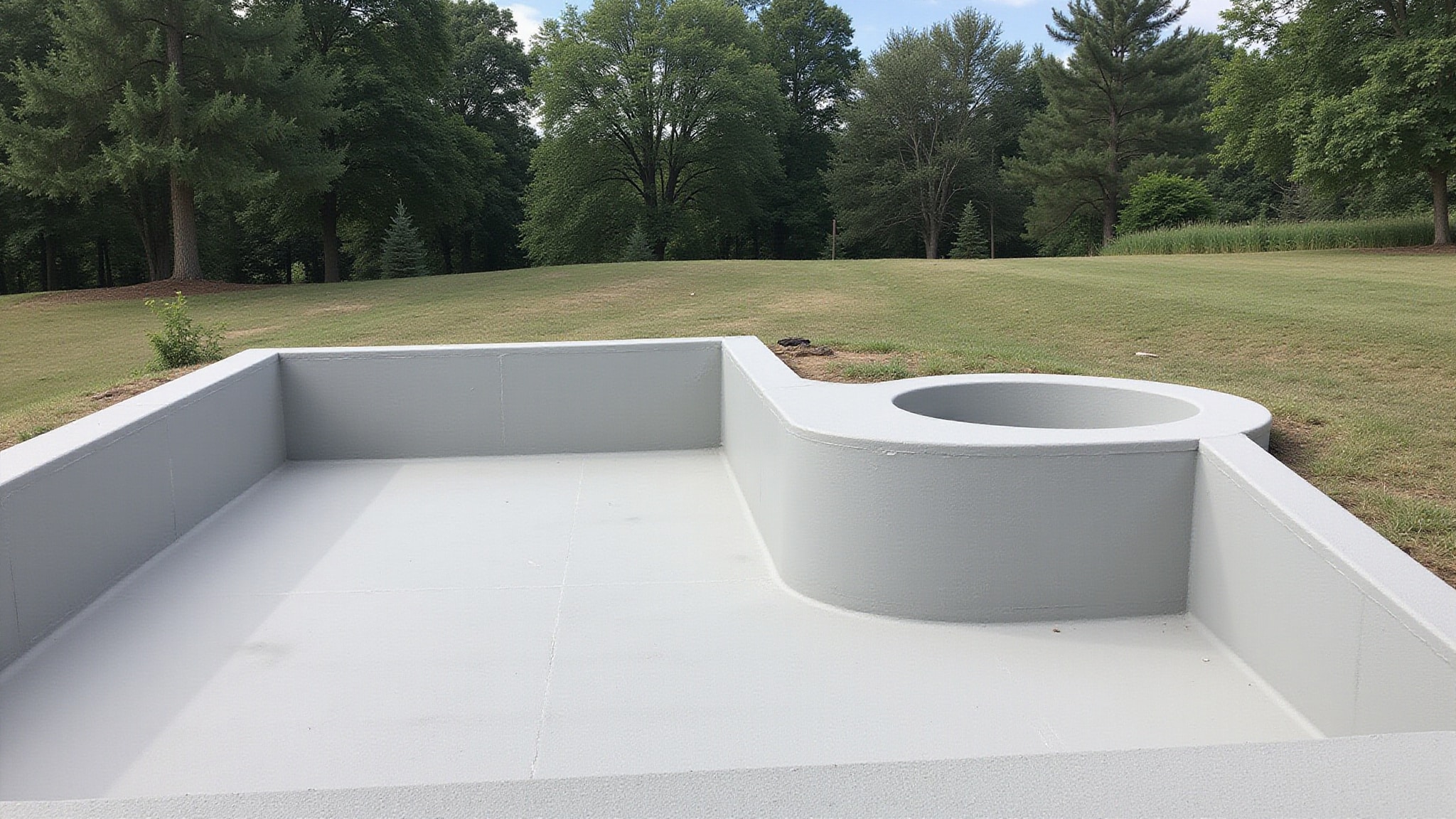
Gunite and concrete pools differ mainly in application method rather than being two entirely separate materials. Gunite refers to a dry-mix process where cement and sand travel through a hose, with water introduced at the nozzle during application. Traditional concrete, by contrast, arrives pre-mixed and gets poured or formed into place. In the industry, you’ll notice “concrete pool” often includes gunite or shotcrete structures, not just poured concrete. A gunite pool typically uses only fine aggregate, while conventional concrete incorporates both larger and smaller aggregates. Understanding this distinction matters because the application method directly affects strength, design flexibility, and cost, factors you’ll weigh carefully throughout your pool project.
What is a gunite pool
A gunite pool is a structure built using a dry-mix sprayed concrete process, where cement and sand travel through a hose under compressed air, and water gets introduced at the nozzle during application. This method lets you apply material in layers, stopping and restarting construction without compromising the structure. Because a skilled nozzleman adjusts the water-cement ratio at the point of delivery, you get a dense, low water-cement structure that typically reaches 7,500 to 9,000+ PSI. Gunite conforms to complex contours, curved walls, and free-form layouts that a formed concrete pool can’t easily match. In pool industry usage, “concrete pool” often includes gunite structures, so you’re really distinguishing application methods rather than entirely separate material classes.
What is a concrete pool
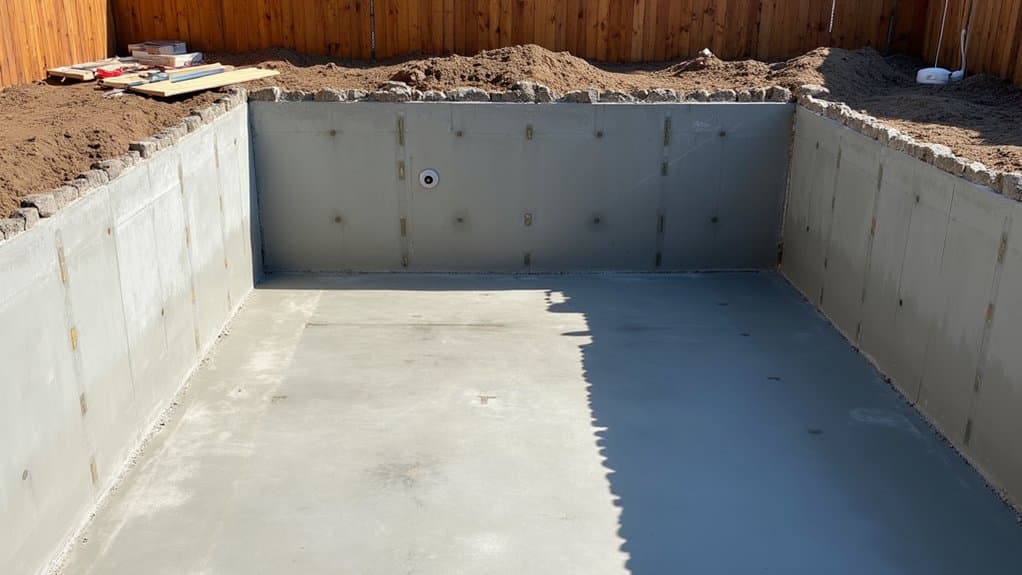
A concrete pool is a structure built with traditional poured concrete or wet-mix shotcrete, both mixed with water before placement rather than at the nozzle. You’ll find this material includes both larger and smaller aggregates, unlike gunite’s fine-particle mix. When you build with poured concrete, you depend on pre-built forms or continuous placement to shape the structure, which works best for simpler, more straightforward layouts. You’ll typically see compressive strength ranging from 3,000 to 4,500 PSI, and you should expect greater susceptibility to cracks or weaknesses depending on your mix and placement method. If you’re prioritizing lower initial cost over complex geometry, concrete’s your budget-friendly option. Keep in mind that in pool industry usage, “concrete pool” often includes gunite or shotcrete structures, not just traditional poured concrete.
How do gunite and concrete pools compare on cost and construction
Gunite typically costs more than poured concrete and involves a more labor-intensive build. Because gunite requires on-site mixing and spraying, you’ll face a more labor-intensive build than poured concrete’s delivered-and-placed approach. Gunite demands a skilled nozzleman who adjusts the water-cement ratio at the point of delivery, adding complexity and cost. You’ll also contend with more mess, rebound, and overspray, plus potential delays if equipment clogs or site conditions interrupt spraying.
| Factor | Gunite |
|---|---|
| Labor intensity | Higher, on-site mixing |
| Skill required | Specialized nozzleman |
| Initial cost | Often greater |
Poured concrete typically presents the more budget-friendly option for simpler builds, relying on pre-built forms or continuous placement. If your project prioritizes lower initial cost and straightforward geometry, concrete fits well. When you need custom shapes and long-term durability, gunite’s added expense often justifies itself.
What are the pros and cons of each type
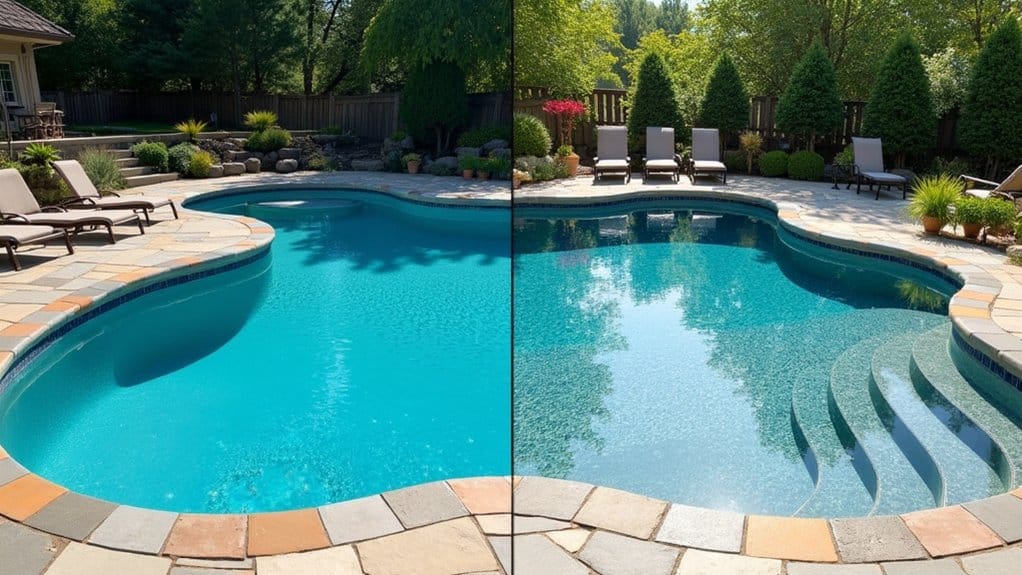
Each pool type offers distinct pros and cons. Gunite’s dry-mix process delivers a low water-cement ratio, yielding compressive strengths around 7,500 to 9,000+ PSI, superior crack resistance, and the design flexibility to form curved walls and custom geometry. The tradeoffs: you’ll pay more, endure labor-intensive on-site spraying, and depend on a skilled nozzleman, plus rebound, overspray, and potential equipment-clogging delays.
Poured concrete’s advantages center on lower initial cost and straightforward placement for simpler builds. Its drawbacks include reduced strength (typically 3,000 to 4,500 PSI), greater susceptibility to cracking, and form-limited shapes. If you prioritize customization and long-term durability, gunite wins. If budget and simplicity drive the project, conventional concrete makes more sense.
Which pool type is right for you
Gunite is right for you if you want customization and long-term durability, while poured concrete is right for you if initial cost and design simplicity take priority. Your decision hinges on three variables: customization, durability, and initial cost. If you’re planning a free-form design with curved walls or nonstandard geometry, gunite’s sprayed application conforms to complex contours that pre-built forms can’t match. For simpler, straightforward builds, poured concrete keeps your budget lower while still delivering a strong, long-lasting structure.
Prioritize durability, and gunite’s edge becomes clear: its low water-cement ratio produces compressive strength around 7,500 to 9,000+ PSI versus 3,000 to 4,500 PSI for poured concrete, with reduced cracking and better resistance to shifting. Expect higher labor costs, skilled nozzleman requirements, and more site mess in exchange.
Choose gunite when customization and long-term investment drive your project; choose poured concrete when initial cost and design simplicity take priority.
Conclusion
Gunite and poured concrete are really two ways of building the same durable, fully custom concrete pool, with gunite’s sprayed application making it the go-to for complex shapes and long-term strength. Understanding that the choice is more about method and finish than a different material helps homeowners focus on what really matters: build quality and the right surface. Innovative Outdoor Living builds custom gunite pools engineered for Florida, so the shell, finish, and shape all come together into a pool made to last.
Call Today and Design a Pool Made for You
Whether you want a gunite, concrete, or fiberglass pool, expert design and construction makes every dream buildable. At Innovative Outdoor Living in Palm Beach Gardens, FL, our skilled team delivers dependable Pool Construction built around your family and lifestyle. Call +1 (561) 594-1495 today and turn your backyard into a private retreat.
Frequently Asked Questions
How Long Does a Gunite Pool Take to Cure?
A gunite shell takes about 28 days to fully cure, though it reaches significant strength within the first week. During curing, keeping the surface damp by spraying it with water several times a day supports the low water-cement ratio and promotes a dense, durable structure. Rushing this stage is a mistake, since proper curing directly affects the pool’s compressive strength, crack resistance, and long-term integrity.
Can You Convert an Existing Concrete Pool to Gunite?
Not really, since gunite is simply a dry-mix method for building a concrete shell, so the two are the same material. An existing poured-concrete structure cannot have its makeup changed, but it can be resurfaced or reinforced by spraying gunite over properly prepared surfaces. That calls for a skilled nozzleman, sound bonding prep, and rebar where required. In practice it is a repair or resurfacing job rather than a true conversion.
What Surface Finishes Work Best Over Gunite Pools?
Plaster, aggregate, and tile all perform well over gunite. Plaster is the classic, cost-effective choice and bonds tightly to gunite’s dense surface. For durability and texture, exposed aggregate like pebble or quartz resists wear and hides staining. Tile offers the most customization and the longest life for a premium look. Because the gunite shell is strong and stable, it supports any of these finishes reliably.
How Often Should Gunite Pools Be Resurfaced?
Typically every 10 to 15 years, though the timing depends on the finish, water chemistry, and maintenance. Plaster wears faster and may need redoing closer to 7 to 10 years, while aggregate or quartz finishes last longer. Rough texture, staining, chalky spots, or exposed gunite are the signs it is due. Keeping the water chemistry balanced is the surest way to stretch the interval between resurfacings.
Do Gunite Pools Require Special Winterization in Cold Climates?
In cold climates, yes. Because gunite is a dense, rigid structure, water must not be allowed to freeze inside the plumbing or shell, since expanding ice causes cracking and hollow-spot damage. Lowering the water below the skimmer, blowing out and plugging the lines, adding pool-safe antifreeze where needed, and covering securely all protect it. In mostly mild regions like Florida, a hard freeze is rare, but the same steps guard the pool when one is forecast.