

Modern outdoor spaces in 2025 demand smart integration of climate-resilient features and sustainable elements. You’ll want to incorporate native plants, automated irrigation systems, and weather-responsive technology to create low-maintenance retreats. Transform your space with permeable pavers, reclaimed materials, and multi-functional zones that adapt to year-round use. Install smart controllers for lighting, water management, and climate control. Consider vertical gardens and edible habitats for ideal space utilization. Our thorough guide explores cutting-edge solutions to enhance your outdoor sanctuary.
Creating Climate-Resilient Outdoor Sanctuaries
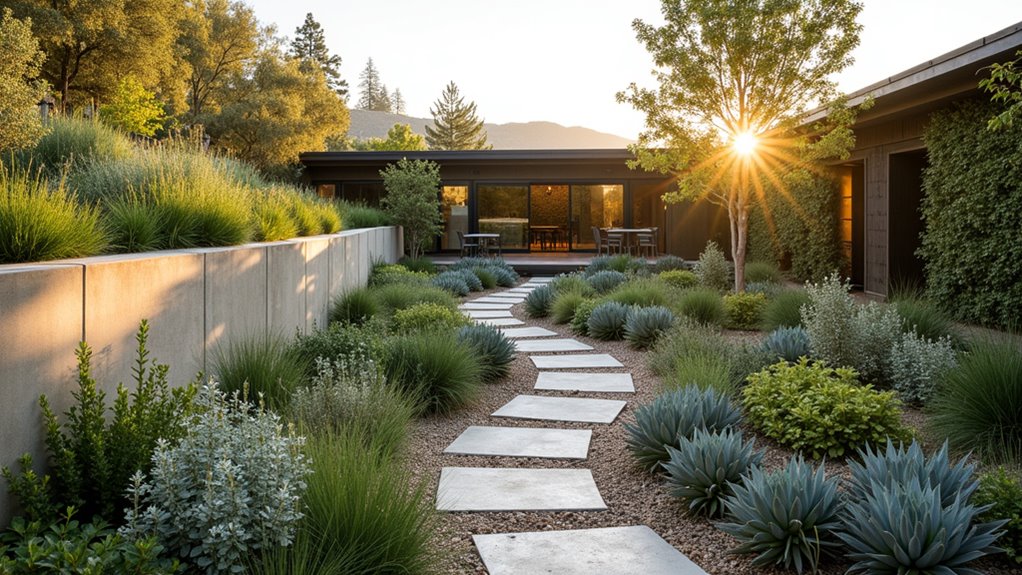
How can homeowners create outdoor spaces that thrive in an increasingly unpredictable climate? The answer lies in implementing climate-resilient strategies that combine smart technology with eco-friendly designs. You’ll want to start by incorporating native plant species that naturally adapt to local weather patterns while installing water-harvesting systems to maximize resource efficiency.
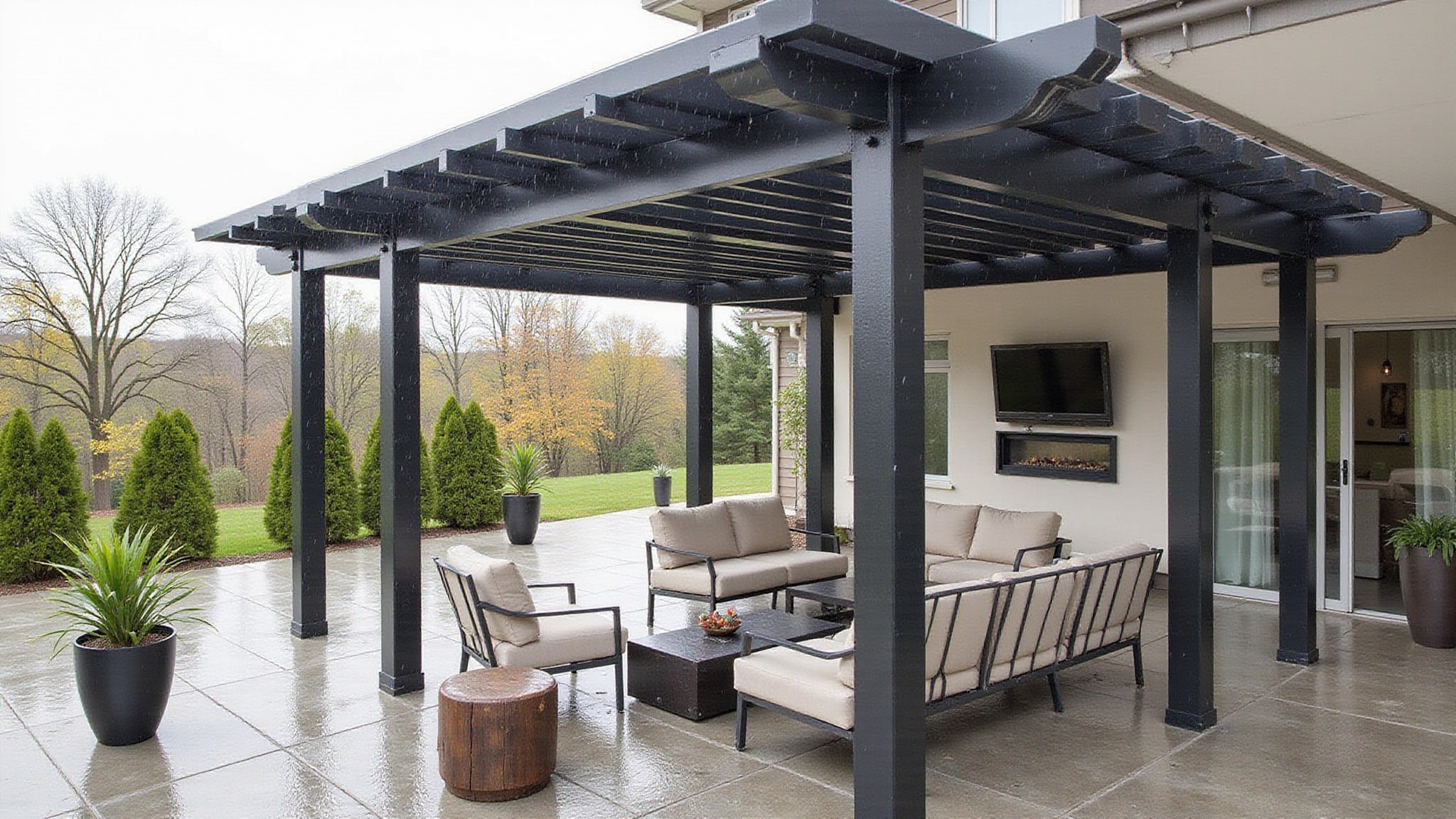
Transform your outdoor living spaces with permeable pavers and natural stone hardscaping that improve drainage and reduce heat retention. Smart irrigation controllers and sensor-driven systems optimize water usage, ensuring your landscape stays lush without waste. Consider installing retractable awnings and adaptable structures to extend seasonal use while creating wildlife-friendly features that support local ecosystems. These solutions not merely protect against climate impacts but also create sustainable, functional environments that thrive year-round.
Smart Technology Integration for Effortless Maintenance
Transform your outdoor space into a self-maintaining refuge by integrating smart irrigation controllers that automatically adjust watering schedules based on real-time weather data, reducing water consumption by up to 50%. You’ll improve efficiency with AI-powered landscape maintenance tools, including robotic lawnmowers that eliminate manual mowing while maintaining ideal grass height. Complete your smart landscape with automated lighting systems that you can control via smartphone apps, allowing precise management of ambiance and energy usage throughout your outdoor areas.
Automated Irrigation Control Systems
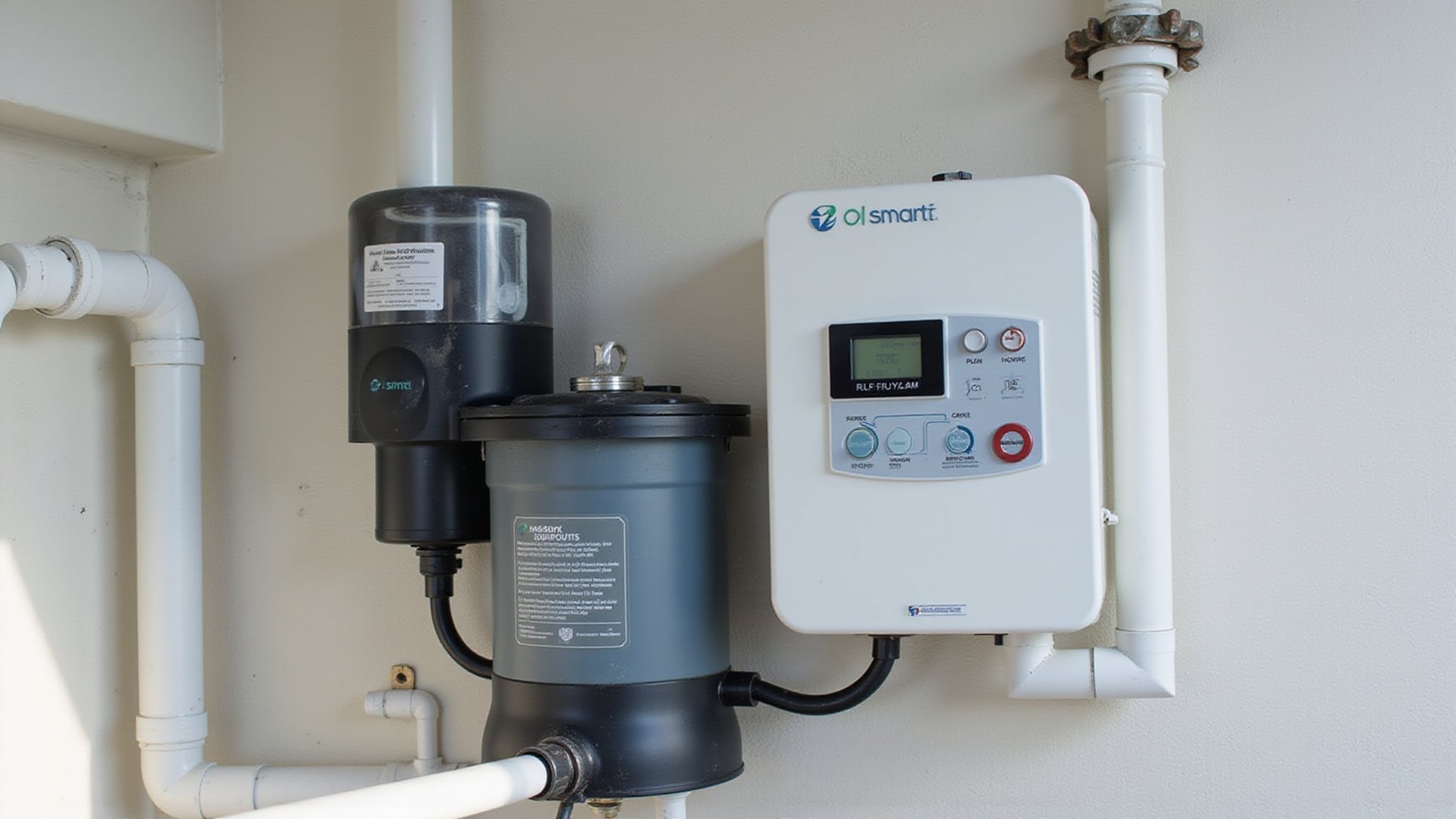
Modern irrigation technology has revolutionized terrain maintenance through smart controllers that combine real-time weather data with sophisticated moisture sensors. You’ll reduce your outdoor water consumption by up to 30% while ensuring your environment receives precise hydration.
These advanced irrigation systems integrate seamlessly with your smartphone, allowing you to monitor and adjust watering schedules from anywhere. The controllers work alongside your automated lighting and other smart outdoor features, creating a cohesive ecosystem for your setting. You can establish customized zones that deliver exact water amounts to different plant varieties, while predictive algorithms anticipate weather patterns to prevent overwatering during rainy periods.
Built-in leak detection and automatic shut-off features protect your property from water damage, making these systems both efficient and protective of your outdoor investment.
Smart Lighting Solutions Everywhere
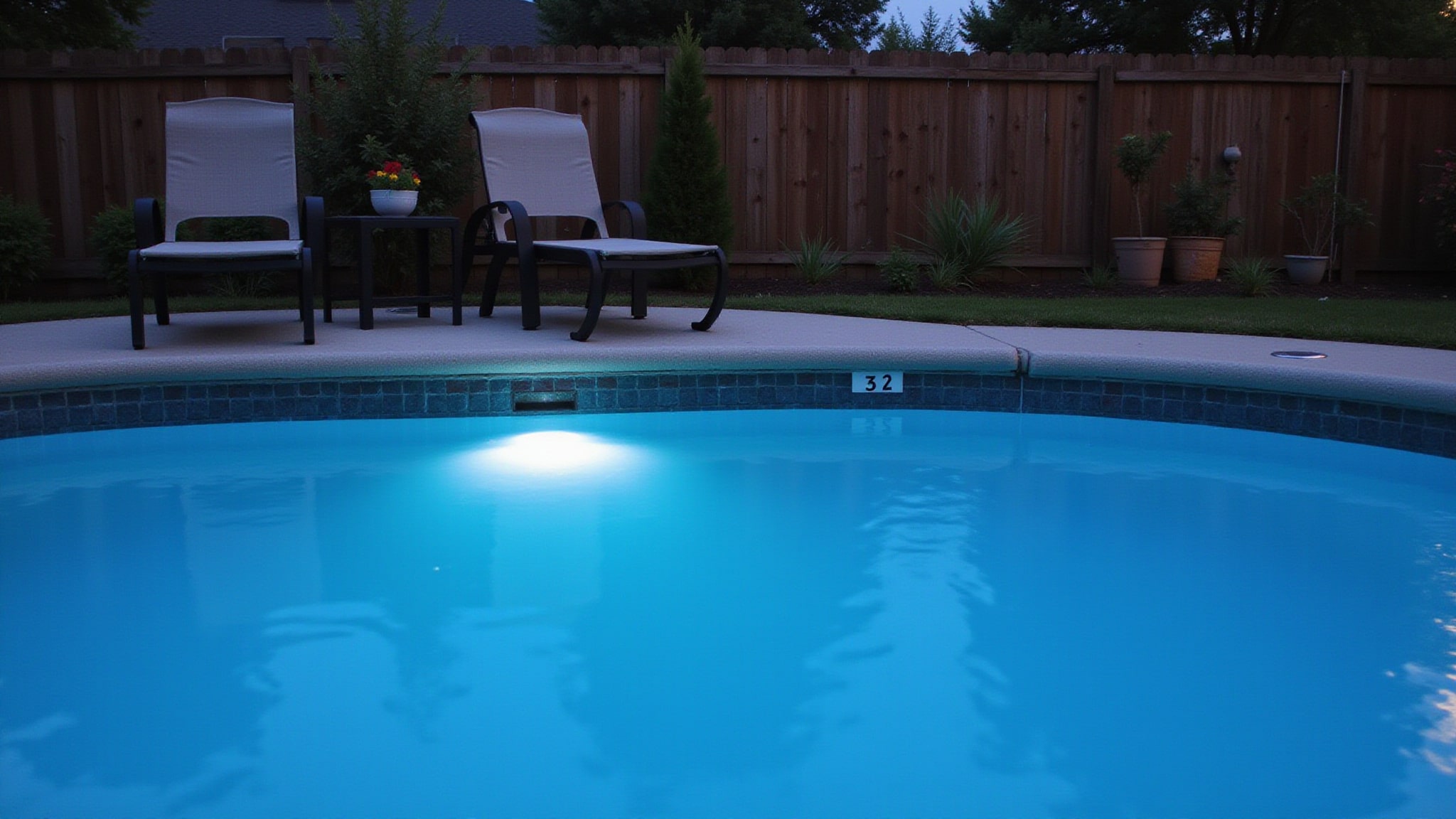
Intelligent outdoor lighting has redefined terrain aesthetics through seamless automation and smartphone integration. You’ll gain complete control over your scenery lighting through intuitive apps that let you schedule, dim, and customize illumination patterns with a few taps on your device.
Smart lighting systems now incorporate climate-responsive technology that automatically adjusts to seasonal changes and weather conditions. You can optimize your outdoor lighting setup using 3D modeling tools before installation, guaranteeing perfect placement and coverage across your property. These energy-efficient LED solutions integrate seamlessly with other smart landscaping features like robotic mowers, creating a cohesive, low-maintenance outdoor environment. Your lighting system’s remote capabilities allow you to boost security and create ambiance from anywhere, while automated schedules guarantee your scenery remains beautifully illuminated year-round.
AI-Powered Landscape Maintenance Tools
Revolutionizing traditional scenery upkeep, AI-powered tools now streamline every aspect of outdoor care through sophisticated automation and data-driven decision making.
Your ideal setting maintenance becomes effortless with smart irrigation controllers that reduce water consumption by 50% while adapting to real-time weather conditions. Robotic lawn mowers navigate your yard autonomously using GPS and AI technology, eliminating the need for manual mowing. You’ll maintain prime plant health using AI-powered monitoring systems that detect issues early and provide targeted care recommendations. These tools integrate seamlessly with landscape lighting apps, allowing you to adjust brightness and scheduling from your smartphone. The combination of these technologies creates a self-maintaining outdoor space that saves time, resources, and energy while ensuring your setting thrives year-round.
Sustainable Materials and Eco-Friendly Design Elements
Transform your outdoor space with reclaimed wood elements that offer both rustic character and environmental benefits through repurposed timber from old barns, industrial buildings, or salvaged marine structures. You’ll find that incorporating native stone into pathways, retaining walls, and decorative features creates a naturally resilient terrain that withstands local weather conditions while reducing transportation impacts. These sustainable material choices work together to establish a harmonious connection between your modern outdoor design and the surrounding environment, requiring minimal resource consumption for long-term maintenance.
Reclaimed Wood Design Integration
As sustainable design practices continue to shape modern scenery, reclaimed wood has emerged as a versatile and environmentally responsible material for outdoor spaces. You’ll find this durable material seamlessly bridging indoor and outdoor living while adding character to your scene design. By incorporating salvaged wood elements, you’re not just creating aesthetically pleasing spaces you’re contributing to environmental conservation.
- Transform weathered barn beams into striking pergola structures that define outdoor living areas
- Install reclaimed wood seating and dining features that complement natural elements in your scenery
- Create distinctive accent walls and privacy screens using weathered planks to accentuate spatial definition
- Design custom outdoor storage solutions and planters that showcase the material’s rich history and texture
These practical applications combine sustainability with timeless appeal, making reclaimed wood an ideal choice for modern scene design.
Native Stone Construction Methods
Natural stone construction stands at the forefront of sustainable scenery design, offering you a sturdy foundation for creating timeless outdoor spaces. When planning your backyard haven, consider incorporating Techo-Bloc’s versatile stone collection, which seamlessly blends elegance with environmental consciousness.
Your landscape design can feature strategically placed masonry elements that serve dual purposes – from peaceful barrier walls to built-in seating arrangements. Design ideas include stone veneer pillars, organic-shaped pathways, and textured accent walls that encompass 2025’s trending earthy aesthetics. By selecting native stones in warm, natural tones, you’ll establish a sophisticated outdoor environment that connects deeply with nature. These durable materials won’t just augment your property’s visual appeal; they’ll create lasting value through their timeless beauty and minimal maintenance requirements.
Multi-Functional Zones for Year-Round Enjoyment
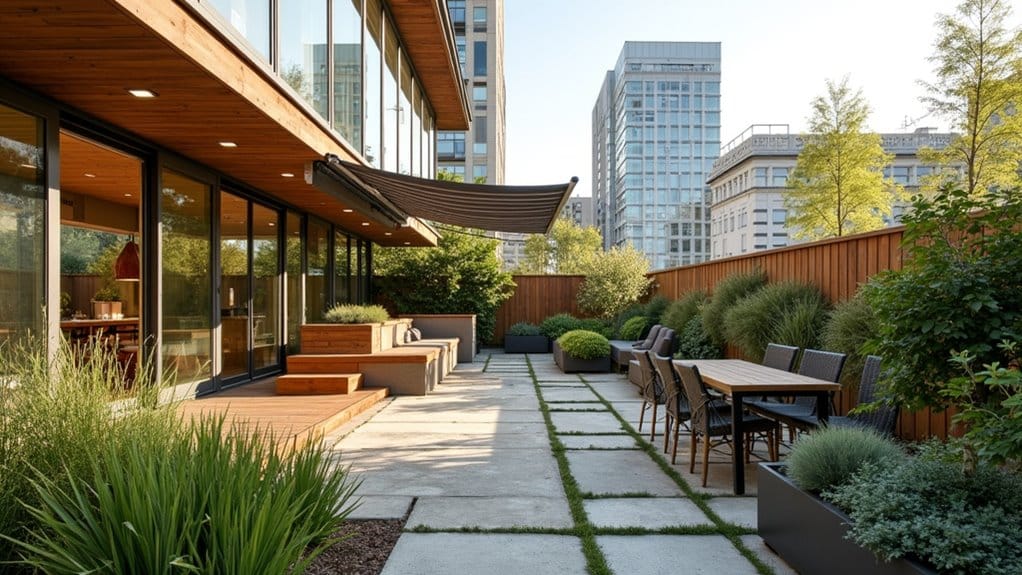
Modern homeowners increasingly seek outdoor spaces that serve multiple purposes throughout all seasons, making strategic zoning and year-round functionality essential elements of contemporary outdoor/exterior design. By incorporating heated patios and fire features, you’ll create functional yet comfortable gathering spaces that extend your living area beyond traditional seasonal limitations.
- Install outdoor fireplaces or fire pits as central focal points, providing warmth and ambiance during cooler months
- Design dedicated outdoor cooking zones with durable materials like natural stone and brick for year-round meal preparation
- Create distinct relaxation areas with weather-resistant seating and customized layouts that reflect your lifestyle
- Implement hardscaping solutions that minimize maintenance while maximizing flow between different functional zones
These thoughtful design elements guarantee your outdoor space remains practical and inviting throughout the year, regardless of weather conditions.
Native Plants and Wildlife-Friendly Gardens
Growing interest in environmental stewardship has transformed traditional scenery into wildlife-friendly sanctuaries that support local ecosystems. You’ll optimize your garden’s ecological impact by incorporating native plants that naturally thrive in your region’s climate and soil conditions.
Create pollinator-friendly gardens by layering flowering native species that bloom throughout different seasons. Replace sections of your lawn with biodiverse plant communities, including shrubs, perennials, and ornamental grasses. These thoughtfully designed spaces provide essential habitat for bees, butterflies, and beneficial insects.
If you’re dealing with drainage issues, consider installing a rain garden with moisture-loving native plants. For urban dwellers, transform your rooftop or balcony into a productive space with native herbs and edibles. These adaptable solutions help restore natural biodiversity while creating visually appealing scenery.
Water-Wise Solutions and Innovative Irrigation
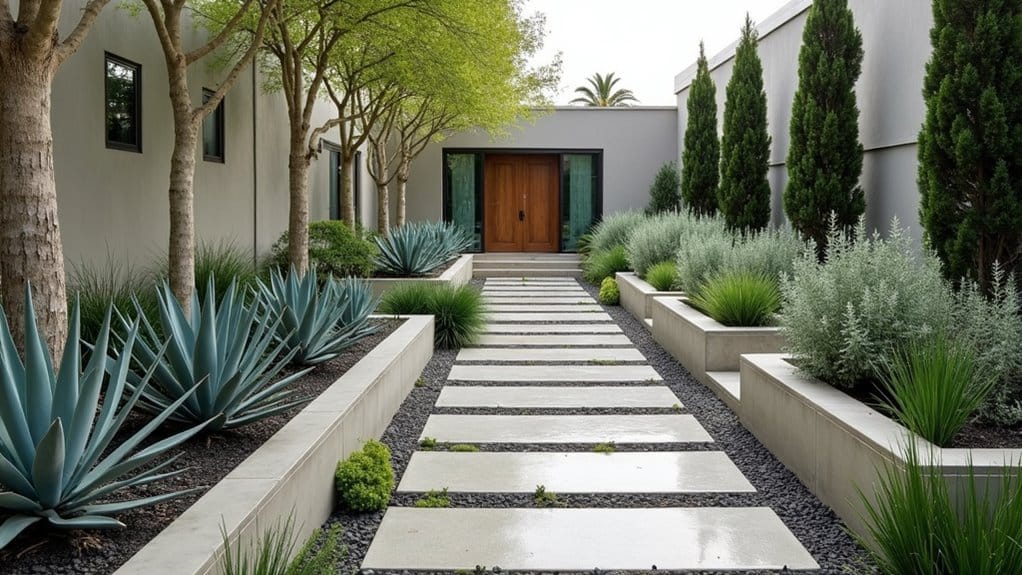
You’ll optimize your terrain’s water efficiency by implementing smart drip irrigation systems that deliver precise amounts of moisture directly to plant roots while reducing waste by up to 50%. Your irrigation strategy can integrate seamlessly with rainwater collection solutions, using AI-powered controllers that adjust watering schedules based on real-time weather data and soil conditions. By selecting drought-resistant plants and grouping them strategically through hydrozoning, you’ll create a resilient outdoor space that thrives with minimal water input.
Smart Drip Irrigation Systems
While traditional sprinkler systems often waste water through overspray and evaporation, smart drip irrigation systems deliver precise amounts of water directly to plant roots, reducing consumption by up to 50%. You’ll conserve water more effectively with these water-efficient solutions that integrate advanced technology and precision delivery methods.
Smart irrigation systems offer sophisticated features to optimize your area’s water management:
- Weather-based controllers automatically adjust watering schedules based on real-time conditions
- Soil moisture sensors prevent over-watering by monitoring ground conditions
- Remote monitoring and control via smartphone apps enable precise adjustments
- Targeted drip lines and emitters deliver water directly to individual plants
With adoption rates projected to increase 25% by 2025, these systems represent the future of efficient outdoor space irrigation, ensuring your exterior remains sustainable and well-maintained.
Rainwater Collection Solutions
As sustainable terrain design practices evolve, rainwater collection systems have emerged as a cornerstone of water-wise outdoor design. You’ll optimize your water efficiency by integrating rainwater harvesting systems with smart irrigation controllers, creating a self-sustaining ecosystem for your terrain.
Install permeable pavers around your property to facilitate natural groundwater recharge while reducing stormwater runoff. Complement these with strategically placed bioswales and rain gardens that utilize native plants to filter and manage water flow. These features work together to decrease your reliance on municipal water supplies while maintaining a vibrant outdoor space.
Drought-Resistant Plant Selection
When designing a water-efficient terrain, selecting drought-resistant plants becomes the foundation of sustainable outdoor spaces. You’ll find that natural, drought-tolerent species adapt perfectly to local soil conditions while requiring less water than traditional options. Transform your garden beds into sustainable ecosystems by incorporating native plants that thrive in your climate zone.
- Choose plants with deep root systems that can access groundwater efficiently
- Group vegetation by water needs to optimize irrigation zones
- Select native species that naturally resist local pests and diseases
- Incorporate ornamental grasses and succulents for year-round visual interest
Your drought-resistant plant selection strategy should align with smart irrigation systems and xeriscaping principles. By combining these elements, you’ll create a resilient environment that maintains its beauty while consuming up to 50% less water than conventional gardens.
Vertical Gardens and Space Optimization
Since outdoor space comes at a premium in today’s urban environments, vertical gardens have emerged as a novel solution for maximizing greenery in limited areas. You’ll find vertical gardening solutions like green walls and trellis systems that transform unused vertical surfaces into thriving plant spaces.
Container gardens and hanging planters offer versatile options for your compact outdoor area, while space-saving landscaping designs help you utilize every available inch. You can implement compact gardening techniques such as espalier fruit trees and modular planter systems to create efficient growing spaces without sacrificing aesthetics. Living walls and wall-mounted planters let you incorporate both ornamental plants and herbs into your design scheme. These creative approaches enable you to cultivate a lush, functional garden regardless of spatial constraints.
Wellness-Focused Landscape Features
Modern terrain design has evolved beyond mere aesthetics to encompass wellness-focused features that transform outdoor spaces into therapeutic refuges. By integrating meditation gardens with strategic masonry elements and aromatic plantings, you’ll create an environment that promotes mindfulness and relaxation. These wellness-focused landscape features align with the growing demand for holistic outdoor living spaces.
Today’s landscapes serve as sanctuaries, where thoughtful design and natural elements merge to create spaces dedicated to mental and physical wellbeing.
- Install yoga decks using sustainable materials, positioned to optimize natural light and provide privacy through strategic placement of stone walls
- Design cold plunges adjacent to meditation areas, incorporating natural stone surrounds and calming water features
- Create sensory gardens with textured pathways, fragrant herbs, and soothing botanical elements
- Establish dedicated zones that shift smoothly between active fitness areas and contemplative spaces, using natural barriers and elevation changes
Edible Landscapes and Productive Gardens
As homeowners increasingly prioritize sustainability and food security, edible sceneries merge ornamental design with productive gardening principles. You’ll find that strategic placement of fruit trees, berry bushes, and herbs can create stunning visual displays while providing fresh produce.
Transform your setting by incorporating edible plants into existing garden beds. Consider design tips like layering different heights – tall fruit trees as focal points, mid-height vegetable patches for visual interest, and ground-covering herbs for borders. For modern landscaping ideas, try vertical herb gardens on walls or espalier fruit trees along fences.
You can optimize space efficiency by using container gardens for seasonal vegetables or installing raised beds with built-in irrigation systems. These solutions allow you to maintain aesthetic appeal while creating a functional food-producing environment.
Natural Hardscaping and Organic Flow
The integration of natural hardscaping elements has revolutionized outdoor design by creating seamless shifts between built and organic environments. By incorporating stone, wood, and brick materials strategically throughout your landscape, you’ll cultivate visual interest while maintaining natural harmony. Permeable pavers and thoughtful drainage solutions guarantee your design is both beautiful and functional.
- Create zones using masonry features like retaining walls and pillars to define distinct outdoor spaces
- Layer native plants, shrubs, and perennials around hardscaping elements to soften edges
- Install curving pathways and organic-shaped patios to promote natural flow between areas
- Choose permeable materials that complement your home’s architecture while amplifying curb appeal
This integrated approach to natural hardscaping transforms your outdoor space into a cohesive environment that’s both sustainable and low-maintenance, perfectly balancing aesthetics with functionality.
Frequently Asked Questions
What’s the Average Cost to Fully Transform a Backyard Into a 2025-Style Landscape?
You’ll typically invest between $20,000 to $75,000 for a complete backyard transformation, with costs varying based on your specific needs. A customized design incorporating sustainable materials like composite decking and smart irrigation systems starts around $35,000. When you add low maintenance features such as artificial turf or technology integration like automated lighting, costs can increase. Your property’s size and existing conditions will substantially impact the final price.
How Long Does It Typically Take to Complete a Modern Landscape Renovation?
Your modern landscape renovation’s typical timeline can range from 2-12 weeks, depending on several key factors. Project phasing usually includes design (1-2 weeks), permits (1-3 weeks), and installation (2-8 weeks). Your landscaper’s availability and design intricacy will considerably impact completion time. You’ll want to account for potential delays due to weather, material delivery, or permit processing. For intricate projects with water elements or outdoor structures, you’ll need extra time.
Can These Landscaping Trends Work in Extreme Weather Conditions?
You’ll find that modern terrain trends can adapt well to extreme weather when properly planned. By incorporating drought-tolerant plant selection and strategic hardscaping, you’re able to manage temperature extremes effectively. You can bolster your terrain’s resiliency to flood risks through proper grading and permeable surfaces. To protect against severe storms, you’ll want to focus on deep-rooted plants and sturdy materials. The key is selecting elements that match your specific climate challenges.
Which Professionals Should I Hire First for a Complete Landscape Makeover?
You’ll want to start with a scenery designer who’ll create your master plan and visualize the complete project. Once you have the design, hire a hardscaping contractor to handle structural elements like patios and retaining walls. Next, bring in an irrigation specialist to plan and install efficient water systems. Ultimately, secure a garden maintenance crew to implement plantings and establish a care routine for your new scenery.
Are There Specific Permits Required for Installing Smart Landscape Technology?
You’ll need to check local permit requirements and municipal regulations before installing smart scenery tech. Most cities require permits for electrical work and irrigation systems that connect to municipal water. Contact your local zoning office to verify specific ordinances, especially for automated lighting or water features. Don’t forget to review utility guidelines for any underground work. Smart sensors and weather stations may need additional clearances if they’re connected to your home’s electrical system.