Choose LED outdoor utility lighting to reduce energy costs by up to 80% while ensuring professional-grade illumination. You’ll want to integrate smart motion sensors and automated scheduling for improved security, along with weather-resistant fixtures rated for your climate zone. Consider solar-powered options to eliminate wiring requirements and take advantage of available tax incentives. The latest AI-driven systems combine advanced detection with real-time monitoring discover how these features can transform your property’s security and efficiency.
Assessing Your Property’s Lighting Requirements
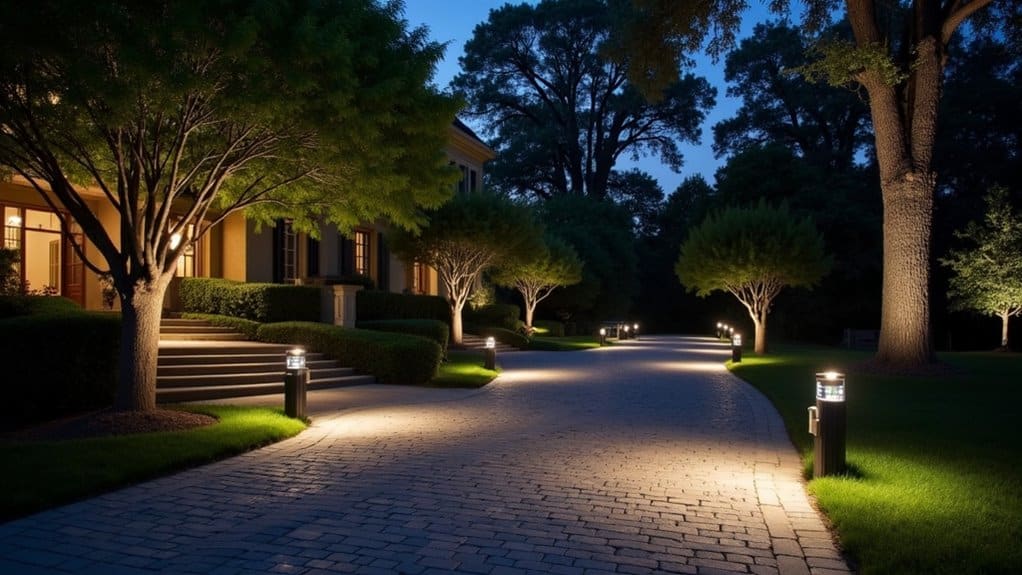
A thorough lighting assessment begins with identifying your property’s specific illumination needs. You’ll want to evaluate your outdoor lighting requirements across three key categories: security, functionality, and aesthetics.
Start by mapping areas that need security lights, such as entry points and dark corners where motion sensors can effectively detect movement. Next, identify pathways, stairs, and work zones that require task lighting for safety and utility. Path lights should illuminate walking areas, while focused task lighting belongs near grills and workspace locations.
Consider your home’s exterior architectural features when selecting lighting fixtures to create a cohesive design. The scale of your lighting plan should complement your home’s dimensions. Don’t forget to incorporate ambiance lighting in entertainment spaces where you’ll want to create a welcoming atmosphere with string lights or decorative lanterns.
Smart Technology Integration for Modern Homes
Modern outdoor lighting reaches its full potential through smart technology integration, offering unprecedented control and efficiency for homeowners. By connecting LED technology to your smart home ecosystem via WiFi or Bluetooth, you’ll transform your property’s illumination while reducing energy costs by up to 80%.
- Enhance home security with motion sensors and automated scheduling that creates a lived-in appearance, while supporting your security cameras with proper lighting
- Achieve energy efficiency through intelligent controls that adjust to ambient light, occupancy, and pre-set schedules via app or voice control
- Highlight architectural details with precision using color-changing smart devices that create stunning aesthetic effects and seasonal themes
Today’s weather-resistant smart outdoor lighting solutions include modular LED systems for eaves, smart soffit lights, and programmable scenery fixtures that seamlessly integrate with your modern home’s automation system.
Energy-Efficient Solutions and Sustainability
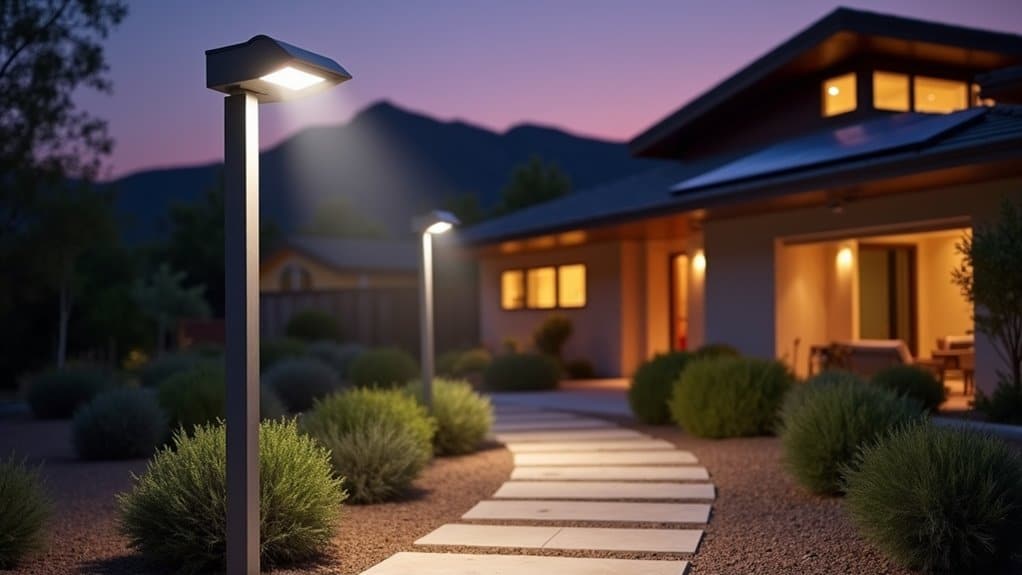
You’ll optimize your long-term cost savings by upgrading to LED outdoor utility lighting, which reduces energy consumption by up to 80% compared to traditional bulbs while providing superior illumination quality. Solar-powered fixtures offer an additional eco-friendly solution, eliminating electrical wiring requirements and leveraging advanced photovoltaic technology to convert sunlight into reliable nighttime illumination. Through proper installation of either LED or solar options, you’ll drastically decrease your home’s carbon footprint while maintaining ideal outdoor lighting performance.
LED Cost-Saving Benefits
LED outdoor lighting delivers exceptional cost-saving benefits through its revolutionary energy efficiency and sustainable design features. You’ll reduce energy consumption by up to 80% when switching to LED lights, dramatically lowering your electricity costs. With a lifespan of 50,000 hours, these fixtures last longer and require fewer replacements, optimizing your total cost of ownership.
- Cut your energy costs immediately with LEDs that use less electricity while providing superior illumination and adjustable lighting options
- Eliminate wiring expenses and reduce your carbon footprint by choosing solar-powered LED solutions as your primary power source
- Maximize your investment through available tax incentives and rebates specifically designed for energy-efficient lighting upgrades
LED technology’s advanced specifications guarantee you’ll save on energy costs while maintaining ideal outdoor illumination. The combination of reduced power consumption and minimal maintenance requirements makes LED lighting the most cost-effective choice for modern outdoor utility applications.
Solar Power Installation Options
When implementing outdoor utility lighting, solar-powered installations offer remarkable efficiency gains while eliminating complex wiring requirements. You’ll reduce energy costs by up to 80% while enhancing safety and security through smart lighting technologies that adapt to weather conditions.
| Installation Type | Cost-Effective Benefits | Sustainability Impact |
|---|---|---|
| Pathway Lights | No trenching required | Zero grid power used |
| Floodlights | 80% energy savings | Replaces high-wattage halogens |
| Scene Lights | DIY installation ready | Battery storage optimization |
| Security Lights | Minimal maintenance | Automated dusk-to-dawn operation |
Modern solar lights deliver superior illumination through advanced photovoltaic cells and enhanced battery storage. You can strategically position eco-friendly fixtures without concern for power source proximity, making them ideal for remote areas. The sustainable solution integrates seamlessly with existing outdoor lighting systems while providing reliable performance in different weather conditions.
Security Features and Motion Detection Systems
To enhance your property’s security coverage, position motion sensors at strategic heights of 6-8 feet and angles of 30-45 degrees, focusing on high-traffic zones like entryways, driveways, and blind spots. You’ll achieve the ideal detection by configuring multiple overlapping zones with adjustable sensitivity settings, enabling your system to distinguish between human movement and environmental factors like wind-blown vegetation. Your integrated alert system can then transmit real-time notifications to your mobile device while activating preset lighting sequences, creating an immediate visual deterrent and recording capability through connected security cameras.
Motion Sensor Placement Strategy
Since effective security lighting depends heavily on proper sensor placement, strategic positioning of motion detectors guarantees both coverage and dependability. You’ll want to position your motion sensors to monitor key entry points, walkways, and high-traffic areas to effectively deter intruders. When integrating motion-activated lights with security cameras, you’ll create a powerful detection system that alerts you to potential threats.
- Angle your sensors strategically to avoid false triggers from vehicles and pets while preserving ideal coverage of critical areas
- Install motion detectors at key entry points where intruders are most likely to attempt access
- Position sensors to create overlapping detection zones, eliminating blind spots in your security perimeter
Remember to adjust sensitivity settings and detection ranges to minimize false alarms. Regular testing confirms your motion detection system maintains peak performance over time.
Advanced Detection Zone Setup
Modern detection zone setup utilizes AI-driven sensors and networked controls to create a sophisticated security perimeter around your property. You’ll optimize protection by establishing multi-tiered detection zones that trigger smart outdoor lights strategically.
Configure your sensors to create customized security zones around high-risk areas like entryways, driveways, and ground-floor windows. The AI-enhanced motion detection system distinguishes between actual threats and harmless movement, reducing false triggers while maintaining vigilance. You can integrate your lighting with security cameras for thorough monitoring and connect to a mobile app for real-time alerts and remote control.
Position your sensors to establish overlapping detection zones, ensuring complete coverage from your property’s perimeter to close-range pathways. This layered approach enables your smart lighting system to respond instantly to potential security threats while maintaining energy efficiency.
Integrated Alert Systems
Your integrated alert system serves as the central nervous system of your outdoor security lighting network. By combining smart lights with advanced motion detection and video monitoring capabilities, you’ll make smart choices about your home’s exterior security in real-time. Control everything through your smartphone app or voice commands via Alexa or Google Assistant.
- Receive instant push notifications when AI-powered analytics detect suspicious human activity while filtering out harmless animal movements
- Access live video feeds and control bolstered security features directly from your mobile device, anywhere and anytime
- Create customized automation routines that trigger specific light patterns and security responses based on detected threats
This thorough integration secures your property through intelligent threat evaluation and immediate response capabilities, giving you complete control over your outdoor security environment.
Weather-Resistant Materials and Durability
Selecting weather-resistant materials for outdoor utility lighting guarantees long-term durability and performance in challenging environments. You’ll need corrosion-resistant materials like stainless steel, brass, or aluminum to withstand harsh weather conditions. Look for fixtures with IP65 or higher ratings and UV-resistant finishes to safeguard against moisture, dust, and sun damage.
| Material Type | Weather Protection | Durability Features |
|---|---|---|
| Stainless Steel | Corrosion-resistant | Impact-resistant |
| Brass | Water-resistant | Rust-proof |
| Aluminum | UV-resistant | Lightweight |
| Tempered Glass | Frost-resistant | Shatterproof |
| Polymer Housing | IP65 rated | Weather-sealed |
Choose fixtures with frost-resistant designs and thermally-tempered glass for operation in sub-freezing temperatures. Durable construction with impact-resistant housings and shatterproof lenses will protect your investment against physical damage while maintaining ideal performance year-round.
Professional Installation Vs DIY Considerations
Once you’ve selected weather-resistant materials, deciding between professional installation and DIY becomes the next key consideration. Smart outdoor lighting systems often require integration with your existing smart home devices, making professional installation a prudent choice for complex setups.
- Safety should be your primary concern – professional electricians understand local codes, proper wiring techniques, and ground fault protection requirements for light fixtures.
- Technical complexity varies greatly – while basic path lights might be suitable for DIY, advanced lighting solutions with motion sensors and automation typically need expert configuration.
- Cost-benefit analysis matters – though DIY saves money initially, professional installation can prevent expensive repairs and guarantee peak performance.
Make sure to evaluate your technical skills honestly before proceeding. The best outdoor lighting implementation depends on proper installation, whether professional or DIY, to maximize both functionality and longevity.
Maintenance and Long-Term Cost Analysis
Three key factors drive the long-term value proposition of outdoor utility lighting: energy efficiency, durability, and maintenance requirements.
You’ll considerably reduce your energy costs by choosing LED fixtures, which consume up to 80% less power and last up to 50,000 hours. Smart systems with automated scheduling, motion sensors, and remote control capabilities can further optimize your savings by 60-70%. For maximum cost-effectiveness, consider solar-powered options that eliminate grid dependency entirely.
Select weatherproof, corrosion-resistant fixtures made from stainless steel or aluminum to minimize maintenance needs. While professional installation may require higher upfront costs, it guarantees proper setup and reduces future repair expenses. When analyzing long-term costs, factor in the minimal maintenance requirements of LED technology, the elimination of frequent replacements, and the substantial energy savings from automated control systems.
Frequently Asked Questions
How Do Outdoor Utility Lights Affect Local Wildlife and Ecosystems?
Your outdoor utility lights can greatly impact local wildlife through several key mechanisms. They’ll disrupt nocturnal animal behavior, alter mammalian circadian rhythms, and interfere with avian navigation. You’ll notice changes in invertebrate behavior, particularly in moths and insects. Light pollution concerns extend to amphibian reproduction effects and plant growth disruption. To maintain ecological balance, you should choose downward-facing fixtures, use motion sensors, and select wildlife-friendly wavelengths that minimize aquatic ecosystem influences.
Can Outdoor Lighting Systems Interfere With Astronomical Observations and Stargazing?
Yes, your outdoor lighting can greatly contribute to light pollution impact and interfere with stargazing. To minimize sky glow, you’ll need to implement specific strategies: use shielding and directionality to focus light downward, select warm color temperatures below 3000K, and integrate motion sensors. Consider energy efficient luminaire types that comply with dark sky preservation policies. These adjustments won’t just help astronomers they’ll also reduce nocturnal animal disturbance and migratory bird disruption in your area.
What Lighting Permits or Neighborhood Regulations Should I Check Before Installation?
You’ll need to check several regulatory requirements before installing outdoor lighting. Start by reviewing your local zoning codes and municipal lighting regulations. Contact your homeowners association for specific policies on fixture types and placement. Most jurisdictions require building permits for electrical work, and you must comply with electrical safety standards. Don’t forget to verify light pollution ordinances, energy efficiency regulations, and neighborhood aesthetic guidelines that may restrict brightness, direction, or fixture styles.
How Do Seasonal Changes Impact the Effectiveness of Outdoor Lighting Systems?
You’ll need to account for several seasonal factors affecting your outdoor lighting. Light temperature changes and rainfall interference patterns can reduce visibility, while snow accumulation impacts require higher mounting positions. Monitor seasonal foliage variations and plant growth interference to maintain coverage. Frost and icing effects may damage fixtures, so use weather-resistant materials. Consider daylight savings adjustments for timers and factor in energy efficiency fluctuations during extreme weather. Animal migration disruptions can be minimized with directed lighting.
Are There Insurance Benefits Associated With Installing Professional Outdoor Security Lighting?
You’ll often find that installing professional outdoor security lighting can reduce your insurance premiums through bolstered liability coverage. Many insurers offer discounts of 5-20% because proper lighting provides crime deterrence and safety for residents. Beyond insurance benefits, you’ll see increased home value and improved neighborhood aesthetics. Consider that modern lighting technology advancements offer energy savings, while warranty considerations protect your investment. Just guarantee you understand maintenance requirements to maintain coverage eligibility.