Smart outdoor lighting control systems let you layer low-voltage landscape and architectural fixtures into one app-driven network, giving you independent control over brightness, color, and scheduling across distinct zones, pathways, patios, and façades. You’ll step 120V down to a safe 12V through smart transformers, then connect fixtures via Wi-Fi, Bluetooth Mesh, or Zigbee to build a responsive, self-healing mesh. Below, you’ll find everything you need to design a layered lighting scheme that evolves beautifully through the night.
What Makes Smart Outdoor Lighting Different?
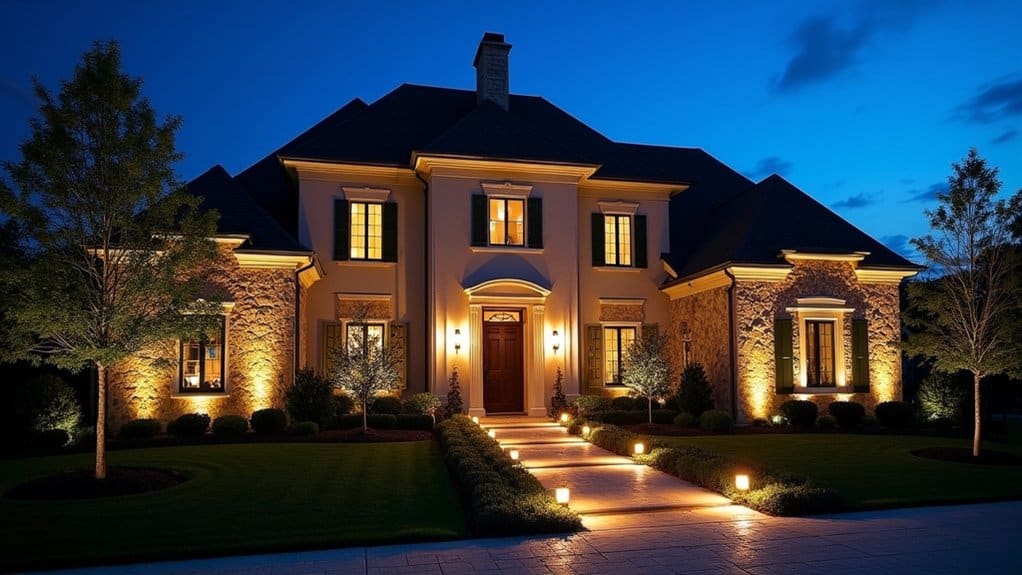
When you move beyond basic switch-operated fixtures, smart outdoor lighting introduces a layered approach to how light interacts with your property’s architecture and landscape. You’re working with zoned brightness, sensor-driven responsiveness, and scene-based configurations that shape how each outdoor area reads after dark.
Smart outdoor lighting control separates pathway wash from architectural accent, letting you tune each zone independently through an app or hub. Motion sensors add reactive layers that static fixtures can’t deliver, while daylight-aware dimming adjusts output as ambient conditions shift. You can schedule, dim, and group fixtures without rewiring, building compositions that serve security, ambiance, and wayfinding simultaneously. The result is outdoor lighting that responds to how you actually use your space. Unlike traditional systems that run at full brightness all night, smart lighting adapts to real conditions using sensors and controllers to reduce energy waste while maintaining safe, well-lit environments.
How Low-Voltage Transformers Power Smart Outdoor Lights
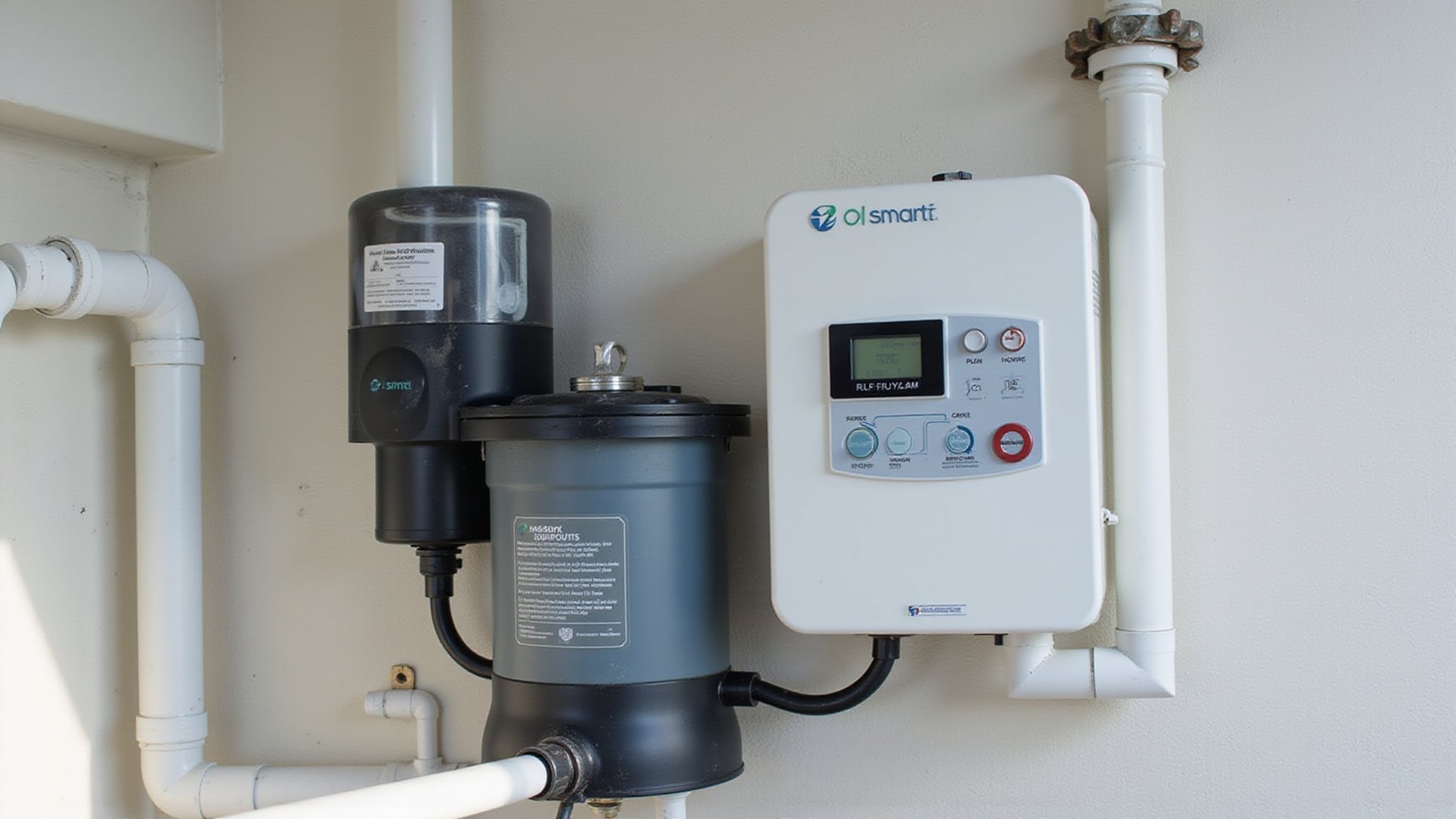
Because every low-voltage fixture depends on converted power, the transformer sits at the foundation of your entire outdoor lighting design. It steps down 120V household current to a safer 12V output, making it possible to layer path lights, spotlights, and architectural fixtures across wet and exposed environments without heightened electrical risk.
You’ll size your transformer above your total fixture wattage, choosing from options ranging from 30W to 1200W depending on your design scope. Multiple voltage taps at 13V, 14V, or 15V let you compensate for voltage drop on longer runs, preserving consistent brightness across layered zones. Durable models built with IP65 rated construction ensure reliable performance even when exposed to rain, humidity, and temperature swings.
Built-in timers, photocell sensors, and Wi-Fi connectivity transform a basic transformer into a low voltage lighting automation hub, giving you programmable scheduling, dimming, and remote control over every lighting layer.
Wi-Fi, Bluetooth Mesh, or ZigBee: Which Protocol Fits?
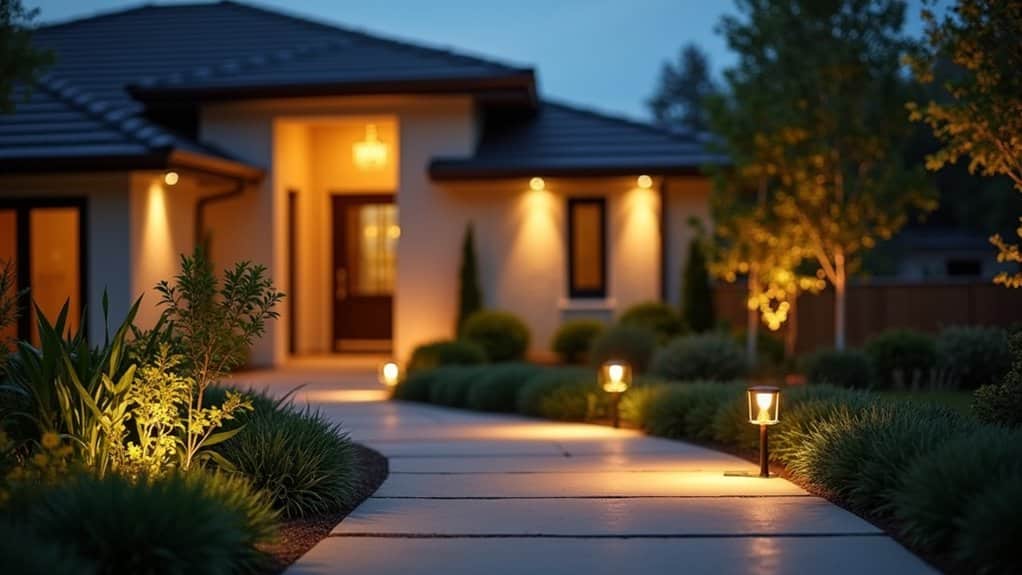
Your transformer may handle power conversion and scheduling, but the wireless protocol linking your fixtures, controllers, and app determines how responsive and scalable your lighting layers actually feel.
| Protocol | Best For | Limitation |
|---|---|---|
| Wi-Fi | Small setups needing direct app control | Higher power draw, weaker at scale |
| Bluetooth Mesh | Mid-size properties with mobile commissioning | Less proven in very large networks |
| Zigbee | Large estates with dense fixture zones | Requires a dedicated hub |
When comparing wi-fi vs z-wave and other protocols, think in lighting layers. Zigbee’s low-power mesh handles dozens of pathway, architectural, and pool fixtures without congestion. Bluetooth Mesh gives you phone-native commissioning, no gateway needed for scene building. Wi-Fi works for smaller compositions where real-time dimming adjustments matter most. Match protocol to your layering complexity. Bluetooth Mesh also supports beaconing for asset tracking and indoor navigation, adding utility beyond pure lighting control to your outdoor system.
How Mesh Networking Keeps Every Fixture Connected
Unlike single-hub systems that route every command through one central point, mesh networking lets each fixture relay signals to its neighbors, creating a web of communication paths across your entire landscape. If one node drops offline, the network self-heals by rerouting messages through alternate paths, no manual intervention required.
For smart landscape lighting, this distributed architecture means you can layer pathway fixtures, architectural uplights, and poolside accents across expansive properties without worrying about signal dead zones. Each added fixture strengthens coverage rather than straining it.
You’ll also get real-time status feedback from every luminaire, enabling precise maintenance scheduling and reliable scene control. Whether you’re managing a compact courtyard or a multi-zone estate, mesh networking scales cleanly, keeping every lighting layer responsive, connected, and visually cohesive.
Control Smart Outdoor Lights From Your Phone
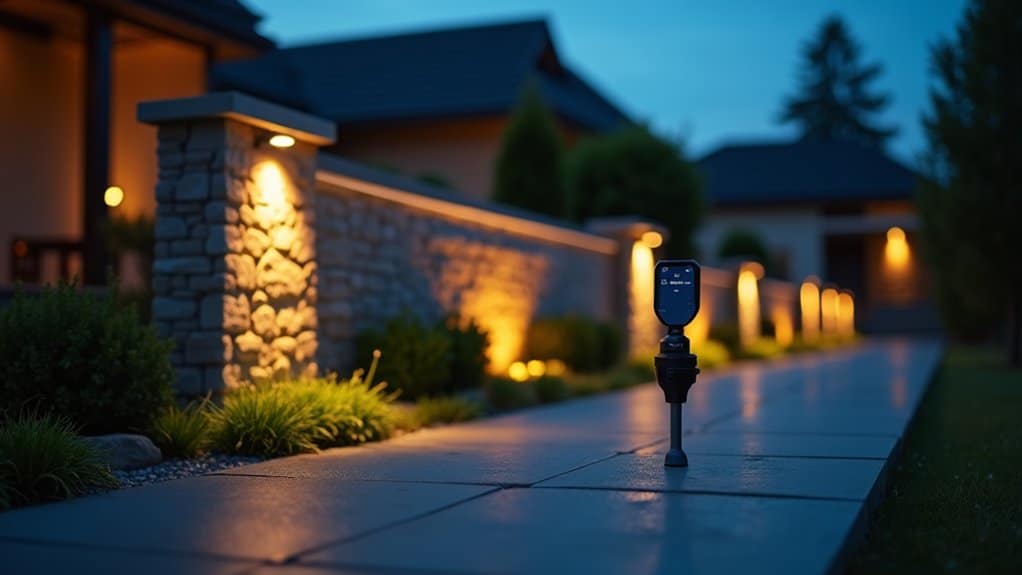
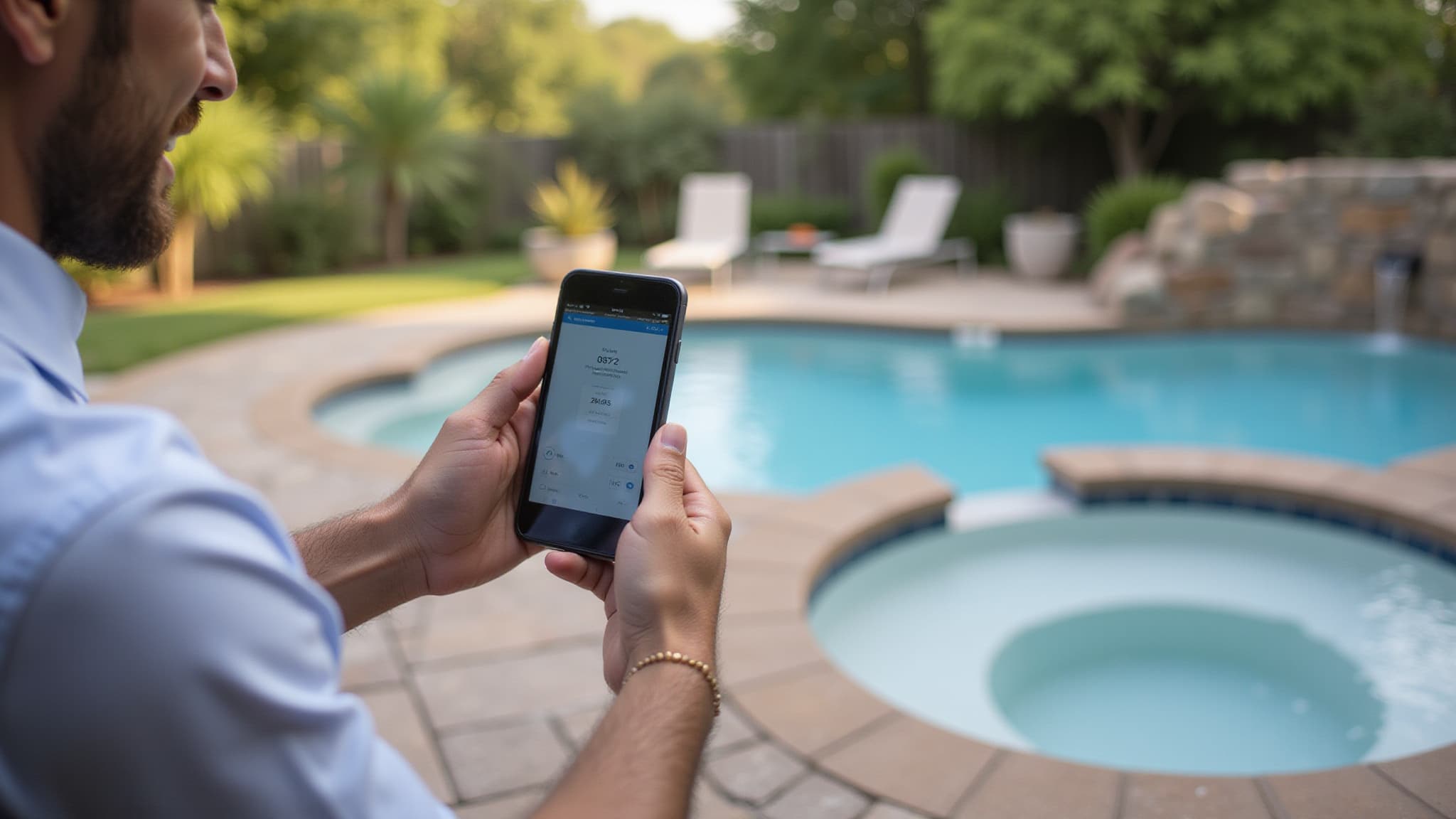
Your phone becomes the command center for every outdoor lighting layer, giving you app-based remote access to adjust fixtures from anywhere with an internet connection. You can control lights individually or group them into coordinated zones that align with your landscape’s visual hierarchy. Scheduling from anywhere lets you fine-tune when each layer activates, so your lighting design looks intentional whether you’re home or away. Voice control for outdoor lighting enhances convenience, enabling you to switch lights on or off with just a simple command. This technology offers a hands-free experience, ideal for gatherings or when your hands are full.
App-Based Remote Access
Most smart outdoor lighting systems now connect to a dedicated mobile app, giving you direct control over landscape spots, path lights, string lights, and architectural fixtures from your phone or tablet. Branded platforms like Cync, Hubspace, and the Ring app each offer tailored interfaces for their product lines, so your outdoor lighting app experience depends on the ecosystem you choose.
From the app, you’ll adjust brightness, set schedules, select colors, and activate presets, layering ambient warmth with functional visibility across zones. Wi-Fi-connected fixtures let you manage scenes from anywhere, while Bluetooth options work within closer range. Some systems pair app control with voice assistant integration, adding another access layer. You’re building a curated lighting composition that shifts effortlessly between security, entertaining, and evening ambiance.
Individual and Group Control
Whether you’re highlighting a single specimen tree or washing an entire patio wall in warm light, smart outdoor systems let you control fixtures individually or as coordinated groups, all from your phone. Individual fixture control lets you fine-tune accent layers, dimming a path light while brightening a focal uplighter to sculpt depth across your landscape.
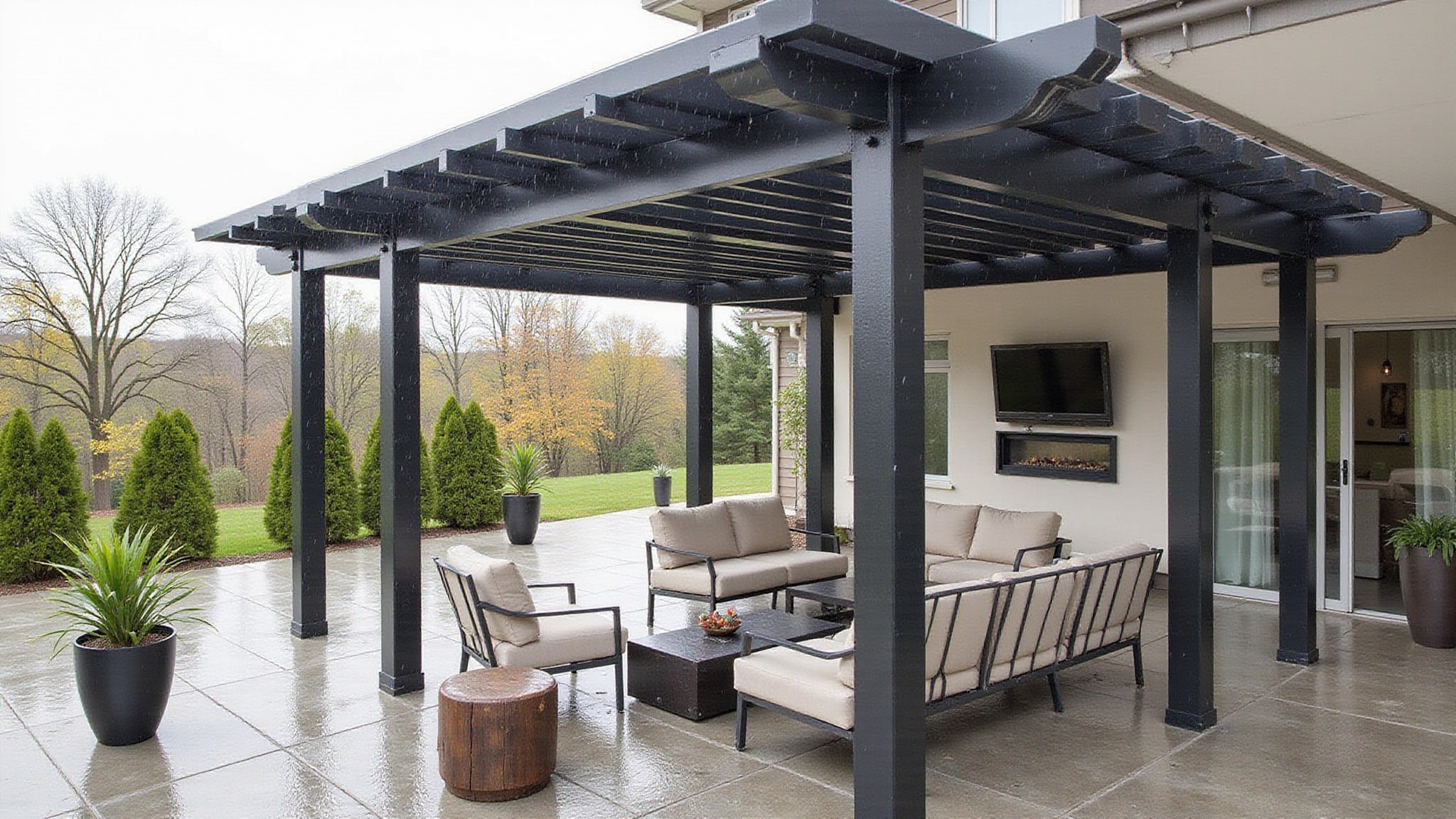
Group and zone control ties multiple fixtures into unified scenes. You can activate your entire front yard composition with one tap or isolate the pergola for an intimate evening setting. Your smart transformer acts as the command center, translating app inputs into precise zone adjustments. By combining individual fixture control with thoughtful grouping, you’ll craft layered outdoor lighting that shifts effortlessly between curb appeal, entertaining, and quiet nighttime ambiance.
Scheduling From Anywhere
Once your zones and groups are dialed in, scheduling lets you automate the entire composition, triggering warm pathway layers at dusk, brightening architectural washes for evening entertaining, and dimming everything to a soft glow before midnight. With programmable outdoor lighting tied to your phone, you’ll adjust timing, intensity, and color from anywhere, whether you’re traveling or simply inside.
| Feature | Design Benefit | Access Method |
|---|---|---|
| Timed routines | Layered shifts across scenes | Mobile app |
| Grouped scheduling | Unified aesthetic across fixture types | Wi-Fi / Matter |
| Remote adjustments | Seasonal and travel flexibility | Smart home ecosystem |
Scene-based scheduling coordinates path lights, accent fixtures, and wall washes into a single choreographed sequence, keeping your landscape visually cohesive without manual intervention.
Set Up Zones for Pathways, Patios, and Façades
Three distinct lighting zones, pathways, patios, and façades, form the foundation of a well-layered outdoor lighting design. Each zone serves a different visual purpose, and separating them gives you independent control over brightness, color, and scheduling.
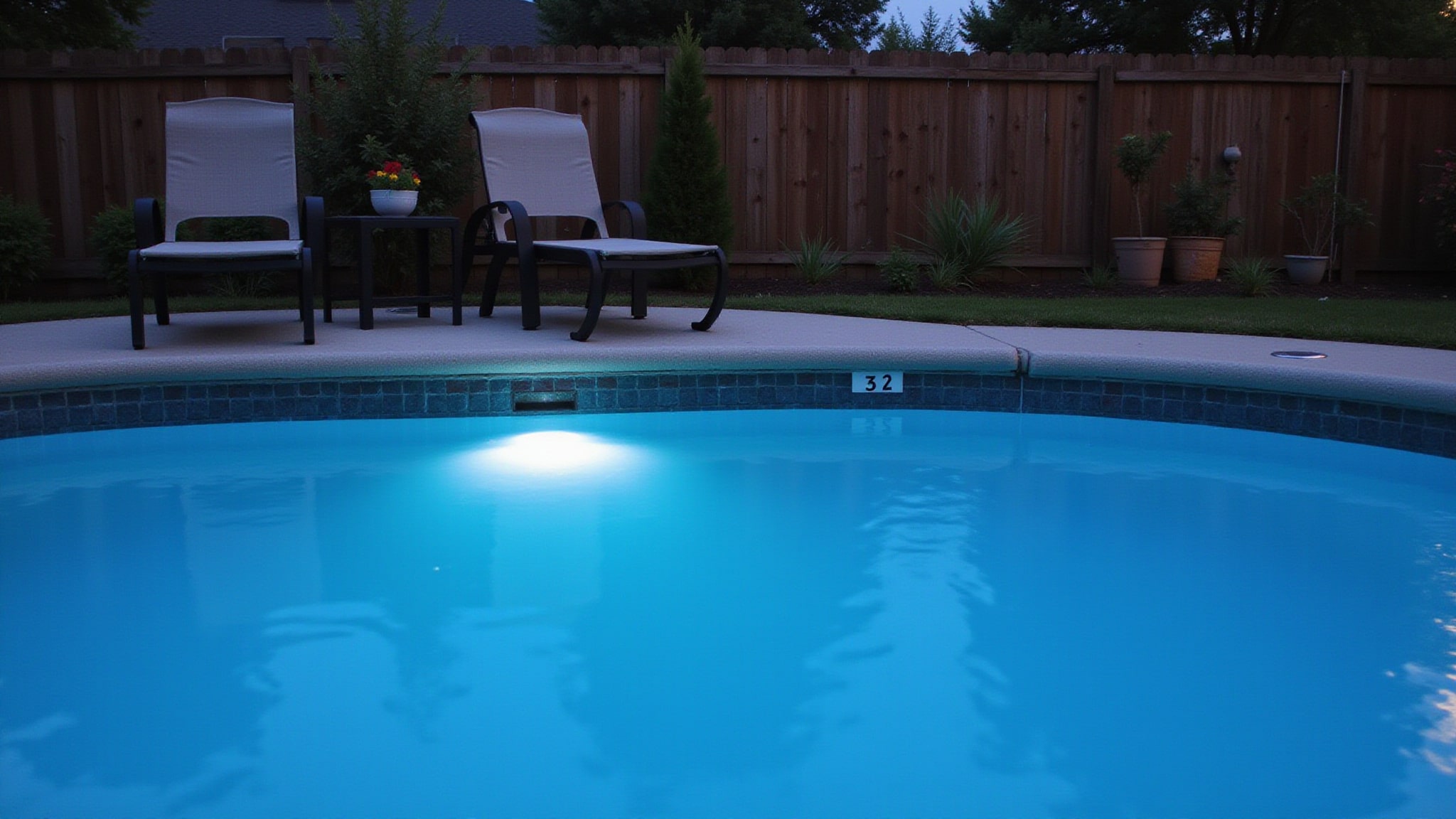
For pathways, space low-profile fixtures every 6 to 8 feet to maintain even, glare-free visibility. Patio zones benefit from warm ambient layers, think strip lights under eaves or color-changing smart fixtures that shift mood for dining or entertaining. Façade zones use targeted spotlights, with cross-lighting from opposite angles creating dramatic architectural depth.
With a system like Lutron Caseta, you can assign each zone its own dimming level and scene. Addressable fixtures add even finer control, letting you adjust individual path lights or accent points without affecting neighboring zones.
Replace Old-School Timers With Smart Scheduling
Even with perfectly layered zones in place, a mechanical timer undermines the flexibility your lighting design needs. Fixed on/off schedules can’t shift scenes throughout the evening or adapt to seasonal light changes. Smart scheduling replaces that rigidity with app-based precision, letting you program distinct lighting moods for dusk, dinner, and late evening across every zone.
Platforms like Lutron Caseta Outdoor and Bluetooth Low Energy mesh controllers let you adjust timing, dimming, and scene changes from your phone. You can coordinate pathway warmth, façade drama, and patio ambiance on independent schedules, without rewiring. Multi-zone support means your architectural accents don’t follow the same timing as your landscape beds. The result is a layered lighting experience that evolves through the night, not one that simply clicks on and off.
How to Install Smart Outdoor Lighting in Five Steps
Five deliberate steps turn a box of fixtures and cable into a cohesive lighting composition that’s both smart and visually layered. Walk your property after dark first, identify accent zones, shadow gaps, and architectural planes worth highlighting. Sketch fixture placements before trenching, then mount your transformer and run low-voltage cable loosely along planned routes.
| Phase | Design Priority |
|---|---|
| Site mapping | Shadow depth and beam balance |
| Cable layout | Clean sight lines, hidden runs |
| Fixture connection | Waterproof splices, plumb alignment |
| Smart programming | Scene layering via FX Luminaire Luxor |
Connect fixtures using waterproof connectors, test everything at night, then adjust aiming for dimensional depth. Program zones and scenes last, bury cable only after confirming every layer performs.
Choose a Smart Lighting System for Landscape and Architecture
Choosing the right smart lighting system starts with evaluating connectivity options, Wi-Fi, voice platform integration, and ecosystem compatibility, so your outdoor controls layer seamlessly into your broader smart home. You’ll want to match fixture types to each application, pairing integrated LED landscape lights with architectural accents that highlight façades, pathways, and focal points. Planning zone control from the outset lets you shape distinct lighting layers for entertainment, security, and ambient beauty across your property.
Evaluate Connectivity Options
Because outdoor lighting spans long distances, mixed fixture types, and varying terrain, your connectivity choice shapes how reliably each layer of light responds. Each option affects how you build scenes, group zones, and integrate with platforms like Control4.
- Bluetooth Mesh, Ideal for retrofit landscapes, offering scalable dimming and grouping without constant internet dependency.
- Wi‑Fi, Best for smaller installations where app-based remote access matters, though outdoor range requires coverage planning.
- Dedicated Mesh / Hub-Based Networks, Suited for multi-zone architectural layouts needing coordinated fixture response across long distances.
- Wired Control Interfaces, Preferred where standardized signals like 0-10V guarantee predictable communication between mixed landscape and architectural fixtures.
Match your connectivity to your layering complexity and aesthetic goals.
Match Fixtures To Needs
Once your connectivity framework is set, the next decision shapes what your landscape actually looks like after dark, which fixtures go where, and how each one serves a specific visual layer. Path lights define edges and walkways with even, glare-free output. Spotlights isolate trees, columns, and sculptures with focused beams. Well lights disappear into grade while pushing dramatic uplighting across walls and canopies. Floodlights wash broader surfaces for security and architectural presence.
Each fixture type draws differently from your transformer with timer, so separating decorative, accent, and pathway circuits by wattage prevents overloading. String lights suit pergolas and patios where ambiance outweighs precision. Match dimming-capable fixtures to hospitality zones and motion-activated units to entries. Every layer you add should serve a distinct purpose, visibility, drama, or atmosphere.
Plan Zone Control
Before you select any smart controller or app, map your landscape into distinct lighting zones, each one tied to a specific visual layer or functional purpose. Separating pathways from architectural facades, tree uplights, and perimeter security lets you control each layer’s timing, intensity, and mood independently.
A well-planned zone layout should address these four layers:
- Pathway and entry zones for safety and wayfinding
- Architectural accent zones for facade highlighting
- Focal feature zones for trees, sculptures, and garden beds
- Perimeter security zones for overnight visibility
Systems like Kichler’s smart transformers offer built-in zone handling, simplifying this separation at the controller level. By defining zones early, you’ll avoid overlighting and gain precise scene control, letting each layer breathe on its own schedule.
Call Today and Take Control of Your Outdoor Space
From pool automation to smart lighting and audio zones, the right control system makes outdoor living effortless and elegant. At Innovative Outdoor Living, our skilled team delivers reliable SMART Backyard & Pool Control Systems built around modern luxury and seamless functionality. Call +1 (561) 594-1495 today and turn your backyard into a smart oasis.
Frequently Asked Questions
Can Smart Outdoor Lighting Systems Integrate With Control4 or Lutron Platforms?
Yes, you can integrate smart outdoor lighting with Control4, systems like in-lite connect through a Smart Bridge and dedicated Control4 driver, giving you full control over dimming, color, and scene activation from one interface. You’ll layer landscape, architectural, and pathway lighting into broader automation alongside speakers, cameras, and more. Lutron integration‘s less documented for these systems, so if that platform’s your priority, you’ll want to verify compatibility before committing.
How Does Wi-Fi Coverage Affect Smart Outdoor Lighting Reliability in Large Yards?
Wi-Fi coverage directly shapes how reliably your smart outdoor lights respond across a large yard. When fixtures sit too far from your router, you’ll notice delayed commands, dropped connections, and inconsistent scene layering. Thick walls and metal structures weaken signals further, disrupting the polished ambiance you’ve designed. You can strengthen coverage with mesh networks or Wi-Fi extenders, or choose systems using a standard 2-wire path that bypass Wi-Fi entirely for seamless, uninterrupted lighting control.
Can Smart Outdoor Lights Adjust Color Temperature for Different Scenes?
Yes, you can adjust color temperature across your outdoor scenes to create layered, intentional lighting. You’ll shift warm tones around 2700K onto dining areas and garden beds for soft ambiance, then assign cooler whites near 5000K along pathways for crisp visibility. By blending these temperatures across zones, you’re building depth and contrast throughout your landscape, making each scene feel purposeful rather than flat or one-dimensional.
Do Smart Landscape Lighting Systems Work With Voice Assistants Like Alexa?
Yes, many smart landscape lighting systems work with Alexa and Google Assistant, giving you hands-free control over your outdoor scenes. You can turn lights on, dim pathways, or shift moods across zones using simple voice commands. Some setups connect through smart plugs at the transformer, while others offer built-in connectivity. You’ll want to verify Alexa compatibility on your specific fixtures to guarantee seamless layering of light throughout your landscape.
How Does Dimming Control Work With Low-Voltage LED Landscape Fixtures?
Dimming typically works by adjusting voltage on the primary side of your transformer, not at each fixture. You’ll want dimmable LED fixtures paired with a compatible magnetic transformer and a low-voltage dimmer rated for your wattage. This lets you layer light beautifully, softening pathways, warming architectural washes, and sculpting focal points across zones. You’ll get the richest depth when you design dimming into your system from the start.