
Choosing between aluminum and wood comes down to budget, climate, maintenance tolerance, and your yard’s aesthetic direction. Wood delivers lower upfront cost but demands sanding, sealing, and staining every 1 to 3 years, lasting 5 to 15 years. Aluminum costs more initially, $15, $150+/sq ft, yet resists rot, rust, and UV while holding clean geometry for 20 to 50+ years with near-zero upkeep. Wood brings warmth; aluminum brings modern precision. Keep going to find which material fits your space.
Key Takeaways
- Upfront cost: Wood is cheaper initially (species-dependent), while aluminum runs higher at $15, $150+ per square foot.
- Maintenance: Wood needs sanding, sealing, and staining every 1 to 3 years ($100, $500 yearly), whereas aluminum requires only occasional soap-and-water cleaning.
- Lifespan: Wood lasts 5 to 15 years with upkeep, while aluminum maintains structural stability for 20 to 50+ years with minimal effort.
- Weather resistance: Aluminum’s powder-coated finish resists rot, rust, warping, and UV, but can build heat and dent under impact.
- Style: Wood offers natural, patterned-shade warmth, while aluminum delivers a modern, clean silhouette with precise spans and configurable shade options.
Aluminum vs Wood Pergola Compared
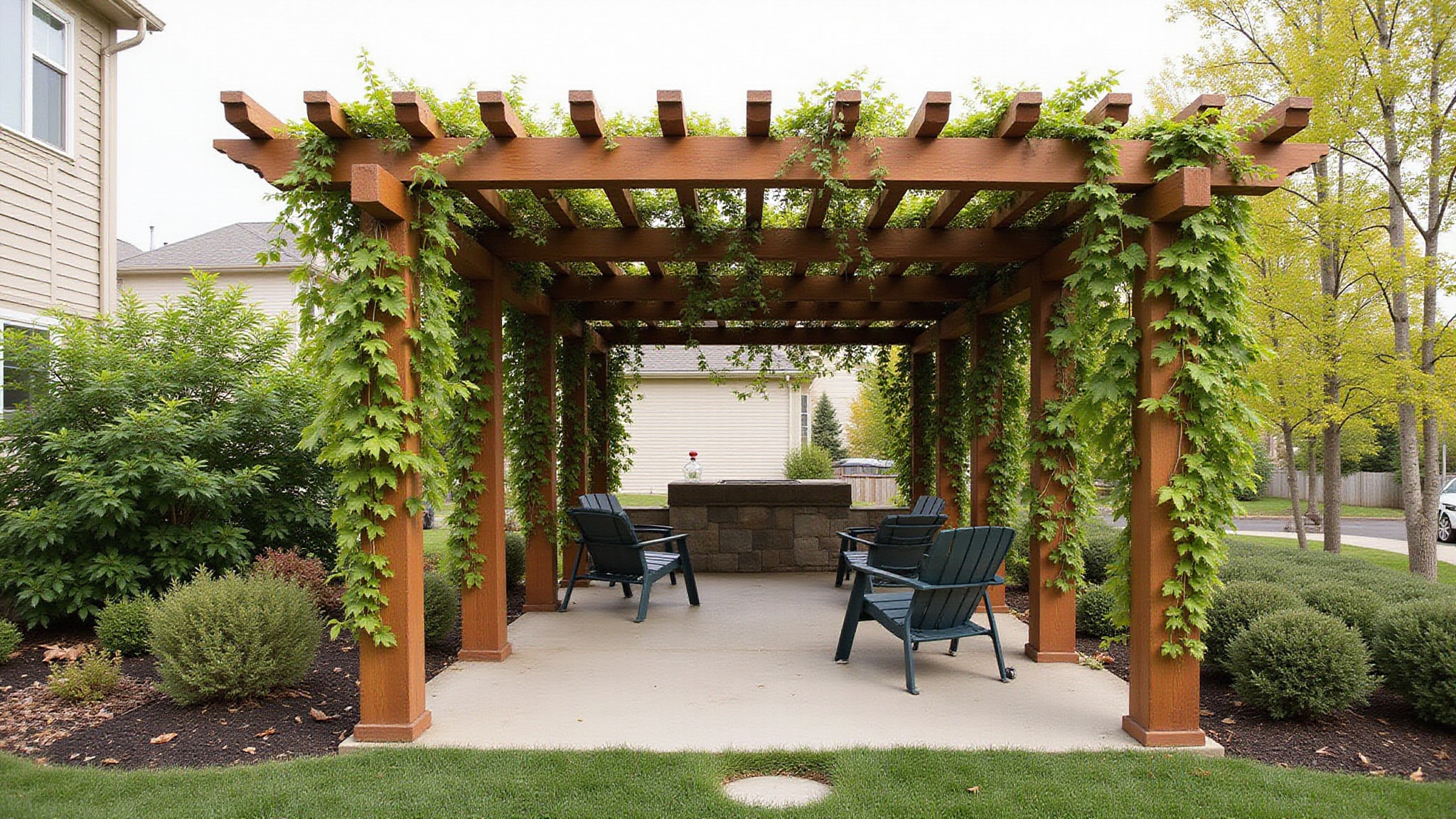
Aluminum and wood pergolas differ across four spatial and structural variables: budget, climate, maintenance tolerance, and style. In the aluminum vs wood pergola debate, wood delivers lower upfront material cost, whereas aluminum commands a higher initial price but offsets it through minimal upkeep and a longer service life.
Wood typically lasts 5 to 15 years and demands sanding, sealing, and staining every 1 to 3 years. Aluminum resists rot, rust, and UV degradation, holding structural stability for 20 to 50+ years.
Climate drives the spatial fit: aluminum performs best in humid, coastal, high-sun zones; wood suits temperate settings with better thermal comfort. Choosing a pergola means weighing your budget against maintenance tolerance and your yard’s aesthetic direction.
What is an aluminum pergola
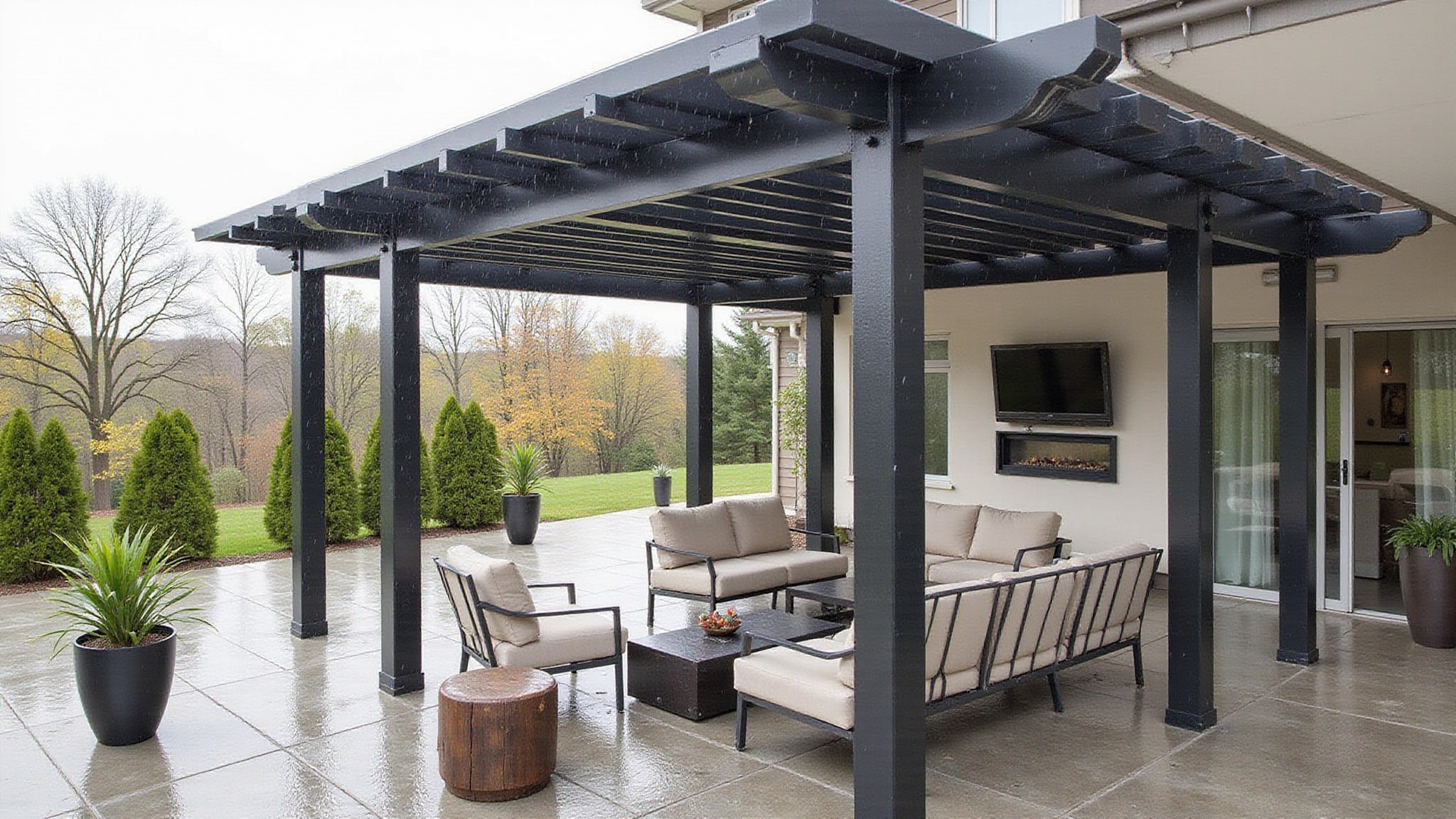
An aluminum pergola is an outdoor structure built from a metal structural system of powder-coated posts, beams, and rafters that frames outdoor space. You get a modern, clean silhouette that holds its geometry against weather, unlike a wood pergola that shifts and weathers over time. The powder-coated finish resists rot, rust, warping, and UV degradation, so the structure keeps its lines for decades.
Consider what defines an aluminum pergola:
- Structure: engineered posts, beams, and rafters that maintain precise spans and alignment.
- Finish: powder coating that seals the metal and delivers customizable color.
- Configuration: open-beam, louvered, or motorized systems for controlled light and shade.
- Performance: durability across humid, coastal, and high-sun climates with minimal upkeep.
You choose it for spatial precision and lasting form.
What is a wood pergola
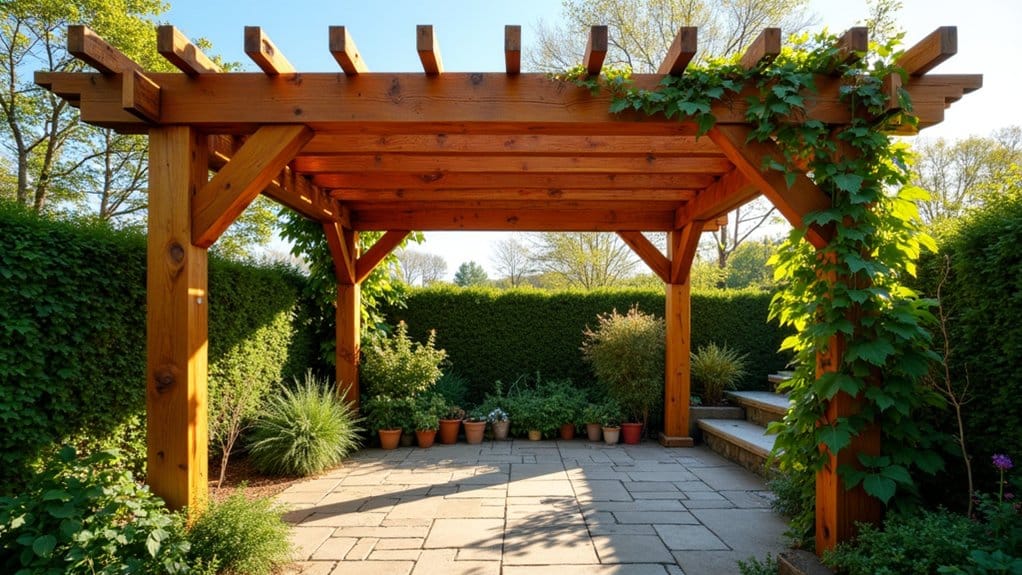
A wood pergola is an outdoor structure built from natural timber posts, beams, and rafters that frames your space with warmth and traditional character. You’ll typically choose from species like pressure-treated pine, cedar, or redwood, each shifting your material cost and weathering behavior. The open-beam framework defines overhead rhythm, casting patterned shade while anchoring your yard’s spatial layout. Regular pergola design options for homeowners can greatly enhance outdoor living spaces. Many homeowners choose pergolas that complement their architectural styles, creating a cohesive look with their existing structures. Regular pergola design options for homeowners can greatly enhance outdoor living spaces. Many homeowners choose pergolas that complement their architectural styles, creating a cohesive look with their existing structures.
You’re working with a material that offers lower upfront cost but demands regular upkeep, sanding, sealing, and staining every one to three years to resist moisture, rot, pests, and UV. Expect annual maintenance running $100 to $500.
Its lifespan varies widely, from 5 to 15 years with minimal care, though properly engineered heavy timber can last 30 to 50+ years. Cosmetic repairs stay simple: sand and brush.
How do aluminum and wood pergolas compare on cost and upkeep
Wood costs less upfront while aluminum costs more but eliminates nearly all recurring upkeep. Every cost decision here splits along two axes: what you pay upfront and what you pay to keep the structure standing. Wood wins the entry price, especially pressure-treated pine over cedar or redwood. Aluminum demands more capital upfront, but it recovers that spread by shedding nearly all recurring upkeep.
| Factor | Wood | Aluminum |
|---|---|---|
| Upfront cost | Lower, species-dependent | $15, $150+/sq ft |
| Maintenance cycle | Sand/seal every 1 to 3 years | Soap-and-water only |
| Annual upkeep | $100, $500 | Near zero |
You’re trading dollars now for hours later. Choose wood if you’ll accept the maintenance ritual and want lower initial spend. Choose aluminum if you’d rather lock in a fixed cost and forget it.
What are the pros and cons of each material
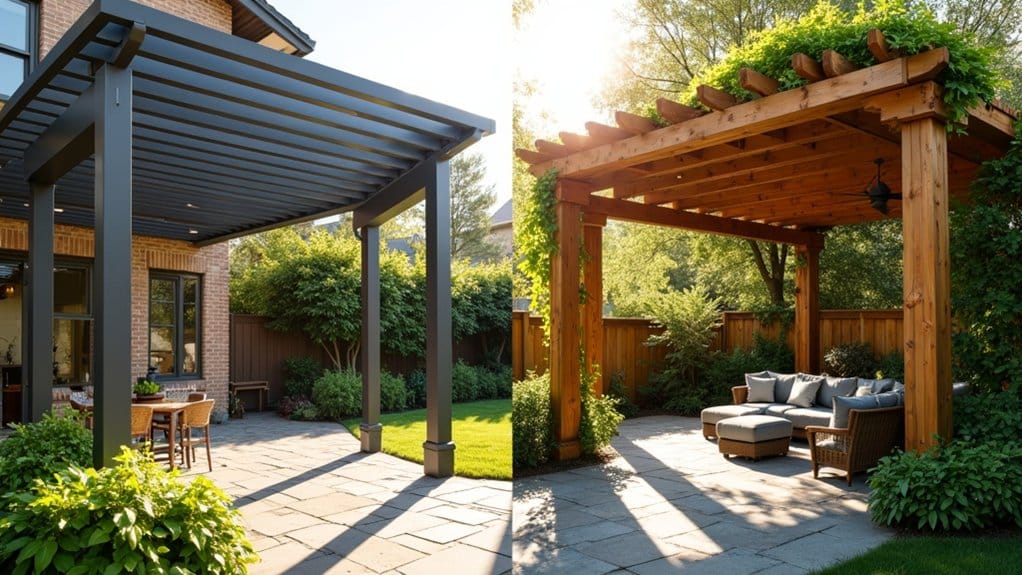
Aluminum’s pros include a modern, clean profile, resistance to rot, warping, rust, and UV, and a lifespan of 20 to 50+ years with only soap-and-water cleaning, but its cons are that it can heat up under direct sun, and dents or cracks often demand manufacturer service. Wood’s pros include a natural, cozy warmth and easier on-site repairs through sanding and brushing, yet its con is that it needs sealing or staining every 1 to 3 years.
- Aluminum durability: shrugs off moisture, insects, and cracking across harsh climates.
- Wood aesthetics: natural grain suits traditional, softly shaded outdoor rooms.
- Aluminum thermal trade-off: surfaces grow hot in high-sun exposure.
- Wood repairability: cosmetic fixes stay simple, but upkeep never stops.
Which pergola material is right for you
The right pergola material depends on four variables: budget, climate, maintenance tolerance, and style, so map each against your site before committing. If you’re prioritizing lower initial spending and a natural, traditional look, wood fits, provided you’ll accept sanding, sealing, and re-staining every one to three years, at $100 to $500 annually. If your site sits in a harsh, humid, coastal, or high-sun zone, aluminum resists rot, warping, UV, and insects better, lasting 20 to 30-plus years with soap-and-water cleaning. Weigh the thermal trade-off: aluminum can turn hot to the touch, but timber often reads cooler underfoot. For a modern, clean silhouette with minimal upkeep and long-term value, choose powder-coated aluminum. If aesthetics lead and upkeep’s acceptable, wood earns its place.
Conclusion
Choosing between an aluminum and a wood pergola comes down to the trade-off between low-maintenance longevity and warm, traditional character, weighed against budget, upkeep, and resale goals. Both make a beautiful backyard structure; the right one depends on how much future maintenance a homeowner wants to take on. Innovative Outdoor Living builds pergolas in both materials and helps homeowners weigh the options, so the structure that goes up is the one that truly fits the yard and the lifestyle.
Add a Custom Pergola That Lasts
Choosing the right pergola style, material, and design transforms your backyard into a stunning outdoor living space. At Innovative Outdoor Living in Palm Beach Gardens, FL, our experienced team provides trusted Pergolas with expert craftsmanship and premium materials. Call +1 (561) 594-1495 today and design your perfect backyard structure.
Frequently Asked Questions
Do Aluminum or Wood Pergolas Require a Building Permit?
The permit requirement comes down to local building codes, not the material. Aluminum or wood, a permit is typically needed based on structural footprint, height, attachment to the home, and load specifications. Freestanding pergolas over certain square-footage thresholds usually trigger review, while smaller detached structures may not. Checking the municipality’s zoning setbacks and dimensional limits before building is wise, since those spatial factors drive approval regardless of material.
Can You Attach a Pergola to an Existing House Roof?
Yes, but it has to anchor into structural framing, rafters, fascia, or a ledger board bolted to load-bearing wall studs, rather than just the roofing surface. Proper flashing at the attachment points is important to prevent water intrusion. Aluminum’s lighter weight reduces the structural load, which can make it the easier material for a roof-attached design. A structural check before installing is always worthwhile.
Are Aluminum Pergolas Recyclable at the End of Their Life?
Yes. Aluminum is fully recyclable, so once the frame, beams, and louvered panels are dismantled, they can go to a scrap facility for reprocessing. Because these systems typically last 20 to 50 or more years, that decision is a long way off. Separating any powder-coated components, hardware, or motorised parts first streamlines the recycling process considerably.
Which Pergola Material Adds More Resale Value to a Home?
Aluminum usually adds more resale value, since its 20 to 50-plus-year lifespan and near-zero upkeep read to buyers as a durable, permanent upgrade. Its modern, clean-lined footprint fits naturally with contemporary outdoor living zones. Wood brings warm, traditional character that helps curb appeal, but its one to three-year maintenance cycle can hint at future work. For long-term value with minimal upkeep, aluminum tends to win out.
How Long Does It Take to Install Each Pergola Type?
Installation time depends heavily on the system’s complexity. Aluminum kits with pre-engineered, powder-coated components generally go together faster, while wood calls for on-site cutting, fastening, sanding, and sealing. A louvered or motorised aluminum system adds labor for the mechanism and wiring. Site access and layout also shape the schedule, so the build method is best matched to the specific yard.